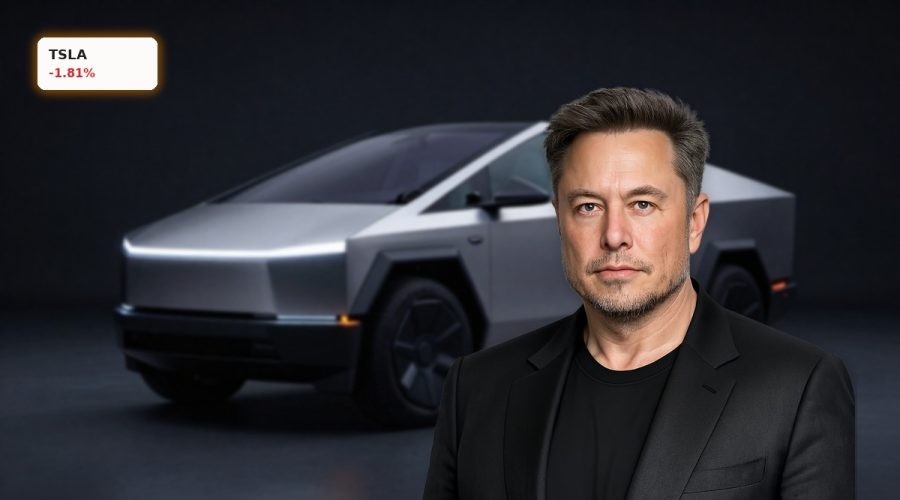
Can the Tesla Robotaxi pivot and Cybercab rollout rescue slowing EV growth as Q1 2026 delivery expectations climb ever higher?

Is Tesla’s Q1 2026 delivery bar now too high?
Heading into April, the market’s focus is firmly on Tesla’s first-quarter delivery print. Prediction markets currently imply a roughly 73% probability that Tesla will report between 350,000 and 375,000 vehicles in Q1 2026, with a compiled analyst consensus at about 365,645 units. RBC Capital Markets projects 367,000 deliveries, only slightly above that range, while some European desks still reference older expectations closer to 372,000–392,000 as analysts recalibrate to a slower electric-vehicle demand backdrop.
The quarterly number matters because Tesla delivered about 336,681 vehicles in Q1 2025, so anything under ~350,000 would signal only modest growth year over year. That would sit uneasily next to Tesla’s 9% delivery decline in full-year 2025 and the 16% year-over-year drop in Q4 2025, when deliveries fell to 418,227 units and revenue slipped 2.93% to $94.83 billion. For a stock still trading at a rich earnings multiple, another soft quarter would reinforce the view that core EV growth is decelerating.
At the same time, Wall Street has already turned more cautious. Full‑year 2026 delivery expectations have been trimmed, with RBC Capital cutting its outlook to 1.69 million units. Against that backdrop, a Q1 figure in the middle of the 350,000–375,000 band might be “good enough” to prevent a sharper de-rating, especially if Tesla can convincingly tie any lingering weakness to product transitions rather than structural demand issues.
What does the Tesla Robotaxi pivot really change?
Beyond the near-term delivery debate, the bigger swing factor for the stock is the Tesla Robotaxi strategy centered on the dedicated Cybercab platform. CEO Elon Musk has repeatedly promised that Cybercab will enter volume production in April, effectively turning Tesla from a pure-play EV manufacturer into a hybrid of auto, AI and mobility platform. Musk has argued that regulatory approvals for operating robotaxis will roughly match the ramp rate of Cybercab output, aiming to avoid a build‑up of idle vehicles sitting on the balance sheet.
So far, though, progress has been far slower than the hype. Tesla has no formal robotaxi regulatory approvals in any major market, and skeptics on Wall Street point to the “glacial” rollout pace to date. Well-known investor Gary Black of Future Fund has been vocal in criticizing Tesla’s multi‑year underperformance versus the Nasdaq 100, explicitly blaming the repeated failure to deliver fully autonomous driving and a functioning Tesla Robotaxi network at scale. He notes that Musk once projected a robotaxi fleet serving over half the U.S. population by the end of last year, a target that now looks distant.
There are also regulatory headwinds. Tesla’s FSD software remains under scrutiny from the U.S. National Highway Traffic Safety Administration (NHTSA), with the risk of expanded recalls that could touch millions of vehicles. Any adverse finding would not only raise costs and legal risks, it could push back investor expectations for when robotaxi revenue might meaningfully impact the income statement.
Still, even modest Cybercab production this year would reduce execution risk and let analysts begin to model real‑world unit economics. Bulls argue that if Tesla can prove a viable Tesla Robotaxi business model in even one major city, the resulting high-margin software and services revenue could eventually dwarf profits from selling cars. That optionality is a key reason the stock continues to command a premium valuation despite cyclical EV headwinds.
Can Tesla regain momentum in Europe with FSD?
Europe has been one of Tesla’s tougher regions recently, with competitive pressure from Chinese manufacturers like BYD intensifying and brand sentiment more fragile than in the U.S. There are, however, some early signs of stabilization. For the first time since December 2024, new registrations of Tesla vehicles in Europe showed a year-over-year increase, rising nearly 12% to 17,664 units in February 2026. The rebound is flattered by an easy comparison, since factory retooling in early 2025 caused a 40% plunge in registrations last year, but it still breaks a negative streak that weighed on investor sentiment.
Even so, Tesla is not yet regaining leadership in the region. BYD again edged past Tesla in Europe last month with 17,954 registrations, and its longer-term growth trend remains stronger. Tesla’s European trajectory is still characterized by market-share erosion in key segments, and the company only gained U.S. share in late 2025 because the overall EV market shrank even faster, with domestic EV sales falling 36% year over year while Tesla’s U.S. units declined 15% to 138,000 in Q4 2025.
The strategic wildcard for Europe is regulatory approval of supervised FSD. Tesla has indicated it expects a green light for supervised FSD in the Netherlands as early as April, with the Dutch vehicle authority saying both sides are in the final stages of their assessment process. If approved, FSD could make Tesla vehicles more competitive across the EU, either via bloc‑wide recognition or a series of country‑by‑country approvals. That in turn would support higher software attach rates, recurring subscription revenue and ultimately a stronger platform position for any future Tesla Robotaxi deployment in European cities.
How do energy storage and robotics fit into the story?
While the market’s attention often swings between quarterly deliveries and the autonomy roadmap, Tesla is quietly expanding in two adjacent areas that matter for long-term valuation: utility‑scale energy storage and humanoid robotics. On the energy side, Tesla reported a bright spot in Q4 2025 with segment revenue rising 25% year over year to $3.84 billion, supported by record deployments of 14.2 GWh of storage. Recent deals, such as an engineering, procurement and construction contract with Matrix Renewables to design and commission a standalone battery energy storage system in Eccles, underline Tesla’s ambition to be a structural player in grid-scale storage, not just consumer EVs.
This push could prove especially important as the company navigates a supply-chain environment marked by capacity constraints at leading foundries. A production crunch at Taiwan Semiconductor has forced major chip customers like NVIDIA and Tesla to explore alternatives, elevating Samsung Electronics as a rare second source for cutting-edge silicon. For investors, diversification into energy and AI hardware mitigates some of the risk that pure EV margins compress under competitive and regulatory pressure.
The other big bet is robotics. Tesla is repurposing factory capacity in Fremont, California, to scale production of its Optimus humanoid robots, with an eventual target of up to one million units per year. Management positions Optimus as an AI-powered labor platform that could perform repetitive or dangerous tasks in factories, offices and eventually homes. Elon Musk has even suggested that Optimus could materially move U.S. GDP higher over time, by effectively lowering the cost of labor and freeing humans for higher-value work.
For now, those claims remain aspirational, and many analysts on Wall Street warn that expectations for Optimus and the broader robotics franchise may already be baked into Tesla’s valuation. Still, with the stock trading around 175x forward earnings by some estimates, the market is clearly pricing in more than incremental EV growth. If even a fraction of the robotics or autonomy potential is realized, that may justify current multiples; if not, Tesla could underperform broader benchmarks like the S&P 500 and Nasdaq 100 over a multi‑year horizon.
How does Tesla stack up against U.S.-listed rivals?
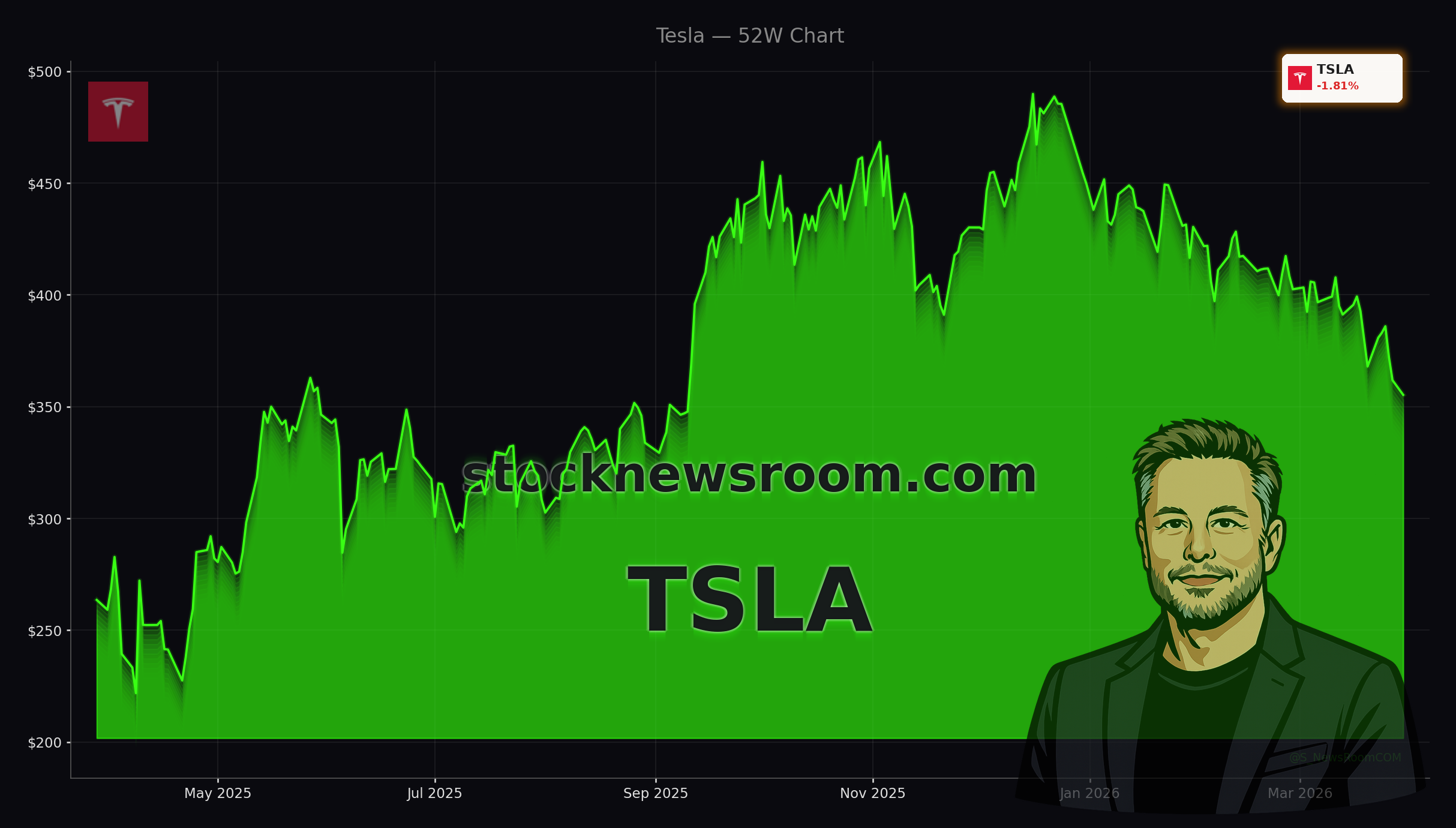
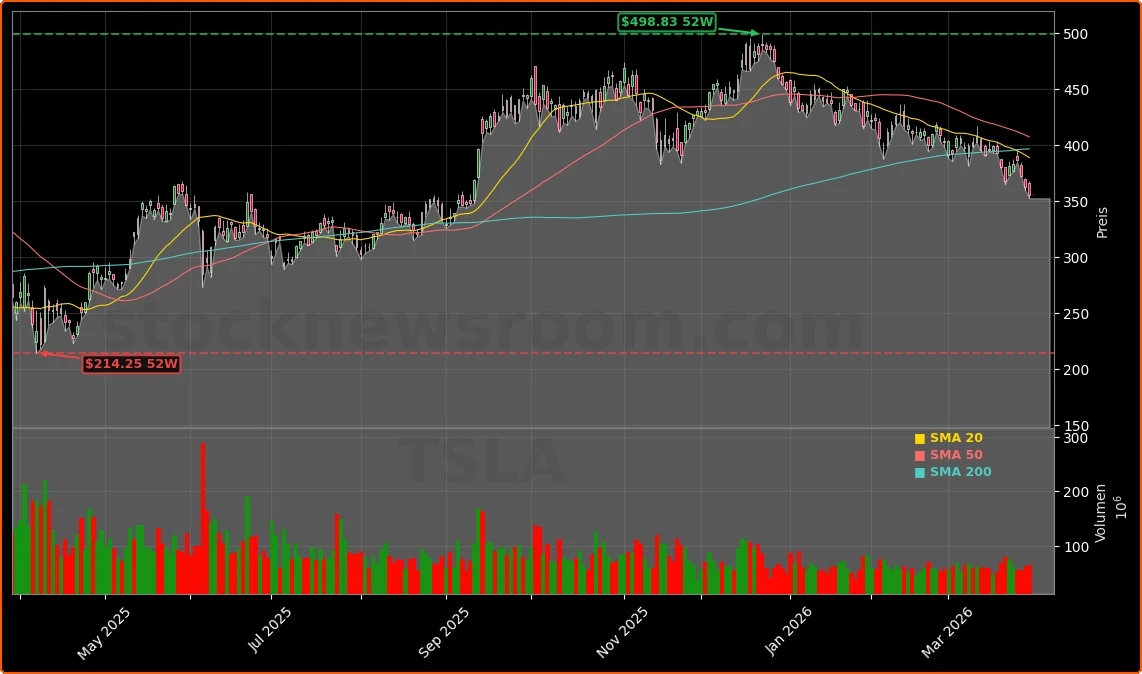
From a U.S. investor’s standpoint, Tesla’s shifting risk‑reward profile needs to be viewed alongside both domestic mega-cap peers and global EV competitors. Within the so‑called “Magnificent Seven” cohort that includes Apple, Tesla, Nvidia, Microsoft, Amazon and Meta Platforms, all have retreated double‑digit percentages from their all‑time highs as higher rates and valuation fatigue hit mega‑cap growth. Over the past year, Tesla shares are up around 38%, lagging some AI beneficiaries but still handily outperforming Chinese rival BYD, whose U.S.-traded stock has dropped roughly 29% in the same period.
Yet other EV names are gaining traction. Nio has outpaced Tesla over the last 12 months, with its shares up about 49% compared to Tesla’s 38%, as investors rotate into names perceived to have more upside leverage to China’s recovery and new model cycles. In that sense, Tesla is in a transition zone on Wall Street: no longer a pure high‑beta EV growth story, but not yet a proven AI and robotaxis cash‑flow machine.
Investors also have to weigh governance and communication risk. Critics like Gary Black have urged Tesla to adopt a clearer, more disciplined marketing playbook reminiscent of Apple under Steve Jobs—fewer over‑promises, more polished execution. Musk’s bold statements, such as forecasting a world where “working will be optional” thanks to AI and robotics, underscore the visionary upside but also highlight the gap between narrative and near-term fundamentals.
Related coverage on Tesla’s outlook
Investors looking for a deeper dive into how slowing EV demand and volatility in mega‑cap tech are shaping expectations for Tesla should read this analysis on a potential -3.1% Tesla forecast crash versus AI and SpaceX bets. The piece examines whether concerns about decelerating deliveries and margin pressure can be offset by enthusiasm around Tesla’s AI, robotics and space‑adjacent ecosystem. It also explores how these long‑dated optionality themes could interact with the timing of the Tesla forecast crash warning versus AI and SpaceX bets to influence positioning ahead of upcoming catalysts.
Investors are no longer paying up for EV volume alone; the premium now rests almost entirely on whether Tesla can turn its robotaxi and AI roadmap into real, scalable cash flow.— Maik Kemper, Editor in Chief, StockNewsRoom
In the end, the Tesla Robotaxi vision, Q1 2026 deliveries and European FSD progress are converging into a single test of credibility for Tesla’s broader AI narrative. For U.S. portfolios, the stock remains a high‑beta bet on autonomy, energy storage and robotics layered on top of a maturing EV franchise. The coming weeks—anchored by the delivery report, any Cybercab production updates and a potential first EU FSD approval—will show whether Tesla can keep investors engaged in that vision or whether capital rotates further into rivals and more predictable mega‑cap tech names.