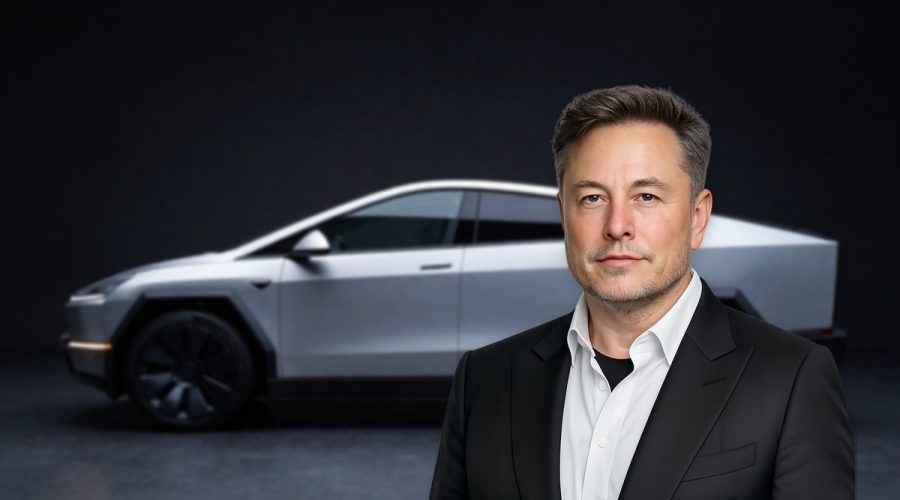
Can Tesla’s bold Robotaxi Strategy and energy storage pivot really justify a trillion-dollar valuation as its core EV business slows?
How is Tesla reshaping its growth story?
Tesla Transformation zu Robotaxis und Energiespeicher is unfolding against a tougher backdrop for EV demand. In 2025, Tesla’s vehicle deliveries fell about 9% year over year to roughly 1.64 million units, dragging automotive revenue down 10% to around $69.5 billion. Adjusted net income slid 26% to about $5.9 billion as price cuts, competition from Chinese manufacturers and fading subsidies pressured margins.
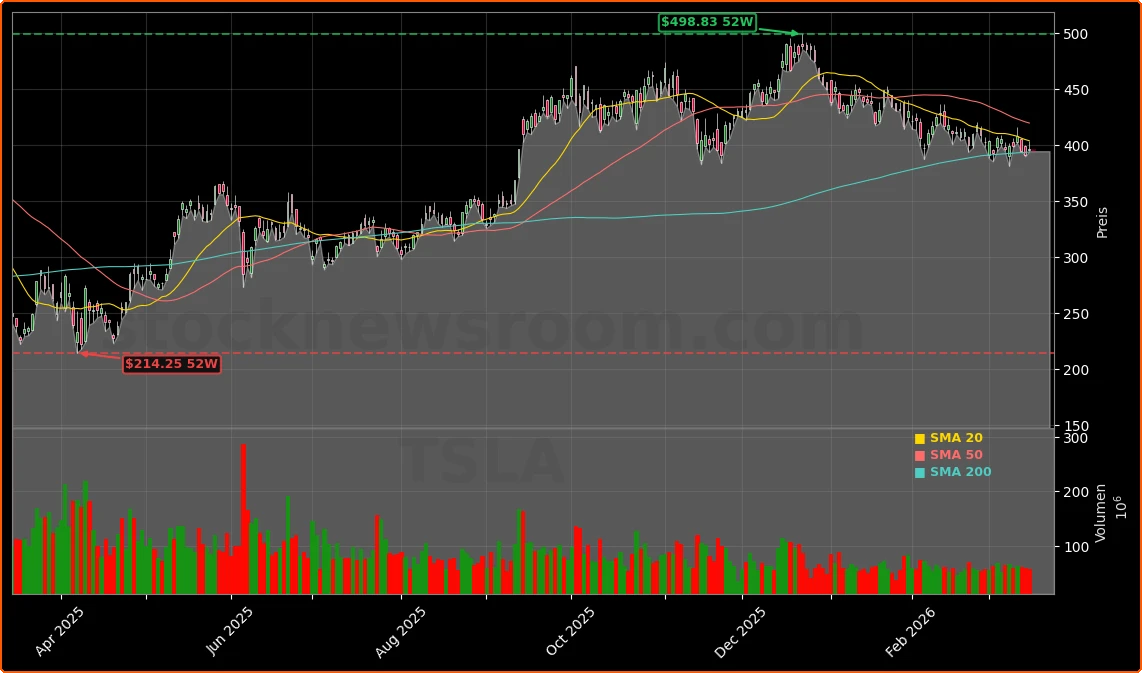
Yet Tesla still commands a market capitalization near $1.5 trillion and trades around 360 times earnings. That lofty multiple implicitly assumes that today’s cyclical car business will be overshadowed by new, higher‑margin segments built on software, autonomy and energy. Management is leaning into that narrative: capital expenditures are projected to exceed $20 billion in 2026, much of it earmarked for AI compute, robotaxi fleet build‑out and battery capacity for stationary storage rather than EVs.
For S&P 500 and NASDAQ investors, this means Tesla behaves less like a traditional automaker and more like a high‑beta AI and infrastructure play whose fortunes are tied to execution on its Tesla Robotaxi Strategy and energy ambitions.
What defines the Tesla Robotaxi Strategy?
The core of the Tesla Robotaxi Strategy is to pivot from one‑off vehicle sales to recurring revenue from autonomous mobility services. Tesla has already reached about 1.1 million active Full Self‑Driving (FSD) subscriptions, up roughly 38% year over year, building a base of software income that is less cyclical than car purchases. In Austin, the company has begun operating robotaxis without safety monitors, and internal preparations are reportedly underway to manufacture hundreds of steering‑wheel‑free Cybercabs per week.
If Tesla can deploy a large fleet of purpose‑built robotaxis, it could capture a slice of the global ride‑hailing and urban transport market, competing with players like Uber and Lyft but with vertically integrated hardware, software and batteries. The economic promise lies in high‑margin software and network fees layered on top of fully amortized vehicles. However, the strategy is capital‑intensive, regulation‑heavy and unproven at scale. Any delays in regulatory approval or safety setbacks could push out cash flows that investors are already pricing in, making Tesla’s stock highly sensitive to news on autonomous testing and policy changes.
Compared with other U.S. tech giants in the autonomy race, such as Alphabet’s Waymo, Tesla is betting on a vision‑only camera system trained by its vast real‑world driving data, rather than lidar‑heavy stacks. That gives the Tesla Robotaxi Strategy a distinct technical and financial profile — potentially cheaper at scale, but also more controversial on safety and redundancy.
How important is Tesla’s energy storage pivot?
Alongside autonomy, energy storage has become the second pillar of the broader Tesla Transformation zu Robotaxis und Energiespeicher. While automotive revenue fell in 2025, energy generation and storage revenue surged 27% year over year to nearly $12.8 billion, cushioning the top line and underscoring the potential of grid‑scale batteries.
Tesla is accelerating that push through a new $4.3 billion battery plant in Michigan with LG Energy. The facility, expected to reach 50 GWh of annual capacity, will produce lithium iron phosphate cells for Tesla’s Megapack 3 systems manufactured in Houston. These batteries are geared toward utilities and large commercial customers looking to stabilize grids and integrate renewables, a demand driver that is less tied to consumer confidence than EV purchases.
For U.S. investors, this energy arm offers a partial hedge against EV downturns and trade frictions, especially as China, a key EV market for Tesla, could adopt more aggressive retaliation in response to U.S. tech and trade restrictions. The more earnings shift toward long‑duration storage projects and infrastructure, the more Tesla starts to resemble a hybrid of a technology, industrial and clean‑energy utility stock within the NASDAQ and S&P 500.
What are Wall Street analysts saying?
Analyst views on Tesla remain polarized, reflecting the high stakes of the Tesla Robotaxi Strategy. Growth‑oriented firms such as Morgan Stanley have in the past highlighted Tesla’s potential as a leading AI and robotics platform, arguing that autonomy and energy could justify valuation multiples above traditional automakers if executed successfully. On the other hand, more conservative houses like Citigroup and RBC Capital Markets have emphasized the risks of paying premium prices for cash flows that heavily depend on unproven robotaxi economics and aggressive timelines for regulatory approval.
Tesla is no longer being valued primarily as a car company; the market is paying up for autonomy, robotics and energy storage that have yet to fully materialize.
— Fictional Wall Street portfolio strategist
Conclusion
Most models on Wall Street now treat automotive manufacturing as a mature or cyclical business and concentrate on scenario‑based valuations for autonomy and energy. That leaves room for violent repricing if FSD adoption slows, if robotaxi rollouts stumble, or if energy margins fall short of expectations due to competition from Chinese and Korean battery makers.
Further Reading
- Tesla leans on energy business as vehicle sales decline (The Motley Fool)
- Tesla and LG Energy to build $4.3 billion battery plant in Michigan (Bloomberg)
- U.S. EV sales slump as subsidies phase out (InsideEVs)
- Tesla Transformation zu Robotaxis und Energiespeicher bei Yahoo Finance (Yahoo Finance)