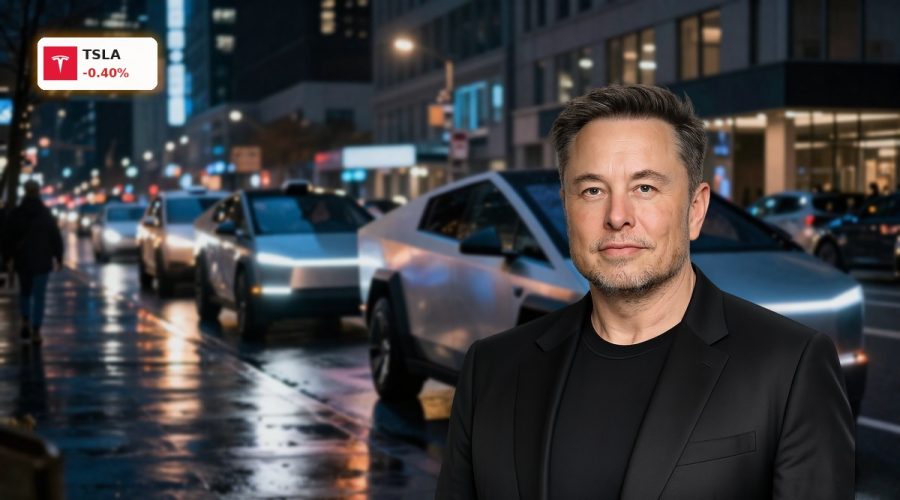
Can the bold Tesla Robotaxi vision really outweigh slumping EV demand, swelling inventories and mounting cash burn risks?

Is Tesla’s valuation now an AI wager?
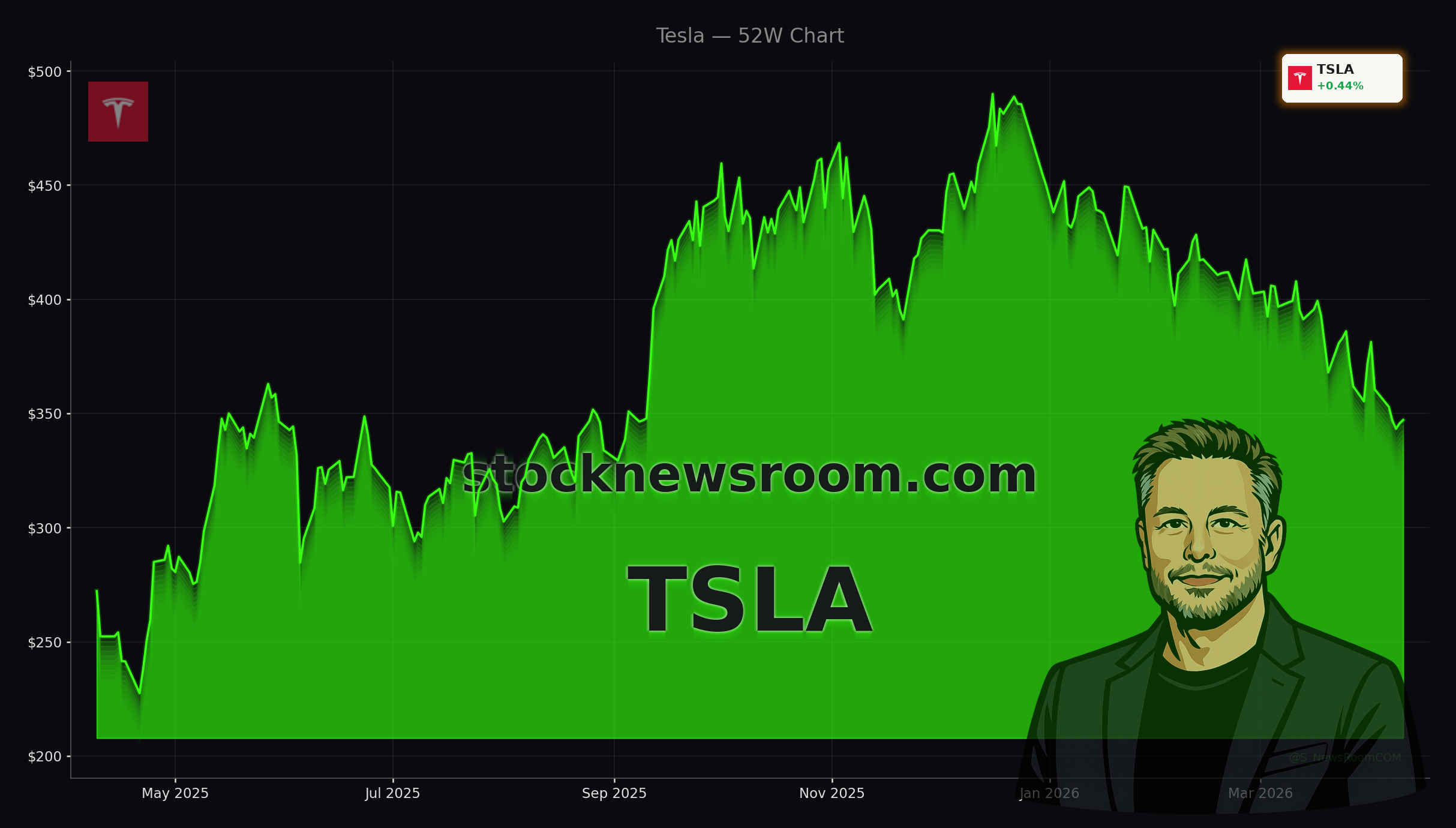
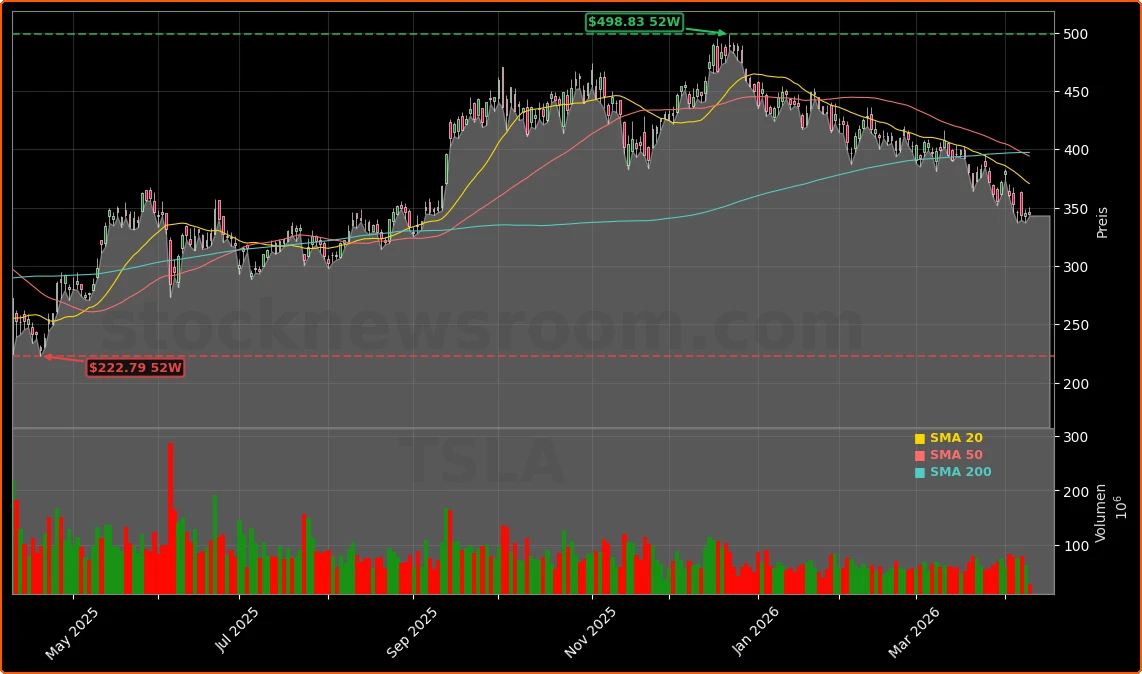
On Wall Street, Tesla is increasingly treated less like an automaker and more like an AI platform stock, trading at roughly 170–174 times forward earnings and over 13 times sales despite falling auto volumes. The share price has slid about 20%–25% year to date, extending an eight‑week losing streak and leaving it more than 30% below its December peak near $500, even as the Nasdaq Composite and peers like NVIDIA have rebounded. At $344.19, Tesla’s market cap still sits around $1.5 trillion, putting it firmly in the “Magnificent Seven” alongside Apple and other mega‑cap tech leaders, but with far more earnings uncertainty.
The latest pressure point was Q1 2026 deliveries: Tesla handed over about 358,000 vehicles, missing Wall Street’s roughly 370,000 consensus. That was only a 6% rebound from a weak Q1 2025, when deliveries had already dropped 13% year over year. Against a backdrop of fading US subsidies, tougher tariffs and growing competition from Chinese manufacturers, the core EV business no longer justifies the multiple on its own – which is why the Tesla Robotaxi vision has moved center stage.
How bad is the EV and inventory problem at Tesla?
The delivery shortfall matters less than the widening gap between production and sales. In Q1 2026, Tesla built more than 408,000 vehicles but delivered only 358,000, creating the largest stockpile of unsold cars in its history. That inventory build acts as a direct drag on free cash flow, tying up billions in working capital at the same time management is ramping capital spending. JPMorgan’s Ryan Brinkman, who rates the stock “Underweight” with a $145 price target, argues that this record overhang of unsold vehicles sharpens the downside risk if demand does not re‑accelerate.
Street estimates compiled by Visible Alpha point to negative free cash flow of over $6 billion in 2026 and more than $1.2 billion in 2027 as capex more than doubles from $8.5 billion last year to about $20 billion. A sizable share of that spend is earmarked for AI infrastructure, humanoid robots and the planned Terafab chip initiative, not for shoring up the existing Model 3 and Model Y franchise that still produces roughly 70% of Tesla’s profits. Bears argue that the company is “actively sacrificing its EV business in favor of a fully autonomous future,” leaving it exposed if that future arrives more slowly than investors expect.
Can the Tesla Robotaxi vision carry the stock?
The Tesla Robotaxi rollout is now the single biggest swing factor in the equity story. Pilot fleets are already operating in several US cities, including an AI‑trained service in Austin, Texas, and management has outlined ambitions to scale to dozens of metros over the next few years. For now, however, the technology remains controversial: independent reporting has suggested that a material portion of Tesla Robotaxi rides still rely on remote human operators behind the scenes, raising questions about how close the company really is to fully driverless service.
Investor Gary Black links part of Tesla’s eight‑week slide to growing skepticism about the robotaxi timeline and to what he sees as overly aggressive marketing of the company’s Full Self‑Driving software. Bulls, including ARK Invest’s Cathie Wood, continue to add to positions on the thesis that Tesla’s unmatched driving data and in‑house AI stack will allow it to dominate autonomous mobility and provide high‑margin software revenue. But with the stock already pricing in substantial robotaxi success, any regulatory setback, safety incident or slower‑than‑promised rollout could hit the multiple hard.
What about Terafab, humanoid robots and cheaper EVs?
Beyond Tesla Robotaxi, Elon Musk is pushing multiple high‑risk, high‑capex bets. The planned Terafab project aims to churn out a terawatt of computing power per year via custom chips for vehicles, Optimus humanoid robots and even space‑based data centers connected to Musk’s space ventures. That ambition comes after the controversial shutdown of the in‑house Dojo supercomputer effort and the loss of much of Tesla’s chip design team, increasing execution risk.
On the product side, Reuters has reported that Tesla is revisiting plans for a smaller, cheaper compact SUV – sometimes dubbed a “Model 2” or “Model Q” – targeting a sub‑$30,000 price point, with initial production in China and potential exports to Europe and North America. Analysts such as Deutsche Bank’s Edison Yu argue that a true low‑cost model could reignite volume growth and free cash flow, but others warn it could compress already pressured margins, especially if priced aggressively against Chinese rivals and legacy OEMs pivoting to hybrids.
At the same time, Musk continues to promote the Optimus humanoid robot program, with the latest prototype due this year. The long‑term idea is that fleets of Optimus units, powered by the same AI backbone as Tesla Robotaxi vehicles, could become a major revenue stream in manufacturing, logistics and services. For now, though, these remain largely pre‑revenue projects funded by a car business that is no longer growing at its former pace.
Are options and flows still supporting Tesla?
A less visible but important shift for Wall Street traders is the apparent breakdown of the options‑driven “gamma squeeze” dynamic that previously aided Tesla’s rallies. GLJ Research, one of the most bearish voices on the name, highlights that hyper‑active retail call buying in prior years forced dealers to hedge by purchasing shares, mechanically pushing the stock higher during bull runs. With call volumes now fading, that technical tailwind has weakened, exposing the shares more directly to fundamental news on deliveries, margins and the Tesla Robotaxi rollout.
GLJ’s Gordon Johnson maintains a “Sell” rating and a $25.28 price target – far below both the current price and the Street average near $400 – arguing that without options‑fuelled squeeze dynamics, Tesla’s valuation is likely to “re‑rate” closer to traditional auto and industrial peers. By contrast, more optimistic firms and high‑profile investors still frame the stock as a long‑duration AI asset, comparable in some respects to NVIDIA, and see any pullback of more than 30% from highs as a potential entry point ahead of the next leg of autonomous and robotics growth.
Related coverage
For a deeper dive into how a cheaper crossover fits into this bigger picture, see “Tesla Compact SUV Warning as Global EV Sales Slump”, which explores whether the planned compact SUV can realistically offset slowing EV demand while Tesla pursues its AI and robotaxi ambitions. The same analysis is also relevant for the broader sector in “Tesla Compact SUV Warning as Global EV Sales Slump”, highlighting how global EV softness and pricing pressure may challenge not just Tesla but the entire electric‑vehicle ecosystem.
In the end, the Tesla Robotaxi narrative sits at the crossroads of all these moving parts: slowing EV demand, record inventory, Terafab chip plans and humanoid robots. For US investors, the stock has effectively become a leveraged bet on Musk’s ability to turn AI and autonomy into cash flow before the balance sheet feels the strain. The next few quarters of delivery data, capex trends and real‑world Tesla Robotaxi performance will be critical in deciding whether today’s volatility is a buyable dip or the start of a longer re‑rating.