Can Tesla Terafab turn Musk’s chip shortage headache into a trillion‑dollar AI and robotics advantage for TSLA investors?

How big a swing is Tesla and SpaceX taking?
Elon Musk has confirmed that Tesla and SpaceX will co‑develop a massive chip campus in Austin, Texas, under the brand Tesla Terafab. The site is planned to host two full semiconductor fabrication lines: one focused on automotive and humanoid‑robot AI chips, and a second tuned for radiation‑hardened silicon powering AI satellites and orbital data centers. Musk has framed the move bluntly: either his companies build Terafab, or they won’t have enough chips to execute on full self‑driving (FSD), Optimus robots and space‑based AI infrastructure.
The scale is enormous. Musk has talked about an eventual annual output of roughly one terawatt of compute capacity from Tesla Terafab alone, which would rival or exceed current total U.S. AI compute. That would put Tesla in the same strategic conversation as hyperscale AI players like NVIDIA and major cloud providers, even though it is still classified as a consumer discretionary stock in the S&P 500 and trades on the NASDAQ.
For investors, this is not a marginal capacity add. Morgan Stanley analysts have described the concept of a Tesla‑led fab as a “Herculean task” that could cost well over $20 billion over multiple years, putting it in the same capex league as leading‑edge foundries from TSMC or Samsung. The question is whether the payoff in AI autonomy and robotics can outrun the balance sheet risk and execution complexity.
What does Tesla Terafab mean for AI, robots, and space?
Strategically, Tesla Terafab is designed to close three bottlenecks at once: automotive AI chips for FSD, compute brains for Tesla’s Optimus humanoid robots, and hardened processors for AI satellites that SpaceX plans to deploy at scale. Musk has repeatedly argued that Optimus could become Tesla’s most valuable product ever, with bulls modeling millions of units and tens of billions of dollars in annual profit if humanoid robots reach mass adoption in factories and logistics.
Current estimates from Cantor Fitzgerald’s Andres Sheppard put the humanoid robotics market at roughly $15.3 billion by 2030, with a near‑40% compound annual growth rate. Tesla’s supporters argue that if the company can sell even one million robots at attractive margins, robot profits could eclipse earnings from the mature EV business. Critics such as Ross Gerber counter that the motor‑control, dexterity and safety problems for Optimus are still years away from being solved, and that chip shortages and regulatory pushback could delay commercialization well into the next decade.
On the space side, SpaceX is preparing for a public listing and pitching itself as a leader in space‑based AI. Custom chips out of Tesla Terafab for satellites and orbital data centers are central to that story. Musk has also floated a more speculative vision: using this compute and launch capability to lay the industrial groundwork on the moon and ultimately build what he calls a “galactic civilization.” That kind of framing excites growth‑oriented investors but deepens concerns among value managers that TSLA’s valuation rests on very long‑dated, unproven cash flows.
How does this reshape Tesla’s stock narrative?
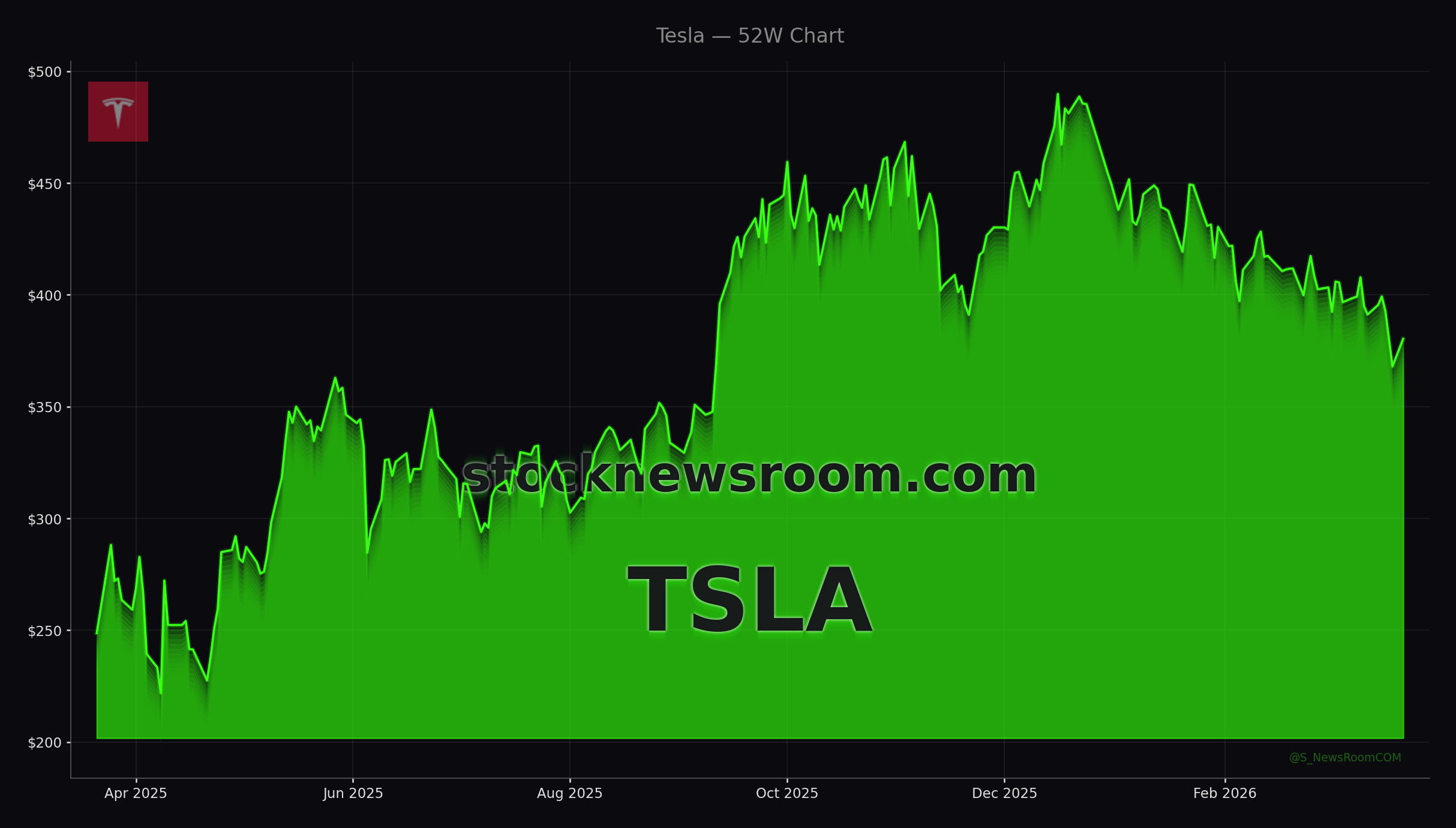
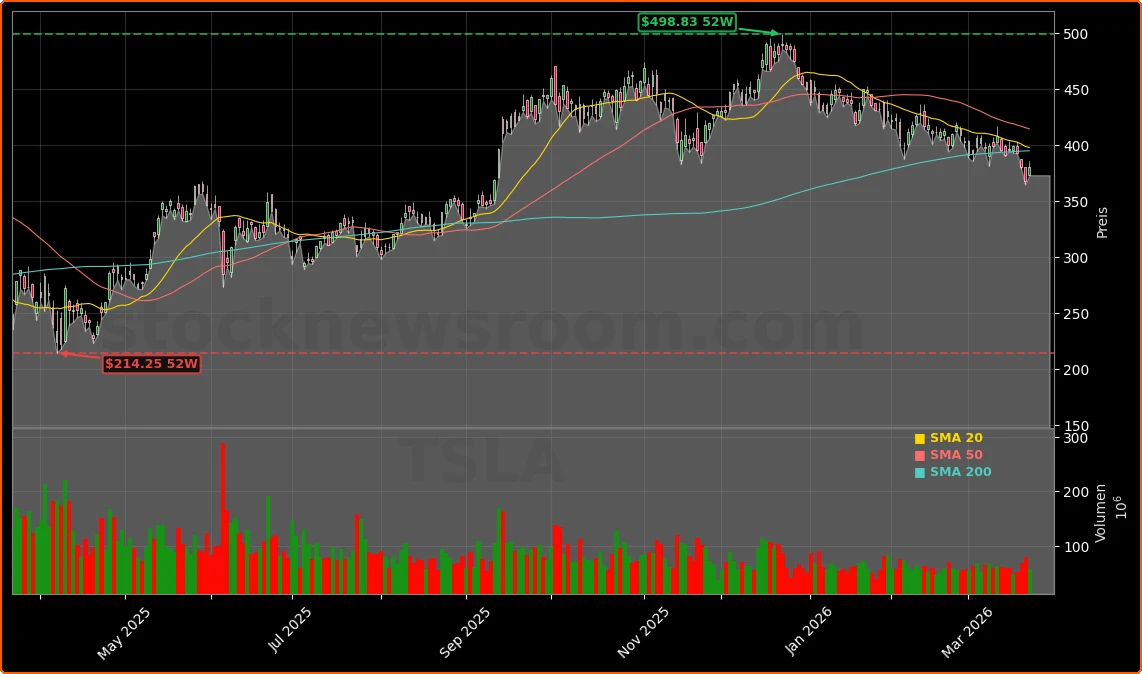
At around $380 per share and a market cap near $1.4 trillion, Tesla still trades at a premium multiple heavily anchored in expectations for autonomy, robots, and AI‑as‑a‑service. Invezz notes that recent strength in TSLA has been driven more by enthusiasm around those future technologies than by the core EV business, where global demand has softened and competitors from Ford to XPeng are stepping up with lower‑cost models and emerging robotaxi plans.
Future Fund’s Gary Black has publicly warned that a full Tesla‑SpaceX merger, layered on top of the Tesla Terafab capex, could actually destroy shareholder value. Using an enterprise‑value‑to‑EBITDA framework, Black argues that if Tesla were to issue $1.5 trillion of new equity to buy SpaceX at a richer multiple, the combined entity could trade at a lower blended valuation and leave TSLA holders effectively 20–25% poorer due to a classic conglomerate discount. His base case remains that the companies will collaborate deeply on projects like Terafab and space‑based AI, but stop short of a formal merger.
At the same time, bullish analysts highlighted by Investopedia see the Tesla Terafab plan as a concrete step toward the company’s long‑promised transformation into an AI powerhouse. For them, building proprietary silicon and controlling the full stack from data generation (cars, robots, satellites) to compute (Terafab) to applications (FSD, Optimus, robotaxis, space AI) justifies keeping Tesla in the “Magnificent Seven” cohort alongside Apple and other mega‑caps that dominate the S&P 500.
How does Tesla stack up against rivals like Rivian and Ford?
While Tesla Terafab is a moonshot, the competitive backdrop in EVs and autonomy remains intense. Ford is investing heavily in low‑cost EVs and lithium‑iron‑phosphate (LFP) batteries and aims to offer vehicles whose five‑year cost of ownership undercuts a three‑year‑old used Tesla Model Y. Yet Ford doesn’t expect its EV segment to reach profitability until 2029, underscoring how hard it is to compete on both price and margin at the same time.
Rivian, meanwhile, is leaning into a different strategy, partnering with Uber on a large robotaxi and ride‑hailing bet and deepening a software tie‑up with Volkswagen. A detailed comparison from 24/7 Wall Street highlights that Rivian remains a pre‑scale manufacturer with negative free cash flow, while Tesla ended 2025 with roughly $44 billion in cash, 20% gross margins, and over a million FSD subscriptions. That financial cushion is one reason Tesla can contemplate a capex‑heavy project like Tesla Terafab while rivals are still fighting to reach steady profitability.
On the autonomy front, Gene Munster expects self‑driving vehicles from Tesla and Waymo to drive the first major wave of “physical AI” adoption in the real world. Yet regulators are not standing aside: the NHTSA has escalated its probe into Tesla’s FSD system, and any adverse findings could slow robotaxi deployment or force costly software and hardware changes—risks that make the control offered by an in‑house fab more attractive, but also raise the stakes if execution slips.
Related Coverage
For a deeper look at the regulatory headwinds around autonomy that could intersect with Tesla Terafab’s self‑driving ambitions, see “Tesla FSD Probe -3.2% Warning as Regulators Turn Up Heat”, which examines how the latest NHTSA investigation might affect Musk’s full robotaxi vision. Investors interested in how rival EV players are taking their own high‑risk bets on autonomy and AI should read “Rivian Robotaxi Deal: -5.4% Plunge After $1.25B Uber Bet”, which dissects whether Rivian’s Uber‑backed robotaxi partnership is a growth catalyst or a balance‑sheet burden.
In the end, the Tesla Terafab initiative crystallizes what TSLA has become: not just an automaker, but a high‑beta AI infrastructure story tied to autonomy, humanoid robots, and space‑based compute. For investors, the project raises both the upside ceiling and the execution risk, making upcoming disclosures on capex, timelines and chip performance critical catalysts for the stock. If Musk delivers on even part of the Tesla Terafab vision, Wall Street may have to finish re‑rating Tesla from car company to vertically integrated AI platform.