
Is The Trade Desk controversy a temporary trust shock or the start of a deeper reset in digital ad buying power dynamics?

How much damage can The Trade Desk controversy do?
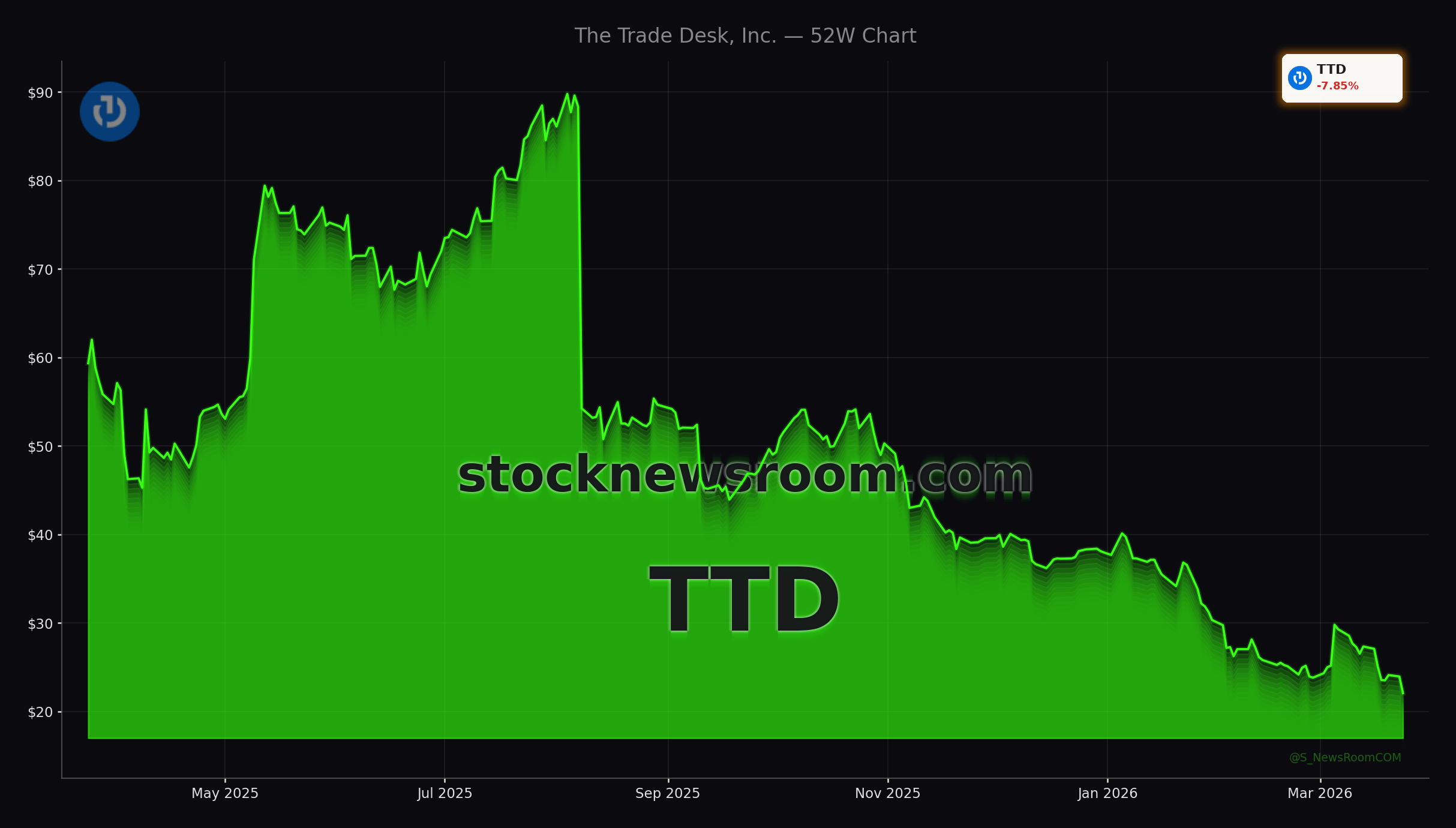
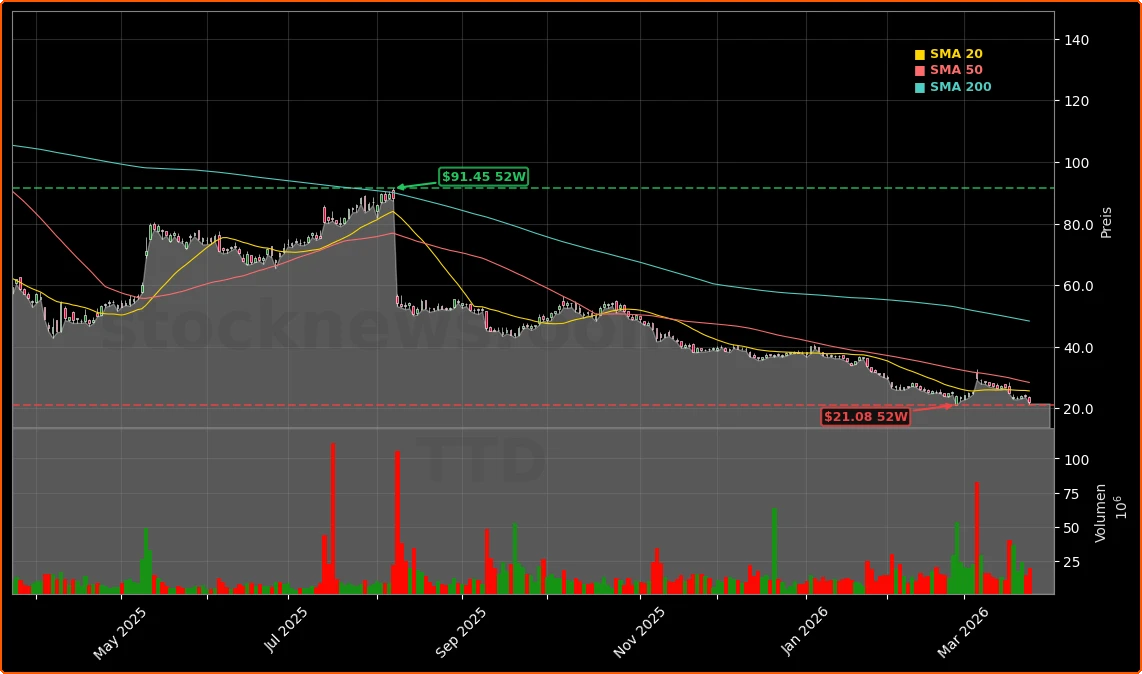
The Trade Desk controversy erupted again this week as Publicis Groupe escalated accusations that the demand-side platform has been charging hidden fees, a claim that helped drive the stock down another roughly 7% to $22.14, versus a prior close of $23.95. That adds to a brutal drawdown: TTD is down about 37% year to date after crashing roughly 68% in 2025, leaving the once high-multiple growth star trading more like a distressed asset than a Nasdaq leader.
For U.S. investors, the key question is whether this is a temporary trust shock or the start of a structural reset in how big agencies work with independent ad-tech platforms. Digital ad budgets are still shifting toward connected TV (CTV), retail media and data-driven buying, areas where The Trade Desk has historically taken share from walled gardens like Apple and from closed ecosystems at Meta Platforms and Alphabet. If large holding companies permanently curtail spend through TTD’s platform, that growth narrative could be at risk.
Complicating matters, The Trade Desk has built its brand on transparency versus legacy agency markups. That makes allegations of opaque pricing especially sensitive for a company that sells itself as a clean alternative to black-box programmatic buying.
Why are Omnicom and Publicis turning up the heat?
The immediate trigger for the latest leg down was Omnicom’s decision to launch a third-party audit of The Trade Desk’s pricing terms, using a Big Four accounting firm after its own contract review reportedly found no issues. That move followed Publicis’ highly public split from The Trade Desk last week, framed around alleged undisclosed fees and overcharging on campaigns.
Management’s tone has been notably different toward the two agencies. While the Publicis breakup turned into a public spat, The Trade Desk described its relationship with Omnicom as going “from strength to strength” even as the audit proceeds. Industry observers note that CEO Jeff Green has long challenged the traditional agency model, pushing to work more directly with brands and calling out agencies for their own lack of transparency. That power struggle may be at the heart of The Trade Desk controversy, as incumbents resist losing control over data and margins.
Publishers and ad-space sellers have taken a different stance. Executives at firms such as Playwire recently praised The Trade Desk for raising quality standards and cleaning up parts of the open internet ad market, describing its influence as a “rising tide lifts all ships” effect for supply-side partners. That split view between agencies and publishers underscores how political the current battle has become.
Can OpenAI turn into a lifeline for The Trade Desk?
Amid the noise, investors are clinging to a potential positive: talks between The Trade Desk and OpenAI about powering ad sales on ChatGPT and other AI-driven surfaces. OpenAI, which is preparing for a possible IPO and faces mounting pressure to show a path to profitability, may increasingly rely on advertising to monetize its massive user base. A partnership could give The Trade Desk early access to high-intent, conversational ad inventory in a channel that competitors like NVIDIA-powered AI stacks are also eyeing.
For The Trade Desk, that could provide exactly the growth catalyst it needs as recent quarters have shown a decelerating top line and rising competitive pressure from Alphabet, Amazon and other large platforms. Analysts at Zacks recently compared TTD to Alphabet’s ad business, arguing that while The Trade Desk offers stronger exposure to open-internet CTV and independent measurement, Google’s scale and balance sheet may make it the safer bet in the near term. The prospect of an OpenAI relationship could narrow that perceived gap if it leads to similar deals with other AI-first platforms.
There are clear risks, however. OpenAI is also developing its own ad-tech capabilities, and any agreement could prove short-lived if the AI pioneer decides to internalize the stack. In a worst-case scenario, today’s prospective partner might become tomorrow’s direct competitor in the same way that Amazon moved from being a key client for logistics groups to an in-house rival.
How is Wall Street valuing The Trade Desk now?
Despite the steep sell-off, the market is treating TTD less like a high-growth software name and more like a challenged cyclical. Bears highlight slowing revenue growth, rising scrutiny of pricing, and the risk that agencies use The Trade Desk controversy as leverage to negotiate lower fees or shift budgets elsewhere. Several recent pieces on Wall Street have questioned whether TTD still deserves a premium multiple before the Omnicom and Publicis audits are resolved.
Bulls counter that the stock is being priced “like a dying business” even though customer retention and long-term secular drivers remain intact. They also point to insider confidence: CEO Jeff Green recently purchased millions of shares on the open market, deploying well over $100 million of his own capital, a move usually interpreted as a strong vote of confidence. While major banks such as Goldman Sachs, Morgan Stanley, Citigroup and RBC Capital have not yet published fresh rating changes in direct response to this week’s news, institutional investors are clearly recalibrating position sizes as volatility spikes.
Against this backdrop, technology peers from Tesla to Apple have reminded investors how quickly sentiment can swing once trust is rebuilt. Whether The Trade Desk follows a similar path will depend on the outcome of the Omnicom process and any concrete announcement with OpenAI.
The Trade Desk controversy: what should investors watch next?
The Trade Desk controversy now spans three fronts: trust with agencies, the health of its growth engine and the credibility of a potential AI partnership. Over the next few months, the most critical data points will be the findings of Omnicom’s independent audit, any settlement or further escalation with Publicis, and formal confirmation of whether OpenAI chooses The Trade Desk as its primary ad-tech partner.
Related Coverage: For a deeper dive into how the Publicis dispute first rocked the stock, readers can review The Trade Desk Publicis audit -6.2% crash shocks investors, which analyzes whether that initial breakdown marked a short-term sentiment hit or the start of a longer reset in agency relationships. For broader context on how AI-driven names are trading after big headlines, the article Palantir Earnings: -4.0% Plunge After Record-Breaking Q4 shows how even strong operational results can be overshadowed by valuation worries in the current market.
In the end, The Trade Desk controversy underlines how fragile trust is in the ad-tech ecosystem and how quickly sentiment can swing when transparency is questioned. For U.S. investors, the stock has shifted from a straightforward growth story to a high-risk, high-volatility turnaround bet that hinges on audits clearing the air and AI deals materializing. The next catalysts — Omnicom’s audit outcome and any official OpenAI announcement — will determine whether today’s turbulence becomes a long-term buying opportunity or a warning sign to stay on the sidelines.