Is the United Airlines Oil Shock just a temporary fuel spike or the start of a deeper squeeze on airline profits?
How hard is United Airlines hit by the oil spike?
United Airlines Holdings, Inc. is trading sharply lower as the United Airlines Oil Shock ripples through the travel sector. Premarket moves on Monday showed the stock down around 3% after suffering double‑digit percentage losses over the past week, mirroring a broader selloff that has dragged the S&P airline index into bear‑market territory. Intraday moves saw declines of 2.2% to more than 6% at times, underscoring how quickly sentiment has flipped.
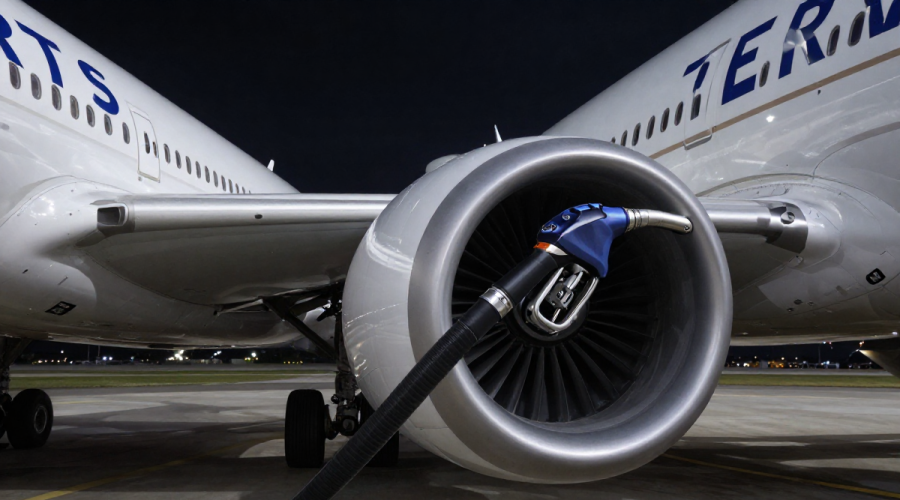
Airlines no longer hedge fuel in a meaningful way, leaving United Airlines fully exposed to the roughly 60% jump in West Texas Intermediate crude into the $100‑per‑barrel range. Jet fuel typically represents 20% to 25% of an airline’s cost base, so the United Airlines Oil Shock is a direct hit to margins. Chief executive Scott Kirby has already warned that higher fuel prices will have a “meaningful” impact on first‑quarter results and that the effect on airfares will “probably start quick” as carriers try to pass on costs to travelers.
The selloff is not isolated to United Airlines. Peers such as Delta Air Lines, American Airlines and Southwest Airlines are also down between 3% and nearly 7%, as investors price in both higher operating costs and the risk that customers balk at rising ticket prices.
What are analysts like TD Cowen signaling?
The United Airlines Oil Shock is forcing Wall Street analysts to recalibrate expectations. TD Cowen has lowered its price targets across six major U.S. carriers and Air Canada, explicitly highlighting the challenge of expanding margins in 2026 without a rapid pullback in energy prices. For United Airlines, TD Cowen maintains a bullish stance but acknowledges that the path to earnings growth has narrowed as fuel costs spike.
Across the Street, the tone remains cautiously optimistic but clearly more selective. Consensus data show United Airlines still rated a “Moderate Buy” to “Overweight” by many brokers, with roughly two dozen buy ratings and only a handful of holds, and no outright sell recommendations. The average price target sits in the mid‑$130s, implying substantial upside from current levels if management can navigate the United Airlines Oil Shock without a lasting hit to demand. Analysts at institutions such as Citigroup, Morgan Stanley and Goldman Sachs have focused their recent commentary on United’s strong international network, premium‑cabin strategy and capacity discipline as offsets to near‑term fuel headwinds.
At the same time, institutional investors are adjusting positions. Victory Capital Management and Grantham Mayo Van Otterloo have both trimmed stakes in United Airlines, locking in prior gains and reducing exposure to geopolitical and commodity‑price risk. That repositioning helps explain the elevated trading volumes and heightened volatility in the name.
How resilient is the United Airlines business model?
Fundamentally, United Airlines enters this shock from a position of relative strength. Before the current crisis, the carrier had transformed itself into a premium‑oriented international operator under its “United Next” strategy, delivering record 2025 revenue of about $59 billion and net income north of $3.4 billion. In an earlier pre‑pandemic benchmark year, 2019, the company earned $3 billion in net income, or $11.58 in diluted EPS, while serving more than 162 million customers on 1.7 million flights and generating 3.5% growth in available seat miles.
Operationally, United Airlines has improved punctuality, maintained a young and efficient mainline fleet of nearly 800 aircraft, and invested heavily in product upgrades such as high‑speed Wi‑Fi and cabin refreshes. The company is also close to a revised tentative contract deal with its flight attendants, which, if finalized, would remove a key labor overhang at a time when management needs flexibility to adjust schedules and pricing quickly.
However, the United Airlines Oil Shock complicates execution. Higher fuel costs collide with other structural challenges, including Boeing delivery delays that constrain capacity growth and labor inflation that keeps non‑fuel unit costs elevated. While United can trim capacity, optimize routes and push fares higher, there is a fine line between protecting margins and triggering “demand destruction” as leisure and corporate travelers reassess budgets.
What are traders and long‑term investors watching next?
Options markets reflect the heightened uncertainty around United Airlines. Implied volatility has risen to well above normal levels, creating opportunities for sophisticated traders to collect rich premiums by selling out‑of‑the‑money puts. One commonly discussed strategy involves selling an April $75 put for roughly $3.55 in premium, a trade profile that is neutral to moderately bullish and designed to benefit if the stock stabilizes or rebounds despite near‑term turbulence.
For long‑term, fundamentals‑focused investors, the key questions are how long elevated oil prices persist and whether the Iran conflict escalates further, potentially disrupting additional routes or suppressing global travel demand. Scenario analysis from several research houses suggests that if crude holds near or above $100 for an extended period, United Airlines’ 2026 earnings guidance could come under significant pressure and the stock might have another 20% downside from already depressed levels.
The spike in oil is a body blow for airlines, but United still has the network strength and demand backdrop to recover if energy markets calm down.
— David Nelson, equity strategist
Conclusion
On the other hand, if energy markets normalize over the next few quarters and the global economy avoids recession, United Airlines could resume its trajectory of EPS growth driven by international expansion, premium cabin mix and continued post‑pandemic travel normalization. Upcoming quarterly results and forward guidance will therefore be critical checkpoints for assessing how deeply the United Airlines Oil Shock has cut into the investment case.
Further Reading
- United Airlines Holdings, Inc. (UAL) Stock Price & News (Yahoo Finance)
- Airline Stocks Headed For A ‘World Of Hurt’ On Oil Spike (Benzinga)
- Airline stocks dive as oil-price spike could trigger a tipping point for travelers (MarketWatch)
- If Oil Hits $100, Delta and United Are in Trouble (24/7 Wall Street)