Can the intensified Volkswagen cost-cutting program stop the profit decline – or does the austerity drive ultimately threaten the brand and locations?
Volkswagen AG: How severely will the cost-cutting program impact?
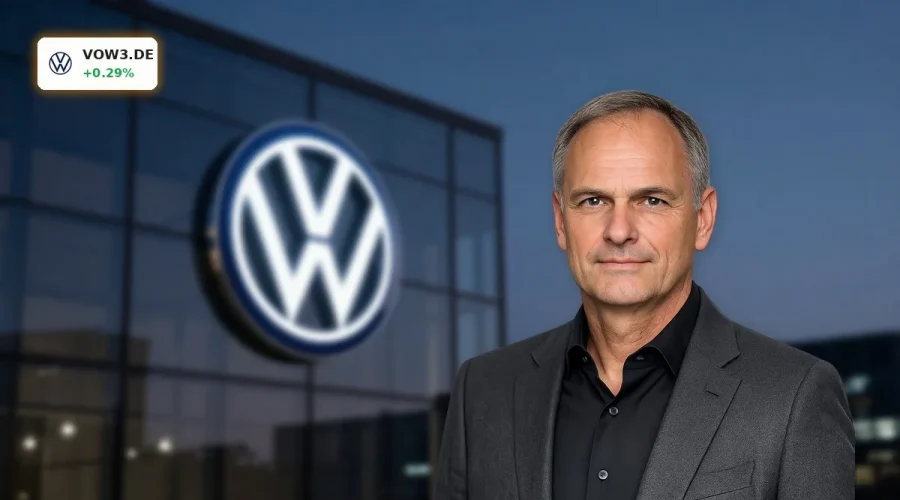
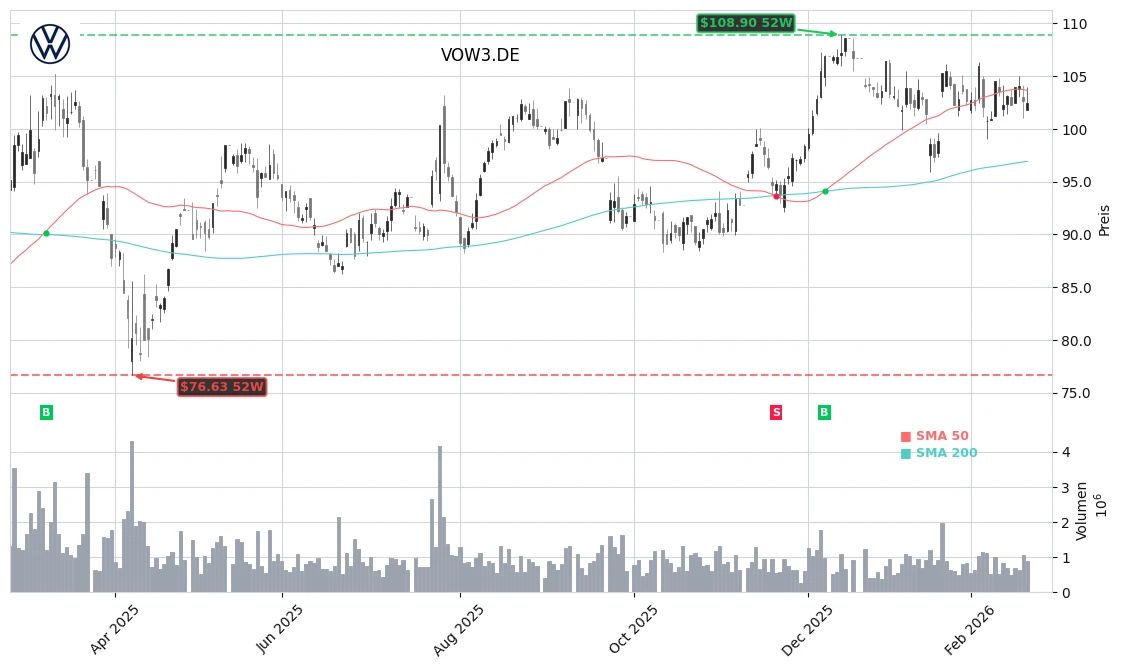
At the center of the intensified Volkswagen cost-cutting program is a global austerity drive aimed at reducing the company’s total costs by one-fifth by the end of 2028. Internally, a volume of around €60 billion is being discussed, which is to be achieved through efficiency improvements, streamlining of structures, and tighter central control. CEO Oliver Blume and CFO Arno Antlitz confronted the top management with the new guidelines in mid-January – apparently much stricter than previously expected. The current price increase of 0.29% to $102.90 does not yet reflect euphoria, but it shows that the market initially supports the management’s direction.
The trigger for the tightening is weak profitability and a massive drop in operating results. After nine months, EBIT is estimated to have fallen by around 48% to approximately €9.9 billion, with the margin dropping from 5.87% to just 3.05%. Free cash flow plummeted by about 90% to around €514 million, severely limiting the investment capacity in research, software, and plant modernization. Against this backdrop, a consistent Volkswagen cost-cutting program appears to management as the only remaining lever to regain financial flexibility.
Volkswagen AG: Power returning to Wolfsburg?
Alongside cost reductions, the question of control is coming to the forefront. Volkswagen AG is to position itself more as an operational holding company, with greater decision-making power in Wolfsburg and fewer decentralized parallel structures. The new control model of the brand group “Core” – including VW, Škoda, and Seat/Cupra – serves as a blueprint: technology, purchasing, and production are already being significantly consolidated there. The goal is to accelerate development, leverage synergies, and avoid duplicate work between brands.
The new direction is particularly visible in technology. In the future, Volkswagen plans to pursue only two central software operating systems: one for China, including export markets, and a second for the rest of the world, which is being developed in a joint venture with US electric vehicle manufacturer Rivian. The previous systems of the software subsidiary Cariad are considered outdated. Additionally, in the future, Wolfsburg will set the guidelines for driver assistance systems and vehicle platforms, while the brands will focus more on design and customer experience. In China, the company is already centrally relying on the solution from Horizon Robotics, while in Europe, an independent solution is being considered, where suppliers like Bosch could play a larger role.
Volkswagen Cost-Cutting Program: What does it mean for jobs and locations?
The intensified Volkswagen cost-cutting program has profound consequences for employees and locations. By 2030, around 35,000 positions are to be cut in Germany, primarily through early retirement models and severance packages. This particularly affects the core brand, which currently employs about 130,000 people. The so-called “Christmas compromise” between management and the works council had already set the framework for this job reduction, even though operational layoffs are to be avoided.
At the same time, the plants in Wolfsburg and Zwickau are under high efficiency pressure. Production relocations to lower-cost countries like Hungary, as well as further expansion of activities in China, Mexico, Brazil, and the USA, are being discussed. In Chattanooga, Volkswagen is already producing SUVs and the electric ID.4, while larger capacity expansions in Germany currently play a minor role. This increases the pressure on German locations and the medium-sized supplier sector, which is facing additional price concessions.
Volkswagen AG: How are investors and analysts reacting?
The capital market is closely monitoring the Volkswagen cost-cutting program. The stock (VOW3.DE) is currently trading at $102.90, only slightly above the previous day’s level; however, some firms see opportunities. Citigroup currently recommends buying Volkswagen stock, betting that the intensified savings will stabilize the weakened margin in the medium term. Other analyst firms, including major European investment banks, point to the structural challenges posed by strong competition from China and the high dependence on the global economy.
Excitement is building for the annual press conference on March 10, where management intends to explain in more detail how the Volkswagen cost-cutting program will be implemented and what one-time effects are expected in the short term on results and cash flow. Crucial for the stock market will be whether Blume can convincingly demonstrate that the combination of cost reduction, technological realignment, and stronger central control will sustainably trim the company for profitability.
The new Volkswagen cost-cutting program is more than a classic efficiency package – it is a profound restructuring of structure, technology, and power balance within the company.
— Oliver Blume (implicitly attributed, paraphrased)
Bottom Line
For investors, Volkswagen remains a stock in transition: those who believe in the successful implementation of the program and a stabilization of global automotive demand may see pullbacks as buying opportunities, but must contend with high volatility and political-regulatory risks.
Related Sources
- Volkswagen intensifies cost-cutting program by 2028 (manager magazin)
- Volkswagen Earnings and Cost-Cutting Challenges (Bloomberg)
- Citigroup Equity Research on Volkswagen (Citigroup)
- Volkswagen AG on Yahoo Finance (Yahoo Finance)