
Is the bullish Walmart Forecast justified by e-commerce and AI momentum, or is the stock’s rich valuation setting up a reversal?

How does Walmart stack up in 2026?
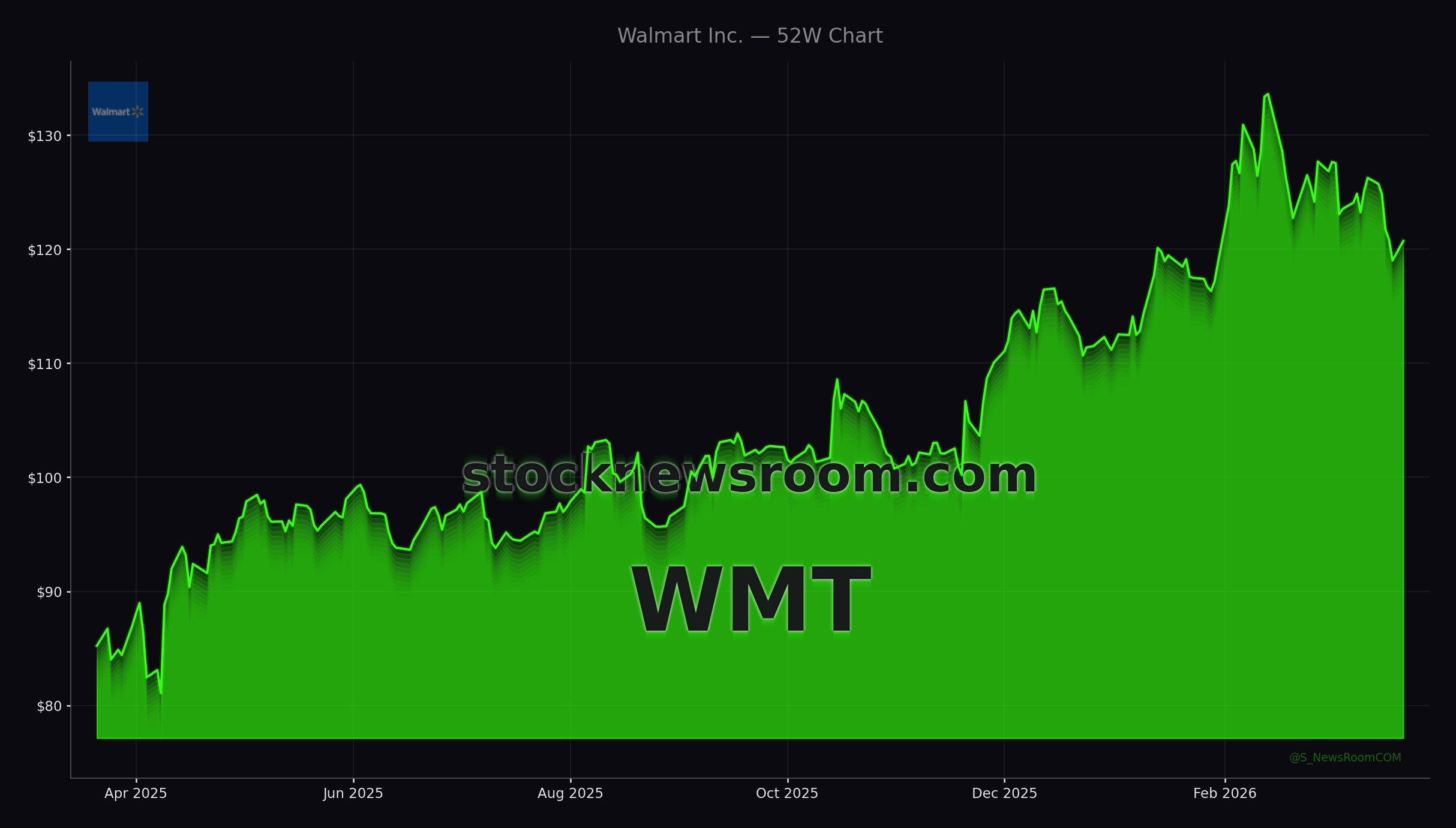
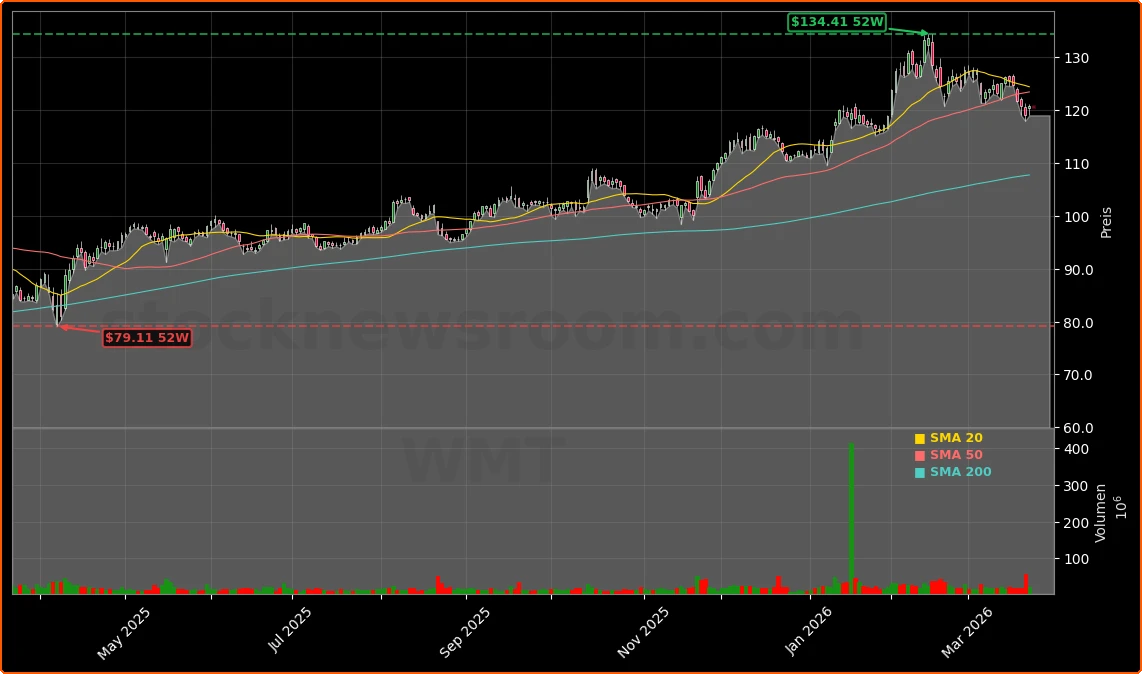
Walmart currently trades around $121, only modestly below its all‑time high from earlier in 2026 and far above last year’s low near $72. The stock is up roughly 38% over the past 12 months and about 7% year to date, handily beating the S&P 500 and many consumer staples peers. Over the last 15 years, a $100 investment in Walmart shares would have grown to nearly $694, implying an annualized return of about 13.8% and modest outperformance versus the broader market. That long track record of compounding is a critical anchor for any medium‑term Walmart Forecast.
On valuation, investors are paying up for that resilience. Walmart’s trailing P/E ratio of roughly 44 and forward P/E above 40 sit well above historical retailer norms and above many large‑cap staples. The market is effectively pricing Walmart closer to a high‑quality, steady‑growth platform company like Apple than to a traditional discount chain, reflecting confidence in its omnichannel and technology strategies.
What drives the Walmart Forecast on growth?
Near‑term, management and Wall Street are looking for revenue growth in the high single digits, roughly 7%–9% over the next year, while earnings per share are expected to grow around 12.5%. That spread indicates margin expansion as the company leans on e‑commerce, advertising and automation to boost profitability. Walmart’s e‑commerce operations are a standout, with online sales reportedly growing about 27% year over year, supported by grocery pickup, delivery, and marketplace offerings that increasingly compete with Amazon.
Another key pillar in the Walmart Forecast is the high‑margin advertising and membership ecosystem. Recent quarterly results showed Walmart’s ad business jumping about 37%, a pace that significantly outstrips overall sales growth. As ads and subscription programs like Walmart+ improve the economics of digital orders, they help offset the heavy logistics and fulfillment costs that come with rapid online expansion. Several analysts, including teams at Tigress Financial, Evercore ISI and TD Cowen, point to these businesses as important levers for long‑term margin upside, even as they warn that current valuation leaves less room for error.
Is Walmart’s AI and automation bet paying off?
Beyond pure e‑commerce, the company is rapidly integrating artificial intelligence and automation across its operations. Every 90 days Walmart is generating roughly $180 billion in revenue, giving it enormous data scale to optimize inventory, personalize promotions and fine‑tune supply chains with AI tools. Management’s push into AI‑driven inventory management, automated distribution centers and smarter pricing engines is aimed at structurally lowering operating costs while keeping shelves stocked and prices low.
Digital shelf labels, which Walmart plans to roll out across all U.S. stores by the end of 2026, are a visible piece of that strategy. These electronic price tags can enable real‑time price changes, labor savings and dynamic promotions. However, the initiative is not without controversy, facing pushback from lawmakers who worry about transparency and consumer impact. How the company manages this political and regulatory scrutiny will be another factor watched within any multi‑year Walmart Forecast.
How does Walmart compare to other blue chips?
For income‑focused investors, Walmart also sits comfortably in the Dividend King camp, alongside stalwarts like Coca‑Cola. It has raised its dividend for more than 50 consecutive years, including about 30% dividend growth in the last five years alone. In 2026, several dividend‑oriented commentators highlight Walmart as one of a small group of stocks that have managed to rally even as parts of the market struggle, reinforcing its role as a core defensive holding.
Unlike high‑beta tech leaders such as NVIDIA and growth stories like Tesla, Walmart offers lower volatility, steady cash flows and a more modest—but highly dependable—total‑return profile. For diversified U.S. portfolios, that means Walmart can function as a stabilizer: a retailer with tech‑enabled upside and lower risk of deep drawdowns. At the same time, investors must balance that stability against the elevated P/E multiple and the possibility of a valuation reset if growth or margins disappoint.
What are analysts signaling in their Walmart Forecast?
Sell‑side sentiment is broadly constructive. Most covering research desks rate the stock Buy or Outperform, emphasizing digital momentum, disciplined execution and the defensive appeal of everyday‑low‑price retailing during uncertain economic periods. Tigress Financial recently set a bullish price target of $150, while Raymond James sits lower at $105, illustrating the spread between optimistic and more cautious outlooks. The average of major targets from firms such as Tigress, Evercore ISI and TD Cowen clusters in the mid‑$140s, implying meaningful upside from current levels but also reflecting faith that Walmart will keep expanding margins.
More technical and quantitative services, however, highlight short‑term risks. Recent trading has produced only about 59% green days over a 30‑day window, with volatility near 2.4% and sentiment gauges sitting in “fear” territory. Combined with a rich valuation and ongoing macro headwinds—ranging from tariff uncertainty to persistent inflation and competition from Amazon and discount peers—this suggests the path higher may not be linear, even if the long‑term Walmart Forecast remains positive.
Related Coverage
Investors looking for a deeper dive into strategy can read “Walmart Strategy Warning: AI, E‑Commerce and Dividend Push”, which examines whether the company’s technology investments and dividend policy are enough to justify today’s premium multiple. For a broader retail and governance angle, “Lululemon Governance Warning After Q4 Growth Slowdown” explores how another consumer brand is managing slowing growth and boardroom tensions—useful context when comparing blue‑chip retailers in a late‑cycle environment.
Overall, the Walmart Forecast through 2030 hinges on the company sustaining high‑single‑digit sales growth and double‑digit EPS gains while proving that e‑commerce, advertising and AI can structurally lift margins. For U.S. investors, the stock remains a core defensive holding, but one that now carries expectations closer to a tech‑enabled platform than a plain‑vanilla retailer. The next few earnings cycles and progress on automation and digital initiatives will show whether Walmart can grow into its valuation and keep rewarding long‑term shareholders.