Are Xiaomi Earnings signaling the end of an easy profit boom or just a pause before EV and AI growth kicks in?

How weak are Xiaomi Earnings versus growth?
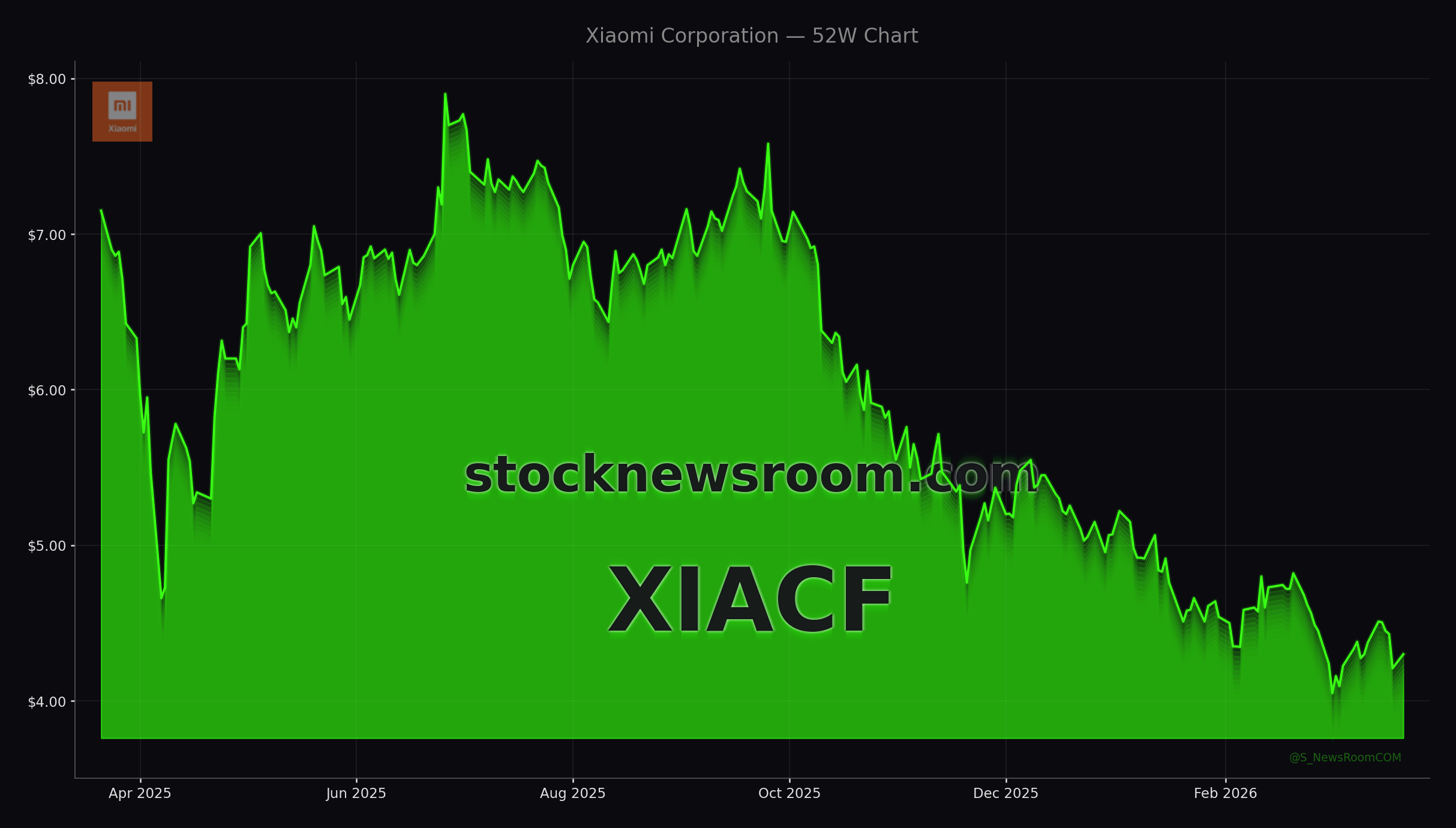
Xiaomi Corporation closed at $4.30 on the OTC market on Monday, up about 2.1% from the prior $4.20 close, even as the latest Xiaomi Earnings showed the first year‑over‑year quarterly profit decline since late 2022. For Q4 2025, adjusted net income came in at roughly 6.3 billion yuan (about $914 million), down from the prior‑year quarter but ahead of consensus estimates near 5.7 billion yuan. Revenue grew 7.3% year over year to 116.9 billion yuan, also slightly above expectations but marking the slowest quarterly growth pace since 2023.
On a full‑year basis, however, the Xiaomi Earnings picture remains much more robust. Net income for 2025 climbed about 43.8% to 39.2 billion yuan, supported by a 25% increase in annual revenue. Profitability improved across several business lines, with analysts highlighting particularly strong margin expansion in higher‑value software and internet services, where operating margins reached levels above 70%. That divergence – slowing quarterly momentum but strong annual gains – is exactly what has polarized Wall Street views on the stock.
For American portfolios, XIACF sits in a niche between U.S. mega‑cap tech and pure‑play EV names. It offers exposure to China’s consumer tech cycle, the global EV transition, and AI infrastructure, but carries higher regulatory, macro, and competitive risk than most NASDAQ blue chips.
Is the smartphone business becoming a drag?
The core smartphone segment, still around 50% of revenue, is under acute pressure. Xiaomi shipped about 165.2 million smartphones in 2025, falling short of its internal 180 million unit target even as it strengthened its position as the world’s third‑largest smartphone vendor behind Samsung and Apple. Memory‑chip prices have surged on the back of booming AI server demand, pushing up bill‑of‑materials costs and compressing margins for Android OEMs globally.
Industry research now projects a roughly 13% contraction in the global smartphone market in 2026, a “crisis like no other” for handset makers. In China, smartphone sell‑through from January to early March 2026 reportedly declined about 4%, despite local subsidies and promotions. Against that backdrop, Xiaomi’s latest flagship Xiaomi 17 and 17 Ultra launch in Europe – priced from EUR 999 and EUR 1,499 respectively – shows the company trying to climb into the premium tier dominated by Apple and Samsung, where pricing power and brand loyalty can offset component inflation.
At the same time, Xiaomi is doubling down on vertical integration. Management has outlined plans for an in‑house XRing smartphone processor family with annual iterations, and to bundle its own chip, operating system, and AI assistant in overseas devices. For U.S. investors comparing it with NVIDIA or Qualcomm, this move is less about competing in high‑end data‑center AI and more about defending device margins and building an ecosystem stickier than a typical Android skin.
Can EVs offset smartphone headwinds?
The electric vehicle unit is rapidly becoming a second growth pillar. Xiaomi’s SU7 sedan has scaled faster than many on Wall Street expected: 2025 deliveries exceeded the company’s 350,000‑unit target, with more than 258,000 SU7s alone. In Q4 2025, EV deliveries rose to 145,115 vehicles, up 33.4% quarter on quarter, helping the EV and AI segment post its first annual operating profit of around 900 million yuan.
Founder and CEO Lei Jun is now guiding for 550,000 EV deliveries in 2026, implying about 34% growth. The company has also introduced updated SU7 pricing, starting from roughly 219,900 yuan (about $31,870), keeping pressure on rivals such as Tesla in China’s intensely competitive EV market. However, monthly delivery data remain volatile: over 20,000 vehicles were delivered in February 2026, down sharply from more than 39,000 in January, highlighting seasonality and the impact of promotions.
Cyclicality is not the only risk. Subsidy roll‑offs for autos and home appliances, rising battery and chip costs, and a bruising price war among Chinese EV makers are all weighing on sentiment. Investors have also taken note of a recent spate of accidents involving Xiaomi vehicles, which prompted the company to set up a safety advisory committee to bolster oversight – a reminder that fast EV scaling must be matched by robust safety and brand management.
Does the AI push change the Xiaomi Earnings story?
Lei Jun has committed to invest at least 60 billion yuan – about $8.7 billion – in artificial intelligence over the next three years, positioning Xiaomi not only as a hardware maker but as a participant in China’s broader AI platform race alongside domestic internet giants. The strategy centers on on‑device AI assistants, smart‑home orchestration, and AI‑driven robotics, including early trials of humanoid robots in Xiaomi’s EV factory that can complete the bulk of certain tasks alongside human workers.
This AI and automation push is designed to create a flywheel: smarter flagship phones, more connected homes, and higher‑margin recurring services, all supported by manufacturing productivity gains. From a U.S. perspective, Xiaomi’s AI bet is structurally different from that of NVIDIA or cloud‑centric names in the S&P 500; it is less about selling compute and more about embedding AI across a mass‑market hardware ecosystem.
For equity holders, the key question is how this capex‑heavy pivot shows up in future Xiaomi Earnings. In the near term, the 60‑billion‑yuan AI plan will pressure free cash flow and keep operating expenses elevated, just as smartphone margins are squeezed. Over a three‑ to five‑year horizon, though, success in EVs, AI‑enhanced devices, and high‑margin internet services could leave Xiaomi with a more diversified, less cyclical earnings base than a pure handset vendor.
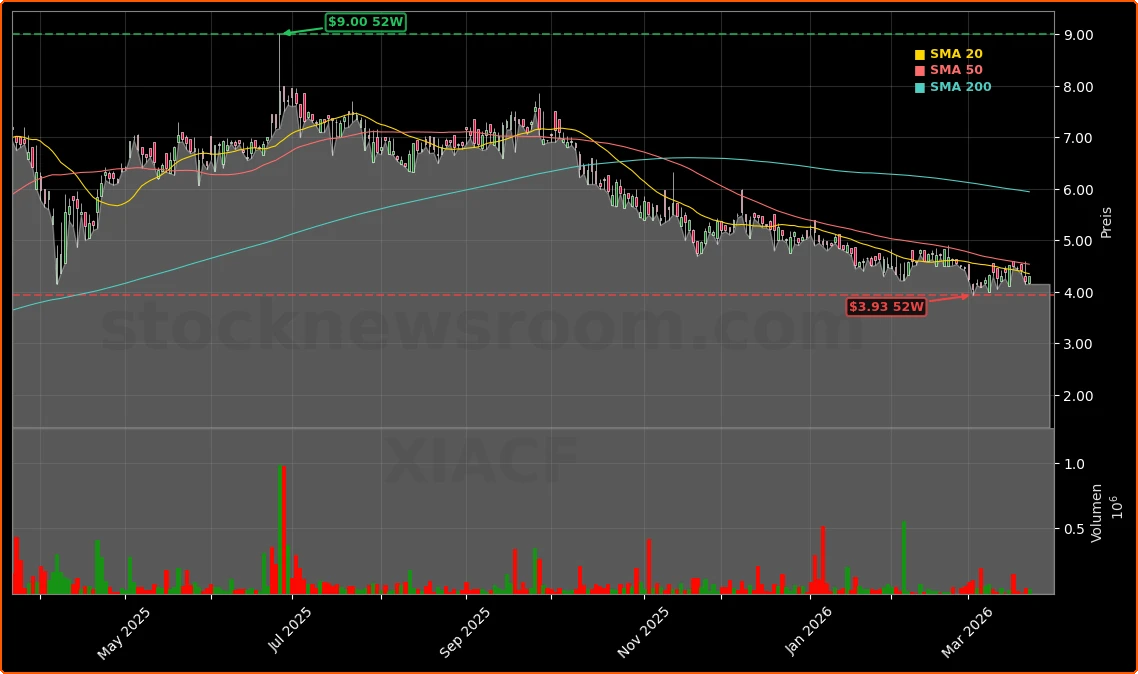
With the share price still more than 40% below its 2025 peak, the stock reflects considerable pessimism on China and hardware cyclicals. The latest Xiaomi Earnings confirm that headwinds are real but also show resilient revenue growth and early proof that EV and AI investments can scale. For globally diversified investors, Xiaomi now represents a leveraged play on the recovery of China’s consumer tech demand and the global EV transition, with the next quarters’ Xiaomi Earnings likely to be a critical test of whether that turnaround thesis is on track.