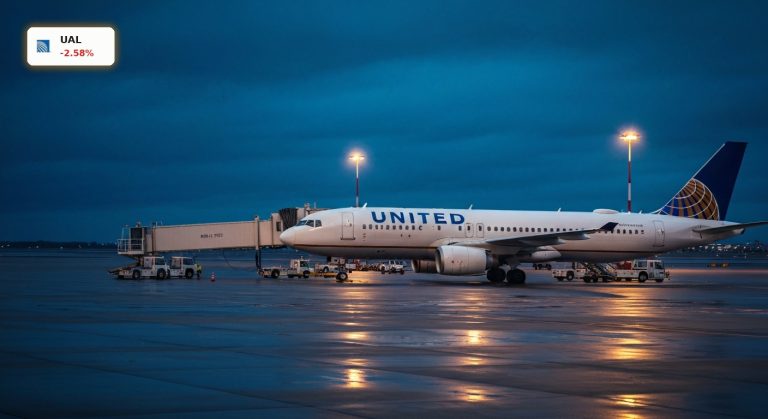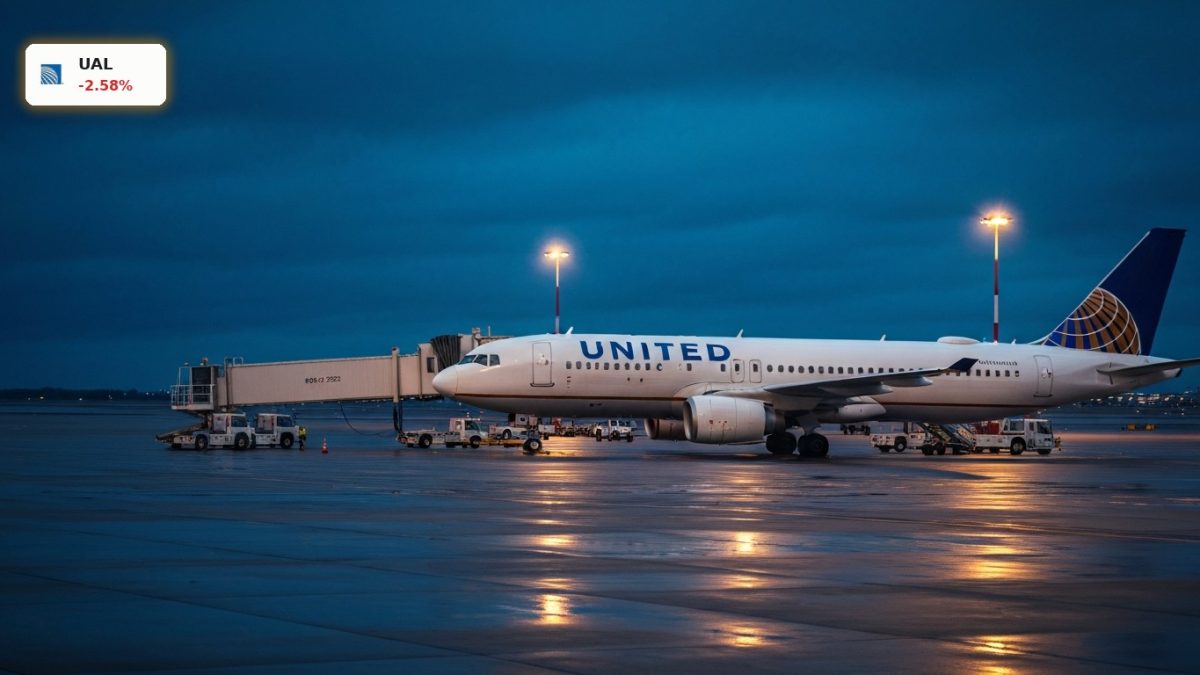

Will United Airlines’ aggressive ticket price hikes be enough to offset a massive $6 billion surge in annual jet fuel costs?

How did United Airlines perform in Q2?
During the second quarter of 2026, United Airlines Holdings, Inc. demonstrated impressive operational resilience. The company reported adjusted earnings per share of $1.99, comfortably outpacing the Wall Street consensus estimate of $1.89. Total revenue for the quarter reached $17.67 billion, slightly ahead of the $17.61 billion expected by analysts and representing a 16% increase compared to the same period last year. Net income, however, fell more than 17% to $805 million, reflecting the heavy burden of rising operational costs.
Passenger demand remained exceptionally strong throughout the spring and early summer. United Airlines reported that passenger revenue reached $16.1 billion, driven by a notable 27% surge in corporate travel and a 16% increase in premium cabin revenue. The carrier’s passenger load factor stood at a healthy 83.4%, while capacity expanded by 3.5% year-over-year. Despite these positive traffic figures, the stock fell over 3% in after-hours trading as investors focused heavily on the company’s forward-looking guidance and cost projections.
What is the impact of the $6 billion fuel spike?
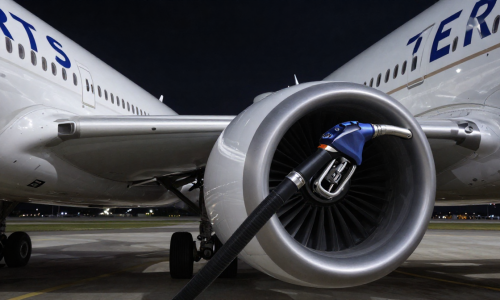
The central talking point of the latest United Airlines Earnings release is the dramatic rise in jet fuel prices. Fueled by escalating conflict in the Middle East, Brent crude has pushed toward $86 per barrel, driving aviation fuel expenses to painful highs. United Airlines revealed that its second-quarter fuel costs skyrocketed by 84% year-over-year to $2.3 billion, with the average price per gallon reaching $4.19.
Looking ahead, the airline warned that higher jet fuel prices could add nearly $6 billion to its total expenses for the full year of 2026 compared to its initial expectations. To combat this margin squeeze, management is aggressively raising ticket prices and adjusting capacity. The airline expects to recover approximately 80% to 90% of these added fuel costs in the third quarter, targeting a 100% recovery by the fourth quarter. Additionally, the company raised $3.7 billion in new liquidity during the quarter to provide financial insurance against ongoing geopolitical uncertainty.
How does the outlook compare to competitors?
For Wall Street portfolios, comparing United Airlines to its peers is crucial. While rival Delta Air Lines also reported strong demand last week, its stock suffered as investors worried about industry-wide cost pressures. United Airlines has adjusted its full-year earnings guidance to a range of $9 to $11 per share, narrowing up from its previous April forecast of $7 to $11. However, the midpoint of this updated guidance fell slightly short of the $10.51 per share that analysts had hoped to see.
Furthermore, United Airlines projected third-quarter adjusted earnings of $2.50 to $3.50 per share, missing the consensus estimate of $3.62. Despite these near-term headwinds, the carrier is moving forward with key strategic upgrades. The airline remains on track to equip its entire fleet with free Starlink satellite internet by the end of 2027, a move that has already doubled customer satisfaction scores on regional flights. To keep capital expenditure in check, the company trimmed its full-year CapEx forecast to $7.5 billion, down from the previous $7.65 billion estimate.
Related Coverage
For a deeper look at how energy markets are shaping the aviation sector, read our analysis on the United Airlines Oil Shock Warning Slams Profit Outlook, which details how the initial fuel price spikes in early 2026 began squeezing carrier margins. Understanding these historical cost drivers is essential for evaluating the long-term profitability of major airline stocks.