
Can the Boeing Etihad Order offset fresh selling in BA shares, or is Wall Street still focused on execution risk?

What Does the Boeing Etihad Order Mean for BA Stock?
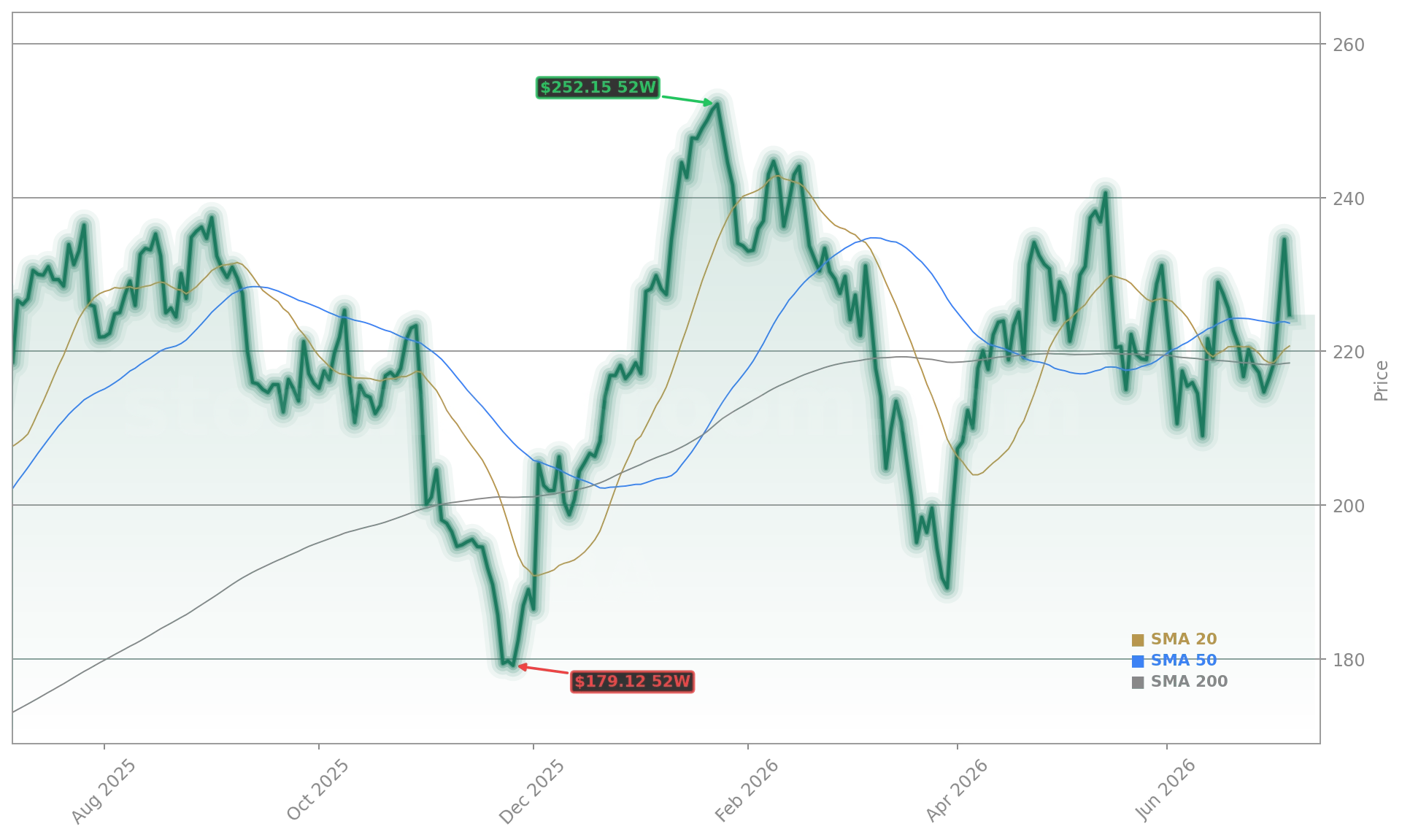
The Boeing Etihad Order for 10 787s—though not yet finalized—comes as airlines face mounting economic pressure to retire older aircraft. With the global commercial fleet averaging 15 years old, and legacy Boeing 767-300ERs still flying for United Airlines on transatlantic routes, maintenance costs are surging. A 20-year-old jet can cost over $5 million annually to maintain, double the burden of a 10-year-old model. That math is pushing carriers toward new orders—not just for efficiency, but for predictable cost control. For The Boeing Company, this translates directly into order visibility, pricing discipline, and reduced risk of delivery deferrals. BA shares traded at $225.04 on Wednesday, down 2.79% from the prior close—but analysts see the Boeing Etihad Order as a positive catalyst ahead of upcoming Q3 guidance.
How Does This Fit Into Boeing’s Broader Backlog Strategy?
Boeing’s 16,000-aircraft backlog dwarfs current annual production capacity, creating structural pricing power across its commercial and defense segments. While supply-chain constraints and engine shortages have delayed deliveries, the backlog itself has become a strategic asset—especially as airlines confront rising maintenance bills and regulatory scrutiny on older airframes. Citigroup recently reiterated its ‘Buy’ rating on The Boeing Company, raising its 12-month price target to $265, citing improved order visibility and defense portfolio strength. The firm noted that even modest commercial order acceleration—like the Boeing Etihad Order—could lift EPS estimates by 8% in 2027. Meanwhile, RBC Capital Markets upgraded Boeing to ‘Outperform’, highlighting its dual exposure to both civil aviation recovery and defense expansion, including new Tomahawk and Patriot missile production facilities.
Who Else Benefits From This Fleet Transition?
While Boeing captures headlines, the Boeing Etihad Order also lifts the entire aerospace supply chain. TransDigm Group (TDG), with its proprietary aftermarket components, stands to gain as aging fleets drive repeated part replacements—regardless of new aircraft deliveries. Analysts at Morgan Stanley see 16% upside to TDG’s current $1329.98 premarket price. Heico Corp (HEI), which supplies FAA-certified alternative parts, is up 10.64% YTD and remains a key beneficiary of OEM supply bottlenecks. AAR Corp (AIR), the pure-play MRO provider, has surged over 65% YTD as airlines scramble for heavy-check capacity and used serviceable material. Its $138.40 premarket quote reflects growing investor confidence in the sector’s structural tailwinds—tailwinds directly tied to the same fleet aging dynamics that make the Boeing Etihad Order so timely.
Is Boeing’s Defense Pivot a Hedge Against Civil Volatility?
Yes—and it’s accelerating. While commercial demand remains lumpy, The Boeing Company is expanding defense production at scale: new facilities for Tomahawk cruise missiles, Patriot air defense systems, and next-gen space launch integration with Lockheed Martin. This diversification insulates BA from short-term airline order fluctuations and aligns with broader Pentagon spending trends. With Lockheed Martin’s recent $35.3 billion THAAD contract and growing U.S. defense budgets, Boeing’s defense segment is no longer a side note—it’s a growth engine. That duality makes BA uniquely positioned among aerospace peers like Lockheed Martin and Northrop Grumman, especially as space-sector valuations—like Blue Origin’s $130 billion figure—highlight investor appetite for aerospace infrastructure exposure.
Related Coverage
Even modest commercial order acceleration—like the Boeing Etihad Order—could lift EPS estimates by 8% in 2027.— Citigroup
Investors tracking the Boeing Etihad Order should also consider Boeing’s parallel momentum in China: Boeing China Order Boom: Could a Mega Deal Reshape BA? explores how a potential Trump–Xi summit agreement could unlock a multi-billion-dollar order that would further compress Boeing’s backlog timeline. Meanwhile, defense investors should monitor how Boeing’s partnership with Lockheed Martin THAAD Contract: $35.3B Deal Sparks Surge strengthens its position in integrated air and missile defense—a critical growth vector as global tensions rise.