Is the latest Eli Lilly Acquisition of Ajax Therapeutics a smart oncology pivot or a risky $2.3 billion side bet?

How does Eli Lilly’s move hit Wall Street today?
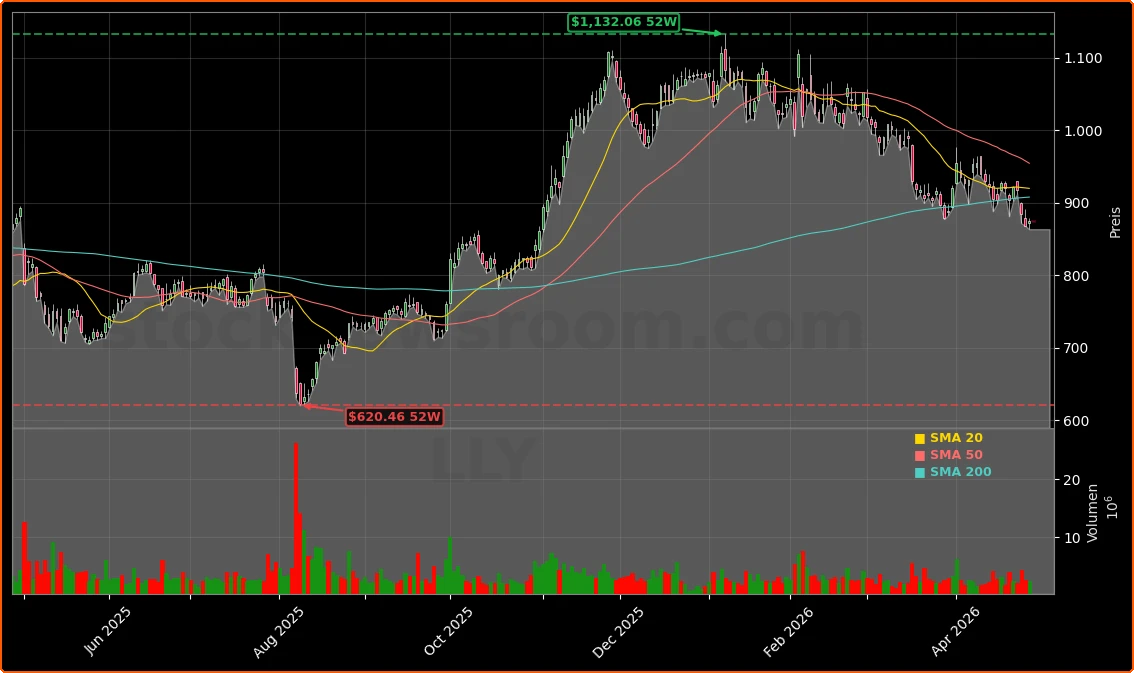
Eli Lilly and Company (LLY) is edging higher, up about 0.7% to $874.00 versus Tuesday’s $873.04 close, with pre‑market quotes near $873.88 as of mid‑day in Europe (morning ET). The modest gain comes despite the stock being roughly 19% below its early‑year levels, as investors reassess expectations for its GLP‑1 obesity and diabetes franchise. The new Eli Lilly Acquisition of Ajax Therapeutics adds a fresh catalyst on the oncology side just as the market is debating early prescription trends for oral GLP‑1 Foundayo.
Analysts remain broadly constructive. Mizuho’s healthcare team and Truist Financial have both reiterated bullish views on the shares, and Barclays recently maintained an Overweight rating with a $1,350 price target, while Scotiabank kept an Outperform at $1,300. Those targets imply substantial upside from current trading levels if the obesity and oncology bets both execute. With healthcare having de‑rated in aggregate and Lilly still seen as a multi‑year compounder at roughly 25x forward earnings, the stock continues to occupy a core growth slot in many U.S. portfolios.
What exactly is Eli Lilly buying in Ajax Therapeutics?
The Eli Lilly Acquisition of Ajax Therapeutics is structured at up to $2.3 billion, combining an upfront cash payment with additional clinical and regulatory milestone payouts. Ajax is a privately held U.S. biotech focused on hematologic malignancies, with its lead asset an experimental, once‑daily oral therapy for myelofibrosis, a rare chronic blood cancer characterized by scarring in the bone marrow and disruption of normal blood‑cell production.
The drug is in early‑stage testing in pre‑treated myelofibrosis patients, positioning it initially in a difficult‑to‑treat population where efficacy signals can be particularly meaningful. Jacob Van Naarden, head of Lilly’s oncology division, has indicated that initial proof‑of‑concept data are expected later this year, making 2026 a key inflection point for the deal’s perceived value. If positive, the program could be expanded across earlier‑line settings and potentially combined with other targeted therapies, giving Lilly a foothold in a niche but strategically important blood‑cancer segment.
For investors, the Ajax transaction fits a broader pattern: the company has been layering on specialized oncology platforms through deals, including its earlier purchase of Kelonia Therapeutics to access an in‑vivo CAR‑T technology. That prior Eli Lilly Acquisition prompted Barclays and Scotiabank to reiterate their bullish ratings, arguing that Lilly is building an oncology engine to sit alongside its metabolic blockbuster franchise.
How does this strategy compare with rivals like Novo Nordisk?
While Eli Lilly and Company and Novo Nordisk dominate the GLP‑1 obesity narrative, Lilly’s latest deal highlights a more diversified research posture. Novo has been doubling down in metabolic disease with Wegovy, Ozempic and an oral GLP‑1 of its own, but faces pricing pressure as India and Canada see cheaper generics emerge. Lilly, by contrast, is pairing its GLP‑1 leadership—via Zepbound in the U.S. and Mounjaro globally—with an expanding oncology pipeline built through targeted acquisitions and partnerships.
The obesity launch picture remains mixed in the very near term. U.S. sales of Foundayo only began in early April, meaning no contribution to Q1 2026 results and limited visibility from prescription data so far. BMO Capital Markets analyst Evan Seigerman has stressed that it is too early—roughly two weeks into launch—to make firm calls on the trajectory relative to Novo’s oral Wegovy, which debuted in January. Investors will look to upcoming earnings commentary from CEO Dave Ricks for qualitative color on the rollout, including how direct‑to‑consumer channels and partners like GoodRx are broadening access to Foundayo and Zepbound at consumer‑friendly price points.
The AI angle is another differentiator. Lilly recently struck a potential $2 billion collaboration with AI drug‑design firm Profluent, a Salesforce spin‑off backed by high‑profile tech investors including participants tied to NVIDIA and other cloud‑AI ecosystems. The deal underscores how top pharma names are racing to integrate AI into discovery pipelines, mirroring broader trends among U.S. mega‑caps such as Apple and Tesla that are leaning heavily on machine learning to maintain competitive moats.
Is the Eli Lilly Acquisition wave changing the long‑term thesis?
For many institutional investors benchmarked against the S&P 500, the recurring Eli Lilly Acquisition headlines—Ajax, Kelonia, and AI‑driven alliances—support a thesis that the company is building multiple growth legs beyond its current GLP‑1 windfall. Oncology is becoming a second major pillar, with hematology and cell‑based approaches complementing existing programs in solid tumors. This reduces single‑product risk and may help smooth earnings if obesity pricing or competition intensifies globally.
At the same time, there are execution risks. The Ajax program remains early, and milestone‑based deal structures reflect that clinical and regulatory setbacks are possible. On the metabolic side, Foundayo needs to prove it can match or exceed Novo’s oral offerings, particularly outside the U.S., where formulary access and pricing dynamics differ from Wall Street’s home market. Still, analysts from firms like Mizuho, Truist, Barclays and Scotiabank see enough optionality in the pipeline to justify current premium multiples, especially if AI‑enhanced R&D shortens development timelines.
Related Coverage
Investors who want a deeper dive into the broader M&A story can revisit the detailed analysis in “Eli Lilly Acquisition Boom: Multi‑Billion Cancer and Obesity Bet”, which examines how the Kelonia deal fits into Lilly’s next‑generation cancer strategy. That piece also explores whether the company’s acquisition‑heavy approach can sustain its lofty valuation once the initial obesity drug boom normalizes on Wall Street.
Overall, the latest Eli Lilly Acquisition of Ajax Therapeutics reinforces that the company intends to be as dominant in oncology as it already is in metabolic disease. For long‑term shareholders, the combination of GLP‑1 leadership, targeted cancer M&A and cutting‑edge AI partnerships keeps the growth story intact despite recent share‑price volatility. The next few quarters—anchored by Foundayo launch updates and early myelofibrosis data—will show whether this multi‑pronged strategy can deliver the earnings power implied by bullish analyst targets and justify Lilly’s role as a cornerstone holding in global healthcare portfolios.