Did Warsh’s first Federal Reserve Rate Decision calm markets, or did it quietly open the door to a more volatile regime?

What Does Warsh’s First Federal Reserve Rate Decision Signal?
At 2:00 p.m. ET, the Federal Reserve announced no change to its benchmark rate — as expected. But the real market reaction came after 2:30 p.m., when Warsh stepped to the podium for his first press conference. Unlike Jerome Powell’s highly telegraphed, data-dependent style, Warsh emphasized flexibility, dismissed the dot plot as ‘a distraction from real-time evidence,’ and declined to submit his own rate forecast — a move Citigroup analysts called ‘a deliberate break from orthodoxy.’ His tone was neither hawkish nor dovish: it was agnostic. ‘We respond to data, not forecasts,’ he stated, reinforcing a Greenspan-era ethos where ambiguity is policy. For investors, this means higher near-term volatility — especially in rate-sensitive sectors like Apple, Tesla, and NVIDIA — whose valuations hinge on low discount rates and sustained liquidity.
How Did Oil, Iran, and Inflation Shape the Fed’s Stance?
Falling oil prices — Brent down to $78.96 — and the U.S.-Iran memorandum of understanding dramatically reshaped the inflation calculus. With the Strait of Hormuz reopening and Iranian oil waivers imminent, energy-driven inflation pressure eased just in time. Core PCE remains at 3.3%, but Warsh signaled he’ll prioritize the trimmed-mean PCE metric going forward — a more stable gauge less skewed by volatile commodities. Morgan Stanley’s Mike Wilson noted this shift ‘removes the urgency for a rate hike this year,’ while BlackRock CIO Rick Rieder added, ‘Warsh’s focus on AI-driven disinflation and services inflation means the Fed may tolerate 3% for longer than markets expect.’ Still, the labor market remains resilient: unemployment at 4.3%, May payrolls revised upward to 214,000 — data that keeps rate hikes on the table for December, per CME FedWatch (60% probability).
Will Warsh’s Communication Shift Spook Tech and Growth Stocks?
Yes — and it already has. Nasdaq 100 futures rose 0.6% pre-announcement but gave back gains intraday as traders parsed Warsh’s language on balance sheet runoff and reduced press conferences. The S&P 500 futures edged up just 0.1%, reflecting broad caution. Warsh confirmed the Fed will continue quantitative tightening at $10 billion/month — a slower pace than under Powell, but one RBC Capital Markets warns ‘could still pressure small-cap and AI infrastructure valuations.’ With NVIDIA trading near record highs and Tesla’s EV margins squeezed by rising input costs, any hint of prolonged tightness rattles sentiment. Goldman Sachs analysts downgraded their near-term risk-on outlook, citing ‘increased uncertainty around liquidity timing’ — a direct consequence of Warsh’s ‘less guidance, more judgment’ stance.
What’s Next for the Dollar, Bonds, and Bitcoin?
The U.S. dollar edged up 0.16% against the euro ahead of the meeting, but retreated post-press conference as Warsh declined to endorse hawkish language. The 10-year Treasury yield held at 4.43%, while the two-year dipped to 4.05% — pricing in a single hike by year-end. Bitcoin fell to $64,782, with Cointelegraph analysts noting ‘FOMC days consistently trigger bearish BTC reactions’ — especially when forward guidance vanishes. The BTC/USD chart shows a critical $64,000 support level; a break below could trigger a move toward $55,000, per STABL cofounder Niels. Meanwhile, gold held steady at $4,349 — buoyed by dollar softness and geopolitical uncertainty, though Commerzbank’s Carsten Fritsch maintains his $4,800 year-end target, citing ‘structural dollar erosion’ and central bank demand.
Federal Reserve Rate Decision: What Does It Mean for S&P 500 Investors?
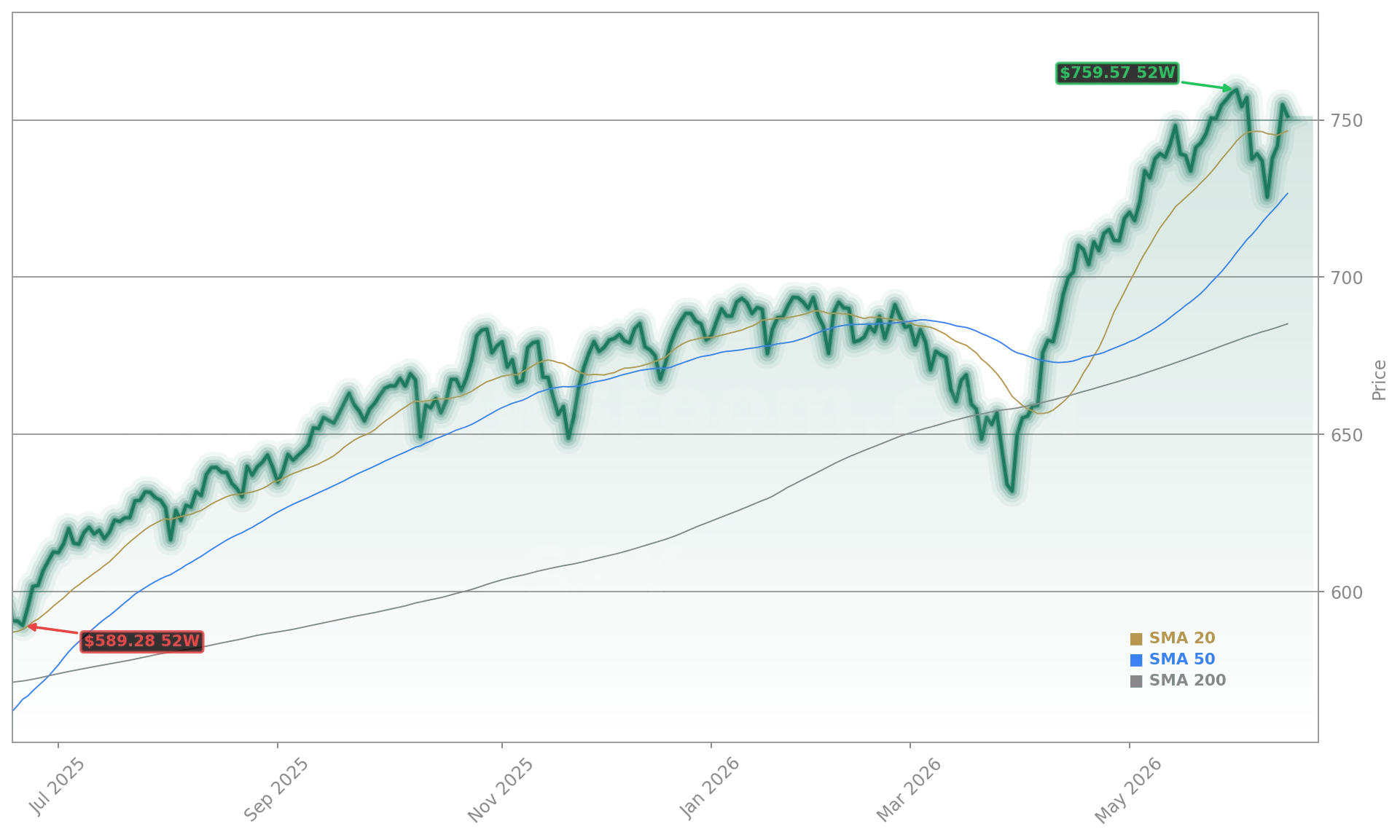
For S&P 500 investors, this Federal Reserve Rate Decision confirms a pivot from rate-cut anticipation to data dependency — with a twist. The index trades near 7,511, but its M2-adjusted valuation has only just reclaimed its 2000 peak, per Yardeni Research. That suggests nominal gains rest on thin liquidity foundations. Warsh’s rejection of the dot plot and forward guidance removes a key anchor for equity valuations. BMO Capital Markets’ Ian Lyngen warns: ‘Markets are overpricing his ability to change policy overnight — but underpricing the volatility of a less predictable Fed.’ With Q2 earnings season looming and AI infrastructure spending at record highs, the next inflation print — due July 11 — may matter more than today’s Federal Reserve Rate Decision.
We respond to data, not forecasts.— Kevin Warsh, Federal Reserve Chair
The Federal Reserve Rate Decision today reaffirms that Kevin Warsh is reshaping how markets interpret central bank credibility — not just rates. For U.S. investors, this means preparing portfolios for higher short-term volatility and longer decision cycles. The Fed’s independence remains intact, but its predictability is fading — and that’s the real market shift. The next quarterly earnings will reveal whether growth stocks can withstand the new era of monetary ambiguity.