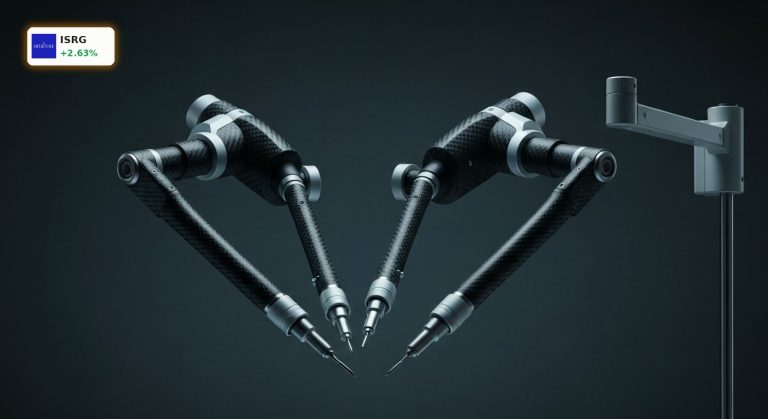

Why did Intuitive Surgical’s stellar earnings report trigger a sudden wave of analyst price target cuts?

Why Did Intuitive Surgical Earnings Spark a Sell-Off?
In its second-quarter report, Intuitive Surgical delivered impressive figures that surpassed consensus estimates. Revenue rose 19% year-over-year to $2.89 billion, beating Wall Street expectations of $2.82 billion. This top-line expansion was driven by an 18% surge in instrument sales ($1.73 billion) and a 19% rise in system sales ($685 million). Adjusted net income climbed to over $1 billion, translating to adjusted earnings per share of $2.80, outpacing the analyst forecast of $2.51.
Furthermore, the company placed 468 of its signature da Vinci systems, including 246 units of its next-generation da Vinci 5 platform. Worldwide da Vinci procedures grew by 15%, while the Ion system saw procedure volumes jump by 36%, expanding its installed base to 1,096 systems.
What Worries Wall Street About Intuitive Surgical?
The primary culprit behind the post-earnings sell-off lies in subtle signs of a domestic slowdown. In the crucial U.S. market, da Vinci procedure growth slowed to 12% in the second quarter, down from 14% in the first quarter. Additionally, management’s decision to leave its full-year global procedure growth guidance unchanged at 13.5% to 15.5% disappointed investors who had anticipated a guidance raise.
External headwinds are also weighing on sentiment. The expiration of elevated Affordable Care Act (ACA) subsidies in the U.S. has begun to exert a moderate negative effect on elective surgeries. Furthermore, the rising popularity of GLP-1 weight-loss drugs continues to suppress bariatric surgery volumes. In response, several investment banks adjusted their outlooks. JPMorgan lowered its price target from $550 to $450 (retaining “Overweight”), while Bernstein SocGen Group trimmed its target from $750 to $685. TD Cowen, Stifel Nicolaus, and Wells Fargo also cut their respective price targets.
Is Intuitive Surgical Still a Long-Term Buy?
Despite the near-term anxiety surrounding the latest **Intuitive Surgical Earnings**, the company’s long-term competitive moat remains incredibly robust. Intuitive Surgical continues to command an estimated 80% market share in soft-tissue robotic surgeries. The company’s business model is highly recurring; hospitals that purchase or lease the expensive da Vinci systems are locked into purchasing proprietary instruments for every procedure. This razor-and-blade model ensures steady cash flows.
Furthermore, switching costs are exceptionally high. Retraining surgeons on competing platforms from rivals like Medtronic is costly and time-consuming. Financially, the company remains a powerhouse, boasting over $8.6 billion in cash and virtually no traditional debt. This financial strength allows the firm to comfortably navigate temporary macroeconomic headwinds while investing in the global rollout of its da Vinci 5 system.
Related Coverage
For further insights into the robotic surgery market, read about how Intuitive Surgical Earnings Plunge 11% as Growth Hits 4-Year Low during earlier market shifts, highlighting the volatility of premium valuations. Additionally, the broader healthcare sector is experiencing significant shifts due to the popularity of weight-loss treatments, as detailed in the Eli Lilly Lawsuit: LLY Stock Rallies +2.3% Amid Novo Nordisk Clash, which examines how competitive battles are shaping the future of pharmaceutical giants like Eli Lilly.
Ultimately, the market reaction to the latest **Intuitive Surgical Earnings** highlights the high expectations placed on premium medical technology stocks. While short-term macroeconomic headwinds and conservative guidance have temporarily dampened investor sentiment, the company’s massive installed base and debt-free balance sheet provide a solid foundation. For long-term portfolios, this temporary dip in the wake of the **Intuitive Surgical Earnings** report may represent an attractive entry point before the next phase of global expansion.