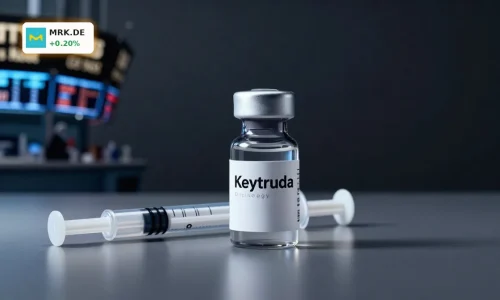

Will the revolutionary Merck Lipfendra Approval be enough to offset the looming $32 billion Keytruda patent cliff for investors?

During intraday trading on Thursday, shares of Merck & Co., Inc. (MRK) rose 3.42% to $127.82. The stock, which has gained 18% so far this year, became a primary driver pulling the Dow Jones Industrial Average higher. Investors are welcoming the regulatory milestone as a critical step in the company’s long-term strategy to diversify its pipeline ahead of impending patent expirations.
How Does the Merck Lipfendra Approval Change Cholesterol Care?
The newly approved medication, chemically known as enlicitide, represents a technological breakthrough. It is the first oral PCSK9 inhibitor to hit the market. Previously, patients seeking to target the PCSK9 protein to lower low-density lipoprotein cholesterol (LDL-C) had to rely on expensive, refrigerated injections. These injectable competitors include Repatha by Amgen, which generated $900 million in the first quarter of this year, and Leqvio by Novartis.
By packaging this powerful mechanism into a convenient daily tablet, the Merck Lipfendra Approval offers a highly attractive alternative for patients who are averse to self-injection. The FDA decision was supported by strong clinical data from the Phase 3 CORALreef program. In these trials, Lipfendra significantly reduced “bad cholesterol” levels by a placebo-adjusted 56% in the CORALreef Lipids study and by 59% in the CORALreef HeFH cohort over six months.
Can Merck Outpace Its Pharmaceutical Competitors?
The commercial rollout of Lipfendra will directly challenge established injectables on pricing and accessibility. Merck announced a competitive list price of $315 for a 30-day supply ($10.50 per daily pill), which is significantly lower than the $500 to $600 monthly cost of existing injection therapies. Furthermore, the drugmaker plans to offer discounted cash pricing through the government’s TrumpRx.gov portal to lower out-of-pocket expenses for patients.
However, the drug does come with specific administration requirements. Patients must take the 20 mg tablet on an empty stomach and wait 30 minutes before eating. Additionally, AstraZeneca is currently developing its own oral PCSK9 inhibitor, dubbed laroprovstat, which does not carry a fasting requirement. Financial analysts note that if AstraZeneca’s clinical trials yield positive data in 2027, the two pharmaceutical heavyweights could eventually split a massive market. To solidify its clinical standing, Merck is running a long-term cardiovascular outcomes study to prove that Lipfendra directly reduces heart attacks and strokes, with results expected in 2029.
What Does This Mean for Wall Street Portfolios?
From an investment perspective, the Merck Lipfendra Approval is a vital piece of the company’s post-Keytruda transition plan. Merck’s blockbuster oncology drug Keytruda, which currently generates $32 billion in annual revenue, is set to lose patent protection in 2028. Wall Street has been intensely focused on how the company will replace this looming revenue gap.
Investment banks are highly optimistic about the commercial potential of the new cholesterol pill. Analysts project that Lipfendra sales could exceed $350 million next year and eventually reach peak annual sales of $4 billion by 2034. Notably, RBC Capital Markets analyst Trung Huynh suggested that peak sales could even reach $5 billion if the oral drug is widely adopted by primary care physicians rather than just specialized cardiologists. The firm expects initial uptake to be strongest among patients who are failing to reach their LDL targets on traditional statins but refuse injectable therapies.
Related Coverage
To better understand Merck’s broader corporate strategy, read about how the Merck Protillion Collaboration Sends MRK Soaring 15% as the company aggressively expands its drug discovery capabilities. For broader healthcare sector context, you can also review the recent Abbott Laboratories Earnings: Stock Surges 11% on Q2 Beat, which highlights how strong medical device demand is driving a wider industry renaissance.
The ability to meaningfully reduce LDL well above what you achieve on statins alone, in an easy-to-take pill, we think can really change care in the U.S. and go after one of the biggest killers.— Robert Davis, CEO of Merck
Ultimately, the Merck Lipfendra Approval marks a pivotal commercial triumph that positions the pharmaceutical giant as a leader in next-generation cardiovascular care. By successfully transitioning a complex biologic mechanism into a convenient, affordably priced daily pill, the company has secured a powerful new revenue stream. For long-term investors, this regulatory milestone provides a reassuring signal that Merck possesses the pipeline depth to navigate its upcoming patent cliff and sustain long-term growth.