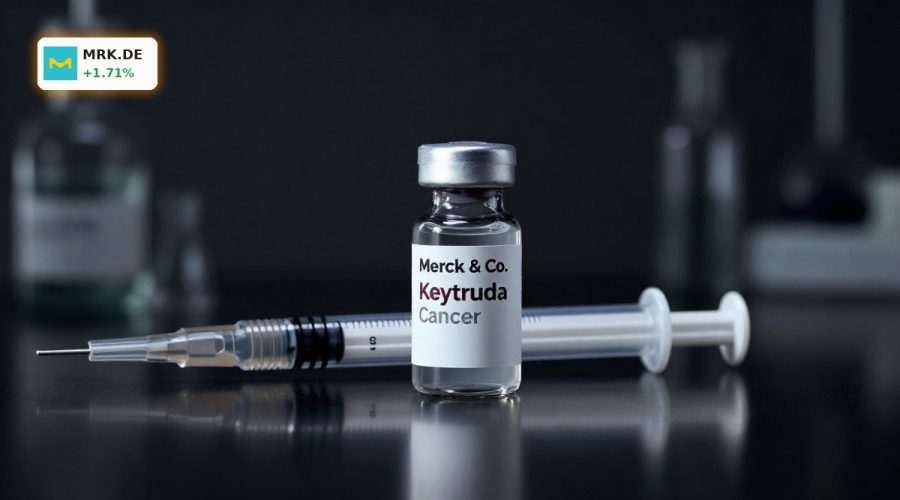
Is the latest ivonescimab setback a temporary stumble or a turning point in the Merck Keytruda Rivalry for lung cancer dominance?

How did markets react to the trial news?
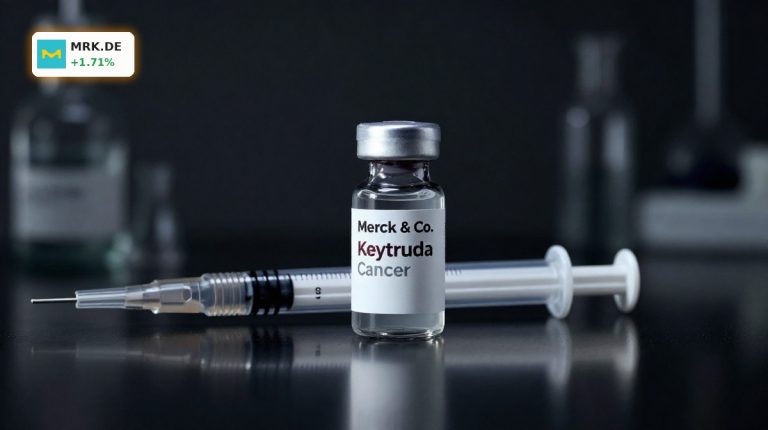
Summit Therapeutics (SMMT) saw its stock collapse by more than 28% to around $15.40 in Friday trading after the company said its phase 3 lung cancer program failed to show a statistically significant benefit at an interim analysis. The study tested ivonescimab plus chemotherapy in first-line squamous non-small-cell lung cancer (NSCLC) against a control arm of Keytruda and chemotherapy.
By contrast, shares of Merck & Co., Inc. gained roughly 2.5% to about $111.90 as investors reassessed the competitive threat to blockbuster immunotherapy Keytruda. The move came despite a broadly cautious tone in U.S. equities, with major benchmarks such as the S&P 500 and Nasdaq Composite struggling for direction amid geopolitical headlines and rate expectations.
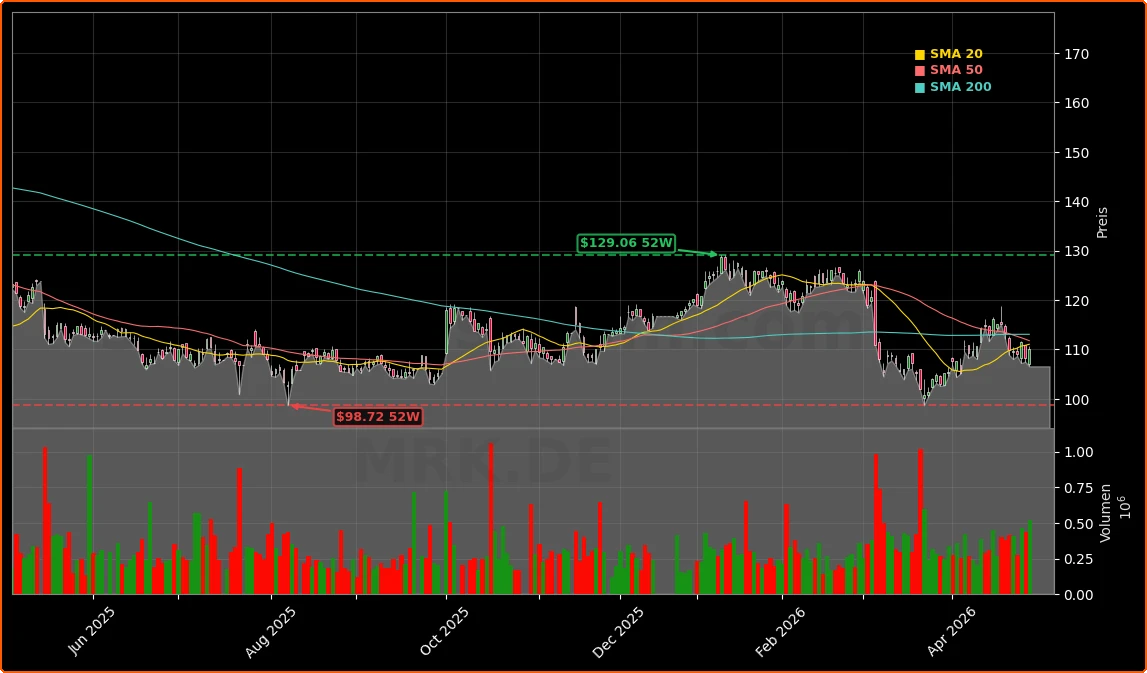
In Europe, Merck KGaA (MRK.DE), a separate company from the U.S.-listed Merck, also traded higher, up about 1.7% at $110.05 compared with a prior close of $108.20. Although the German group is not directly involved in the Merck Keytruda Rivalry, the stronger sentiment around large-cap pharma helped lift the broader sector on both sides of the Atlantic.
What went wrong for Summit Therapeutics?
Summit disclosed that the combination of ivonescimab and chemotherapy did not deliver a statistically significant improvement in progression-free survival (PFS) versus Keytruda plus chemotherapy at the pre-planned interim analysis. PFS measures how long patients live without their cancer worsening and is a key endpoint in oncology trials.
The company will continue the study to a final analysis expected in the second quarter, leaving open the possibility that the overall data could still turn more favorable. However, the interim miss is a major blow because investors had bid up Summit shares in recent weeks on high expectations that ivonescimab could become a serious challenger in the Merck Keytruda Rivalry in lung cancer.
Interest was fueled by earlier data from Akeso, Summit’s partner in China, where ivonescimab previously generated a hazard ratio of 0.62 in a similar patient population. That implied a 38% lower risk of disease progression versus Keytruda plus chemotherapy, a striking result compared with prior attempts to combine PD-1 and VEGF blockade.
Why is ivonescimab seen as a Keytruda challenger?
Ivonescimab is designed as a bispecific antibody that simultaneously targets PD-1 and VEGF, two pathways involved in tumor growth and immune escape. Keytruda, by comparison, inhibits only PD-1. Historically, dual PD-1/VEGF approaches have sometimes improved PFS but struggled to deliver a clear overall survival benefit, which ultimately matters most for regulatory approvals and reimbursement decisions.
The Akeso data triggered speculation that ivonescimab might finally break that pattern, potentially resetting expectations around the Merck Keytruda Rivalry. On Wall Street, firms had modeled meaningful market share risk for Merck in first-line NSCLC if ivonescimab’s performance was replicated in a global setting.
Leerink Partners analyst Daina Graybosch now sees “considerable uncertainty” surrounding the read-through from the interim analysis. She noted that the hazard ratio in Summit’s trial could fall in a range of roughly 0.75 to 0.60, equating to about a 25% to 40% reduction in risk of progression compared with the Keytruda-based regimen. Even at the better end of that spectrum, investors appear less convinced that ivonescimab can decisively shift the balance in the Merck Keytruda Rivalry.
How strong is Merck’s fundamental backdrop?
The trial news lands just days after Merck & Co., Inc. reported quarterly results that comfortably beat Wall Street expectations. The company posted lighter-than-anticipated losses, with Keytruda again surpassing sales forecasts and reinforcing its role as Merck’s primary growth engine. The drug has become one of the most important components of major healthcare holdings, including those tracking the S&P 500.
Beyond Keytruda, Merck has highlighted a growing pipeline in oncology and cardiometabolic disease, including a novel cholesterol-lowering therapy that aims to “move the needle” by eliminating the need for injections. That diversification matters for investors weighing how much of Merck’s valuation still hinges on Keytruda amid upcoming U.S. patent expirations in the early 2030s.
On the valuation side, Wells Fargo analyst Mohit Bansal maintained an Overweight rating on Merck this week while trimming his price target to $145 from $150. The call suggests confidence in Merck’s long-term trajectory, even as he adjusts assumptions for growth drivers and competitive risks. For portfolio managers comparing big pharma names with mega-cap tech leaders like NVIDIA and Apple, the combination of solid cash flows and a tempered but still constructive target remains attractive.
What’s next for the Merck Keytruda Rivalry?
The final analysis of Summit’s phase 3 study, expected in the second quarter, will be a key catalyst for both Summit and Merck. If ivonescimab ultimately delivers a statistically and clinically meaningful benefit on PFS — and, crucially, on overall survival — sentiment could shift again, re-intensifying the Merck Keytruda Rivalry in frontline lung cancer.
For now, the momentum has swung back toward Merck & Co., Inc., which keeps a tight grip on the immuno-oncology franchise that underpins much of its current valuation. U.S. investors will also watch how regulators, payers, and oncologists respond to any future head-to-head data, as treatment guidelines in NSCLC can move market share rapidly.
From a broader sector standpoint, the ivonescimab setback is a reminder that oncology innovation remains high-risk, even for promising mechanisms. It may also push capital back toward established players such as Merck and, in other therapeutic areas, giants like Tesla’s healthcare-adjacent partners and Apple’s digital health initiatives, as investors balance growth stories across sectors.
The interim miss for ivonescimab eases near-term competitive pressure on Keytruda, but the final analysis will ultimately determine how durable Merck’s lead really is.— Daina Graybosch, Leerink Partners
In summary, the latest data keep Keytruda firmly in the lead, and the Merck Keytruda Rivalry looks less threatening in the near term. For long-term shareholders, Merck remains a cornerstone pharma holding, while active traders will be watching the next trial readouts to see whether the competitive picture shifts again.