Can the SpaceX Record IPO justify a trillion-dollar vision, or did markets simply price in Elon Musk’s next big promise?

What drove SpaceX’s historic week?
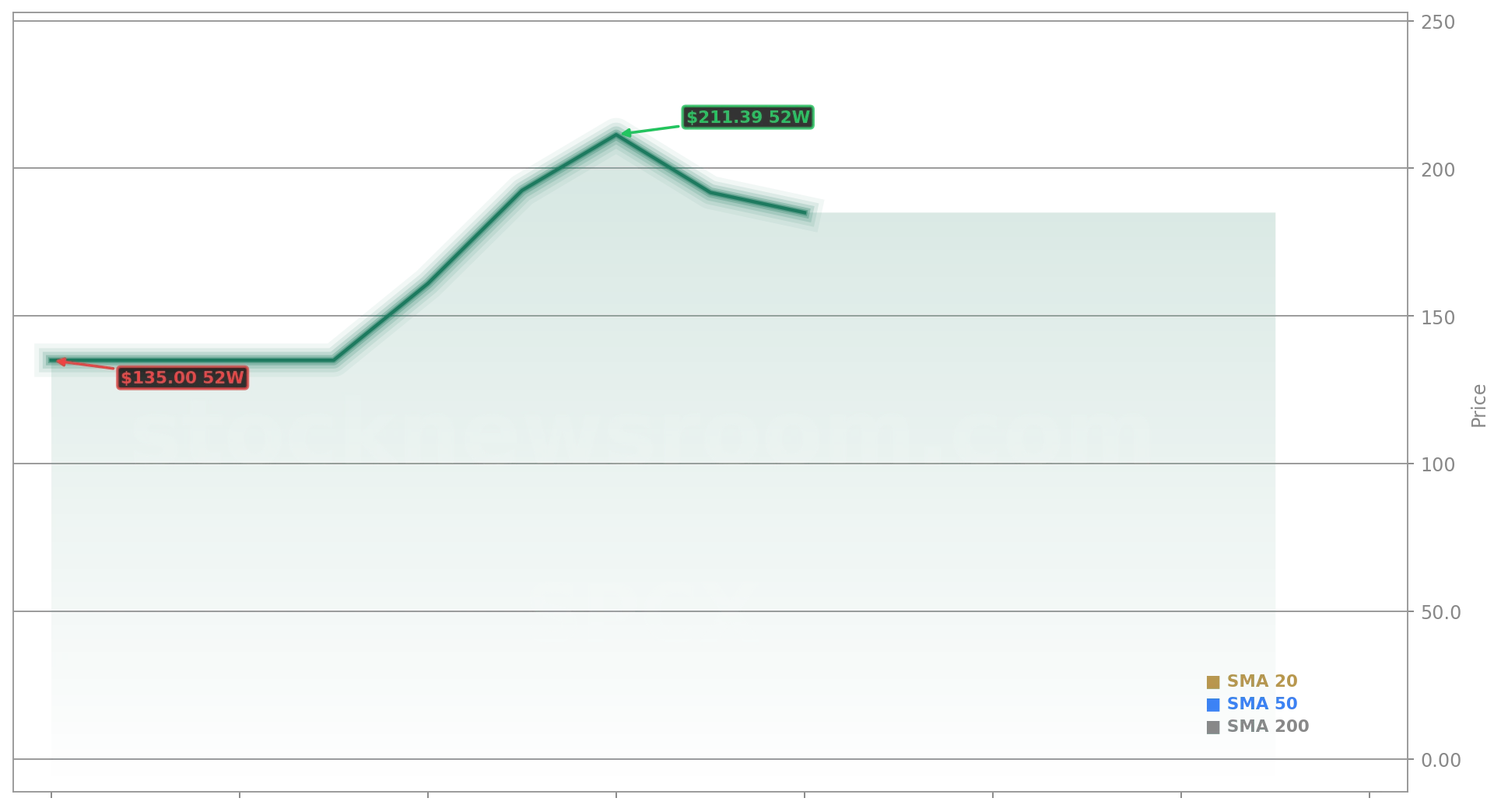
This week was defined by three simultaneous, interlocking catalysts: the SpaceX Record IPO, the $60 billion Cursor acquisition, and the rapid activation of new index inclusion rules. The IPO itself — the largest in history — raised $75 billion through 555.6 million shares at $135, opening at $150 and closing Friday at $185. That launch instantly minted 4,400 SpaceX millionaires and propelled Elon Musk past $1 trillion in net worth. But the momentum didn’t stop at day one. On Tuesday, SpaceX announced its all-stock acquisition of Anysphere Inc. (Cursor) for $60 billion — a move analysts at Wedbush called a decisive pivot into enterprise AI’s control plane. Simultaneously, Nasdaq’s new ‘Fast Entry’ rule triggered — allowing SPCX to qualify for Nasdaq-100 inclusion in as few as 15 trading days, guaranteeing billions in mandatory passive buying regardless of price or sentiment. These weren’t sequential events; they were coordinated, market-shaping actions.
PRICE ACTION OVER THE WEEK
From Monday’s open at $150.00 to Friday’s close at $185.00, SPCX delivered a weekly performance of +23.3%, with a weekly high of $225.64 and a weekly low of $149.34. Five days stood out as genuine outliers: Friday’s +19.2%, Monday’s +19.6%, Tuesday’s +9.8%, Wednesday’s −9.3%, and Thursday’s −3.6%. The explosive gains on Friday and Monday were directly tied to the IPO debut and its immediate afterglow — retail demand overwhelmed order books, Nasdaq extended its opening auction, and broker apps crashed. Tuesday’s +9.8% surge followed the Cursor announcement, which reframed SPCX as a vertically integrated AI infrastructure play, not just a launch provider. The −9.3% Wednesday pullback coincided with the Federal Reserve’s dovish-but-cautious meeting outcome and growing scrutiny of SPCX’s $2.5 trillion valuation — a day when CFRA initiated coverage with a Sell rating and $115 target. The week’s volatility wasn’t noise; it was the market price-discovering how much to pay for optionality, execution, and Musk’s control.
What does ‘SpaceX Record IPO’ mean for valuation?
Valuation became the week’s central fault line. Morningstar pegged fair value at $63 — less than half the IPO price — citing over-optimistic AI assumptions and weak cash flow visibility. In contrast, Oppenheimer set a $190 target, arguing SpaceX’s vertically integrated AI ecosystem (Starlink, xAI, Starship, and now Cursor) could capture a $10 trillion TAM by 2035. Defiance ETFs’ Sylvia Jablonski pushed further: “The market is still thinking about SpaceX as a rocket company… Six months from now, investors may increasingly view it as a multi-platform infrastructure company spanning launch, communications, defense, AI connectivity, and space-based data services.” Meanwhile, CFRA’s Keith Snyder warned that investors were “underwriting multiple ambitious projects at once” — Starship, orbital AI, and xAI — without proven commercial paths. The $2.5 trillion market cap wasn’t priced on 2025 earnings; it was priced on a 2030 vision — and this week revealed how deeply analysts disagree on whether that vision is investable or illusory.
How did ETFs respond to the SpaceX Record IPO?
The SpaceX Record IPO instantly catalyzed the most aggressive ETF product launch wave in history. Within 48 hours, Direxion launched LOFF (2X Bull), Defiance launched SPCU (2X Long), ProShares launched SPCF, and Leverage Shares launched SPCH — all with sub-1% expense ratios and immediate $1B+ daily volume. GraniteShares and Tuttle followed with SPAL and SPAX. This wasn’t niche demand: 11 leveraged SPCX ETFs generated over $1 billion in volume on Monday alone, prompting Eric Balchunas to call it “bonkers.” More strategically, WisdomTree and VettaFi confirmed SPCX would join the Procure Space ETF (UFO) with a 6.17% weight — while Schwab’s Large-Cap Value ETF (SCHV) added a 0.012% stake, blurring traditional style boxes. The message was unambiguous: SPCX is no longer a thematic satellite — it’s core infrastructure for the AI and space economy.
What matters next week for SPCX investors?
Three structural catalysts converge next week: First, the Nasdaq-100 inclusion clock begins ticking — SPCX could be added as early as July 2, triggering mandatory buying from $200B+ in QQQ assets. Second, the Q2 earnings report is expected late July, but the market is already pricing in the first unlock window: if SPCX closes ≥$175.50 for 5 of 10 days, a 10% insider share tranche unlocks — and the 20% post-earnings tranche starts two days after the report. Third, SpaceX’s bankers are preparing a $20 billion bond offering, signaling capital discipline but also raising questions about near-term cash needs. Investors must now watch not just fundamentals, but the float calendar, index mechanics, and bond-market reception — because next week, the SpaceX Record IPO stops being a celebration and becomes a test.
SpaceX’s historic week proved it’s more than a rocket company — it’s a market-structure event, an AI infrastructure thesis, and a valuation Rorschach test. The +23.3% weekly surge wasn’t just momentum; it was the first chapter in a new era where thematic ETFs, passive index rules, and AI monetization converge. For investors, the SpaceX Record IPO isn’t the finish line — it’s the starting pistol for a multi-year race to define the future of compute, connectivity, and capital allocation in space. Position sizing, milestone tracking, and float-awareness are no longer optional; they’re the new fundamentals. And as the world’s first trillionaire reminds us, the most valuable assets aren’t launched — they’re built, iterated, and priced one resistance level at a time.