
Will Elon Musk’s aggressive pivot toward expensive AI infrastructure pay off, or has he permanently broken Tesla’s profitability?

Why Did Tesla Earnings Miss Wall Street Expectations?
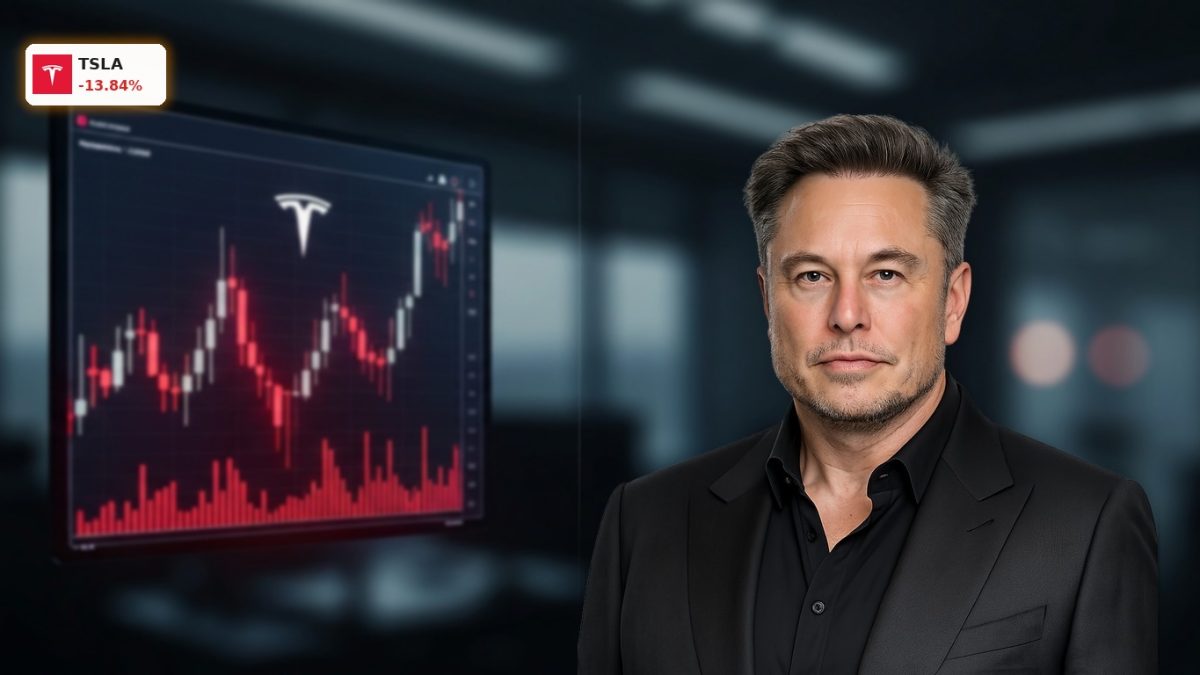
The primary driver behind the negative market reaction was a massive bottom-line miss in the second-quarter Tesla Earnings. While Tesla reported a revenue beat of $28.24 billion—surpassing the consensus estimate of $25.71 billion—adjusted earnings per share (EPS) came in at just $0.33, far below the $0.51 projected by analysts.
Profitability was heavily squeezed as gross margins slid to 16.8%, missing the 19.5% Wall Street estimate. Furthermore, the company recorded its first negative free cash flow in two years, posting a deficit of $1.09 billion. This cash burn was driven by capital expenditures that more than doubled year-over-year to $5.79 billion. Following the print, several prominent financial institutions adjusted their outlooks. JPMorgan lowered its price target on the stock to $445, maintaining a “Neutral” rating, while Cantor Fitzgerald trimmed its target from $510 to $485 but kept its “Overweight” rating.
Is Elon Musk Prioritizing AI Over Electric Vehicles?
The latest Tesla Earnings confirm that the company is transitioning from a pure-play automaker into a speculative AI and robotics powerhouse. Operating expenses climbed 47% to $4.35 billion, fueled by massive investments in physical AI infrastructure, the Optimus humanoid robot, and the Cybercab network. CEO Elon Musk defended the aggressive spending on the analyst call, stating that the company should be investing in capital expenditures as fast as possible without being wasteful.
While traditional auto margins fell to 16.3% due to global price cuts, Tesla’s technology segments showed rapid growth. Active Full Self-Driving (FSD) subscriptions surged 56% year-over-year to 1.48 million. However, commercializing these innovations remains a long-term play. Musk preached patience regarding the Optimus rollout, acknowledging that scaling production of the humanoid robot is an incredibly complex manufacturing challenge. George Gianarikas of Canaccord Genuity lowered his price target to $410 but maintained a “Buy” rating, noting that while Tesla’s AI potential is intoxicating, stagnant margins remain a near-term hurdle. Meanwhile, RBC Capital maintained an “Outperform” rating with a $500 target, viewing the elevated R&D as a positive for AI valuation.
Will Tesla and SpaceX Eventually Merge?
A fascinating detail buried in the financial statements was a pre-tax unrealized gain of $1.005 billion ($763 million after-tax) on Tesla’s minority stake in SpaceX. This paper gain accounted for approximately 68.5% of Tesla’s GAAP net income of $1.114 billion. This has reignited speculation about a potential merger.
During the earnings call, Musk did not dismiss the idea of a combination, noting that the two companies share extensive collaborations, such as the TeraFab semiconductor project. ARK Invest has championed the idea, suggesting a combination would create a powerful AI entity. However, analysts point out that any formal merger would face immense regulatory scrutiny and valuation hurdles, especially as SpaceX is currently valued at around $1.5 trillion compared to Tesla’s $1.1 trillion market cap.
Related Coverage
We should be spending on capex as fast as we can spend — as fast as we can without it being too wasteful.— Elon Musk
For a deeper look at how the market reacted to these financial figures, read our detailed analysis on how Tesla Earnings Disappoint: Stock Drops -5.4% on AI Spending. Additionally, Tesla is not the only tech giant facing investor scrutiny over massive infrastructure outlays; you can explore similar market dynamics in our report on the Amazon AI Strategy: Stock Drops -2.2% Amid Massive Capex Shock.