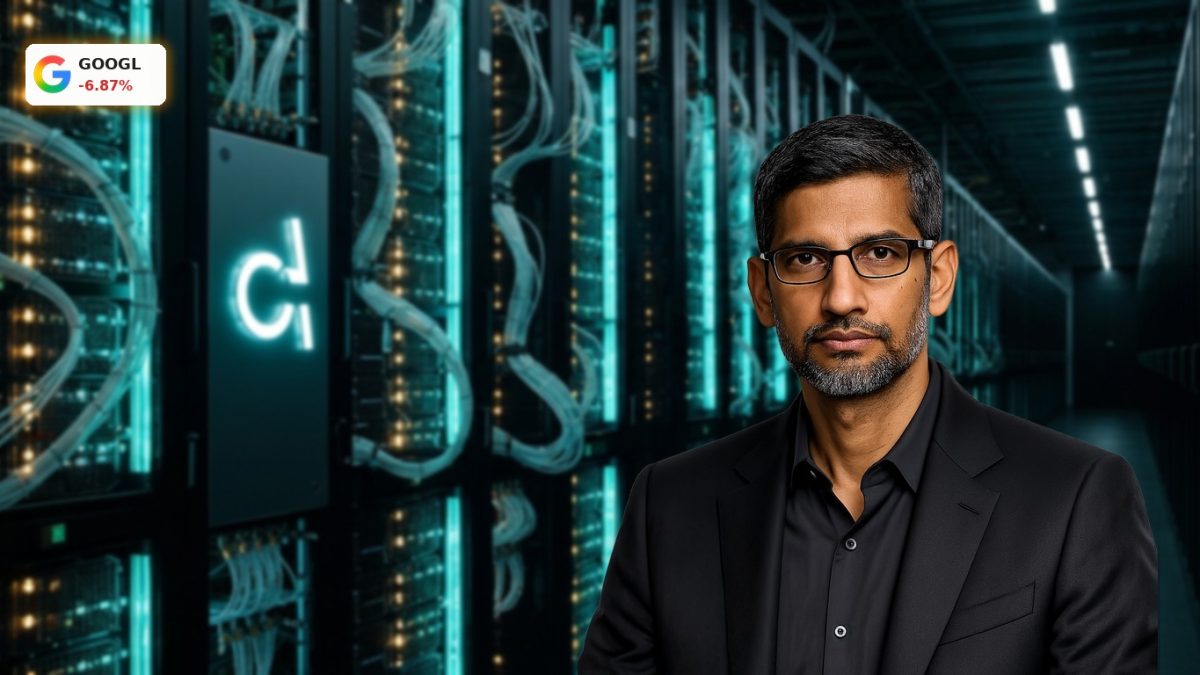

Will Alphabet’s aggressive pivot into artificial intelligence pay off, or has the tech giant just triggered an unstoppable cash burn?

Why is Alphabet AI Spending Spooking Investors?
During the second quarter, Alphabet reported capital expenditures of $44.9 billion, representing a massive 100% year-over-year increase. Management raised its full-year capital expenditure guidance to a range of $195 billion to $205 billion, up from its previous estimate of $180 billion to $190 billion. This aggressive **Alphabet AI Spending** has triggered a strategic shift, leading the company to halt its stock buybacks.
The immediate consequence is a historic cash burn. Operating cash flow of $39.1 billion was eclipsed by capital outlays, leaving the company with a negative free cash flow of $5.9 billion. This marks the first negative cash flow quarter since Google went public in 2004. CFO Anat Ashkenazi warned that technical infrastructure investments would continue to pressure cash flows, with capital outlays projected to increase “significantly” in 2027. This raised worries on Wall Street that the tech giant is entering an expensive arms race with peers like Microsoft and Tesla.
Will Google Cloud Growth Validate This Capex Binge?
Despite the cash flow concerns, bulls argue that the massive **Alphabet AI Spending** is backed by tangible demand. Google Cloud revenue surged 82% year-over-year to $24.8 billion, easily beating analyst estimates. The division’s operating margins nearly doubled to 35.6%.
Furthermore, Alphabet reported a record cloud backlog of $514 billion, up from $460 billion in the first quarter. CEO Sundar Pichai highlighted that the company’s AI model APIs are now processing 22 billion tokens per minute. To keep up, Google is even renting third-party compute capacity from partners like SpaceX, in which it holds a newly disclosed 6% stake valued at $94.1 billion. This indicates that the current **Alphabet AI Spending** is chasing confirmed enterprise orders.
Where Do Wall Street Analysts Stand on the Stock?
The financial community remains divided. JPMorgan analyst Doug Anmuth maintained an Overweight rating but lowered his price target to $420 from $460, suggesting that investors should buy the dip because Google continues to show excellent returns on its AI investments. Similarly, BMO Capital analyst Brian Pitz maintained an Outperform rating and raised his price target to $465.
Conversely, Piper Sandler cut its price target to $395, citing upcoming margin pressures. DA Davidson analyst Gil Luria maintained a Neutral rating and lowered his target to $350, expressing skepticism about how quickly the elevated capital expenditure will translate into sustainable free cash flow.
How Serious Is the New $1 Billion EU Fine?
Compounding the earnings drama, the European Commission fined Google €890 million ($1.02 billion) on Thursday for violating the Digital Markets Act (DMA). Regulators ruled that Google unfairly favored its own services in search results and restricted app developers from steering users to cheaper payment methods outside the Google Play Store. Google has 60 days to comply with the ruling or face additional penalties of up to 5% of its global turnover. Google’s president of global affairs, Kent Walker, criticized the decision, stating it degrades the user experience by stripping away helpful real-time search features.
Related Coverage
The EU’s implementation of the Digital Markets Act continues to break everyday products. To comply, we are having to strip away real-time Search features Europeans love — like instant pricing and direct availability for hotels, flights, and restaurants.— Kent Walker, President of Global Affairs at Google
For further insights into how these massive infrastructure investments are reshaping tech portfolios, read our detailed analysis on the Alphabet Earnings Shock: Stock Drops -4.6% as AI Capex Surges. Additionally, as big tech companies face disruption from decentralized alternatives, you can explore how other enterprise giants are defending their market share in Salesforce Buzz: Can Jack Dorsey’s New Platform Disrupt Slack?.