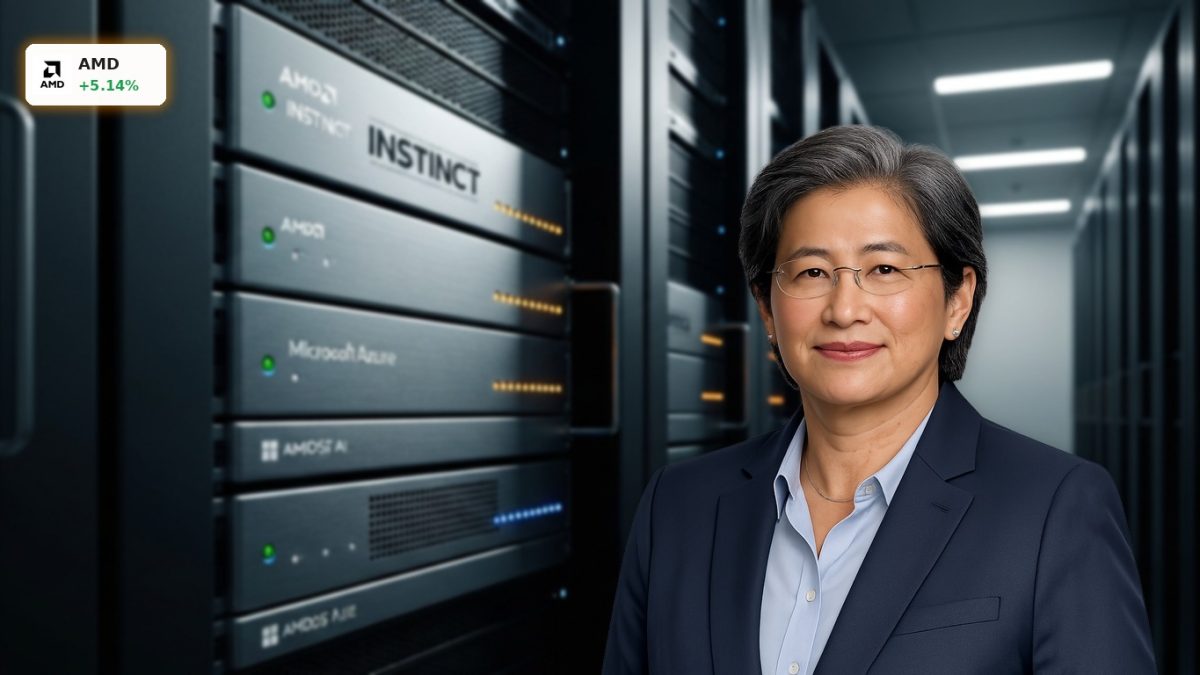

Can the new AMD Microsoft Partnership finally break Nvidia’s near-monopoly on the highly lucrative AI chip market?

How Does the AMD Microsoft Partnership Impact Nvidia?
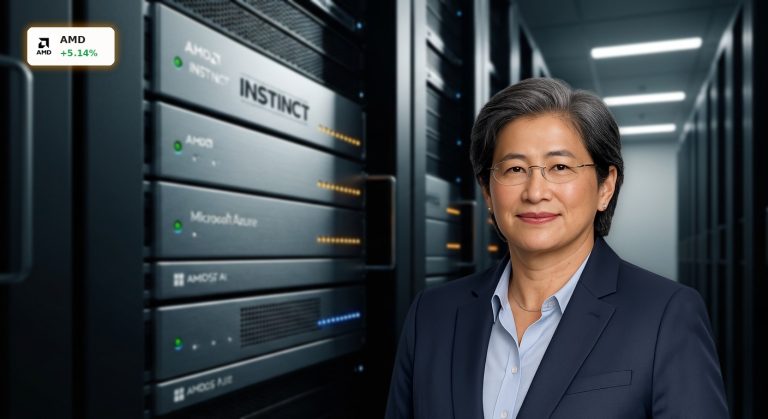
The expanded **AMD Microsoft Partnership** directly targets NVIDIA‘s near-90% stranglehold on the highly lucrative AI chip market. Currently, AMD holds roughly 4.5% of the global AI silicon market, but industry analysts believe the Helios system could help the company capture 20% to 25% over the longer term. Helios is a comprehensive rack-scale solution featuring 72 AMD Instinct MI455X GPUs, EPYC CPUs, and Pensando DPUs. It gives cloud providers a viable, high-performance alternative to Nvidia’s dominant architecture.
This diversification is crucial for Microsoft as it seeks to scale its Azure cloud platform while managing capital expenditures. Beyond Azure, AMD has already secured commitments from other tech heavyweights, including Meta Platforms and Oracle, to deploy these advanced rack systems. While Nvidia is counter-attacking with its own next-generation systems, AMD’s aggressive hardware and software integration proves it is no longer just a budget alternative, but a front-running competitor in high-end AI acceleration.
What Do Wall Street Analysts Say About Advanced Micro Devices?
Financial institutions are increasingly bullish on Advanced Micro Devices ahead of its upcoming quarterly earnings report on August 4, 2026. Stacy A. Rasgon of Bernstein Research maintained an “Outperform” rating on the stock with a $600 price target, highlighting AMD’s strength in the server segment. Meanwhile, Rosenblatt named AMD a top pick and aggressively raised its price target to $665. UBS was even more optimistic, lifting its price target to $700 in anticipation of AMD’s upcoming product rollouts.
These upgrades reflect growing confidence that the **AMD Microsoft Partnership** and the rollout of Helios in the second half of 2026 will drive substantial top-line revenue growth. In the first quarter of 2026, AMD reported $10.25 billion in revenue, representing a 38% year-over-year increase. This rapid expansion shows that the company is successfully capturing market share from legacy rivals while capitalizing on the ongoing AI infrastructure boom.
Will Supply Chain Pressures Affect Advanced Micro Devices?
While the **AMD Microsoft Partnership** acts as a powerful catalyst, the semiconductor giant must navigate macroeconomic headwinds. Recent price increases from manufacturing partners mean AMD will likely have to pass on higher production costs to its customers. Additionally, rising geopolitical tensions and fluctuating energy costs could present challenges to global supply chains. However, AMD’s recent $10 billion investment in the Taiwan manufacturing ecosystem demonstrates a proactive approach to securing its supply lines. Wall Street remains focused on the massive upside of the AI buildout, which continues to outweigh short-term cost pressures.
Related Coverage
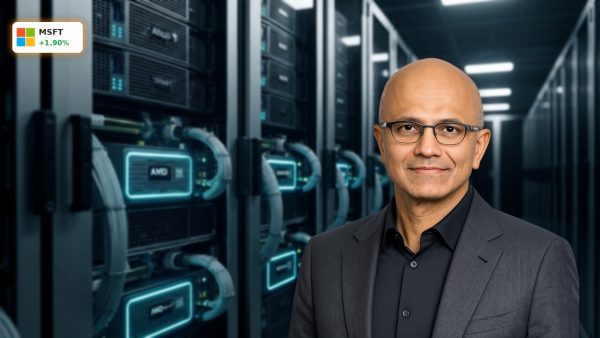
Through our collaboration with AMD, we are expanding the Azure infrastructure portfolio with AMD Helios to give customers the performance, scale and choice they need to build and run the next generation of AI applications.— Satya Nadella, CEO of Microsoft
Investors looking to understand the broader implications of these developments should examine how the company’s long-term product roadmap is shaping up. For a deeper dive into the market dynamics, read about how the AMD AI Strategy Drives +3.7% Surge as Wall Street Targets $700, which analyzes whether this aggressive push can successfully challenge industry rivals and propel the stock to historic highs.