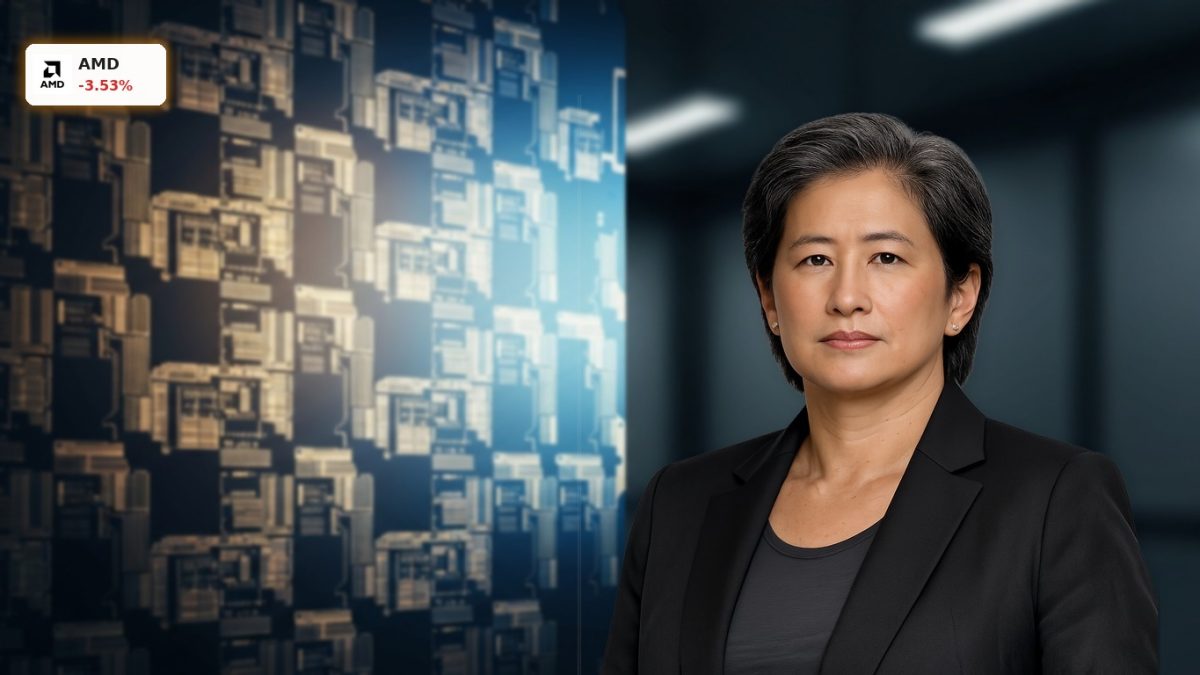

Can AMD’s upcoming MI450 accelerator break Nvidia’s AI monopoly, or will the current market sell-off drag the stock down further?

Why is the chip sector experiencing a sudden sell-off?
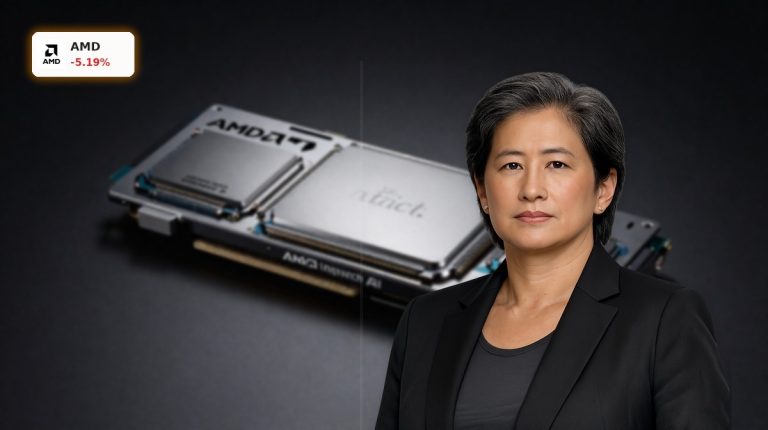
The semiconductor space saw extreme price swings as profit-taking and a sector rotation pressured top-tier hardware names. With the market volatility index elevated, investors locked in gains from the recent tech rally, moving capital back into other megacap tech giants. Advanced Micro Devices, Inc., which designs high-performance processors but relies on Taiwan Semiconductor Manufacturing Company (TSMC) for fabrication, was swept up in this industry-wide flush. Additionally, regulatory filings revealed that Vice President Mark D. Papermaster registered the intent to sell 6,000 restricted shares of the company, a routine insider move executed through Morgan Stanley Smith Barney LLC that drew close attention from retail traders during after-hours discussions.
How does the new AMD Analysis evaluate the MI450?
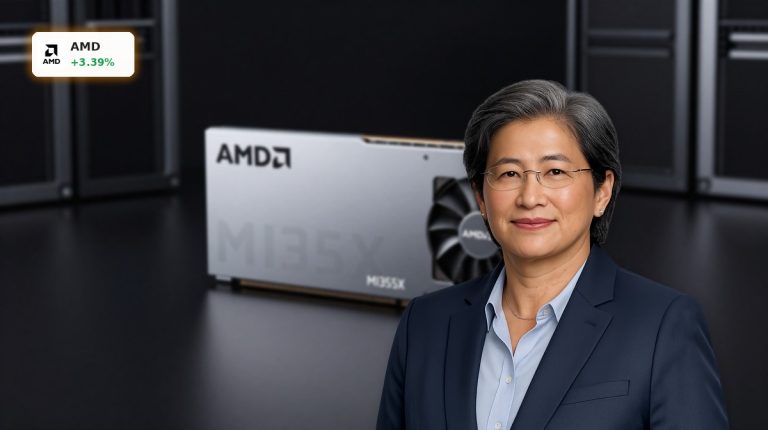
A fresh AMD Analysis by financial institution BNP Paribas highlights a major structural shift in the company’s artificial intelligence strategy. Analysts point out that the upcoming MI450 accelerators, combined with the Helios rack-scale architecture, represent the company’s first genuine opportunity to compete with NVIDIA at the integrated system level. By acquiring ZT Systems, the company is transitioning from selling individual graphics processing units (GPUs) to delivering complete, fully optimized server racks that integrate compute, networking, and system design.
However, BNP Paribas cautioned that hardware is only half the battle. The investment firm noted that software remains the primary gating factor. While the open-source ROCm software stack has improved, it still lags behind Nvidia’s deeply entrenched CUDA platform. Furthermore, the company faces networking bottlenecks, trailing both Nvidia and Broadcom in delivering high-speed AI fabric. Despite these hurdles, the MI450 is currently sampling with lead customers, positioning the chipmaker as a vital secondary supplier for hyperscalers like Meta Platforms and OpenAI who are desperate to diversify their supply chains.
Will upcoming earnings justify the premium valuation?
As the market prepares for the second-quarter earnings release on August 4, after the market closes, investors are debating the stock’s premium multiples. Trading at a high trailing earnings multiple, the company must deliver flawless execution to sustain its 139% year-to-date rally. Fortunately, a massive structural shift in AI data center design could act as a powerful tailwind.
While early AI infrastructure focused almost exclusively on GPUs for model training, the industry’s transition toward inference and agentic AI workloads has sparked a massive resurgence in central processing unit (CPU) demand. Research firm TrendForce estimates that the CPU-to-GPU ratio in data centers could shift from 1:4 to nearly 1:1, representing a potential fourfold increase in server CPU demand. This shift has already driven server CPU prices up by 10% to 20% earlier this year, allowing the chip designer to leverage its pricing power. According to Mercury Research, the company controlled 46.2% of the server CPU revenue share in early 2026, positioning it perfectly to capitalize on these rising prices. For Q2, management guided for a 46% year-over-year revenue surge to $11.2 billion, a target many analysts believe could be exceeded.
What are the latest Wall Street analyst ratings?
Financial firms remain divided on the near-term upside. William Blair recently initiated coverage on the semiconductor giant with a “Market Perform” rating, opting not to set a specific price target. The firm acknowledged that the company is a prime beneficiary of the AI infrastructure boom, projecting revenue to double from $52 billion in 2026 to over $104 billion by 2028. However, William Blair warned that competing with Nvidia in the GPU space remains an uphill battle, suggesting the current valuation balances strong AI demand against competitive risks. Meanwhile, long-term historical data compiled by Benzinga shows the stock has outperformed the broader market over the past 15 years, delivering an average annual return of 33.9%.
Related Coverage
For more insights on how market sentiment is shifting around this stock, read about how the AMD Stock Surges 3.68% as AI Optimism Ignites Tech Rally, highlighting the massive institutional volume driving recent price action. Additionally, check out our analysis on other high-tech sectors in the IonQ Earnings: Stock Drops -3.9% Ahead of Q2 Results review to see how quantum computing firms are managing their backlogs amid the broader tech sell-off.
Conclusion
This latest AMD Analysis underscores that while short-term semiconductor volatility remains high, the company’s expanding server CPU market share and its upcoming MI450 rack-level hardware present formidable long-term growth drivers. For forward-looking investors, the upcoming Q2 earnings report on August 4 will serve as the ultimate litmus test to prove whether the company can successfully monetize the next wave of agentic AI infrastructure. Ultimately, the company’s ability to close the software integration gap will determine if it can truly break Nvidia’s monopoly and reward patient shareholders.