
Can NVIDIA’s powerful software moat protect the stock from a deeper correction as semiconductor supply chain worries mount?

Why is the semiconductor sector under pressure?
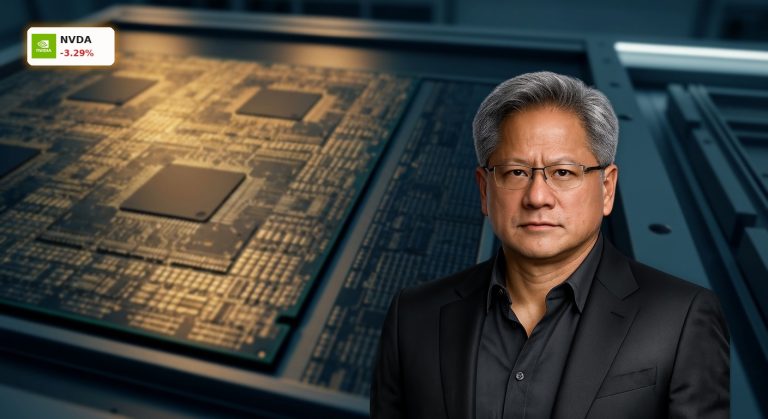
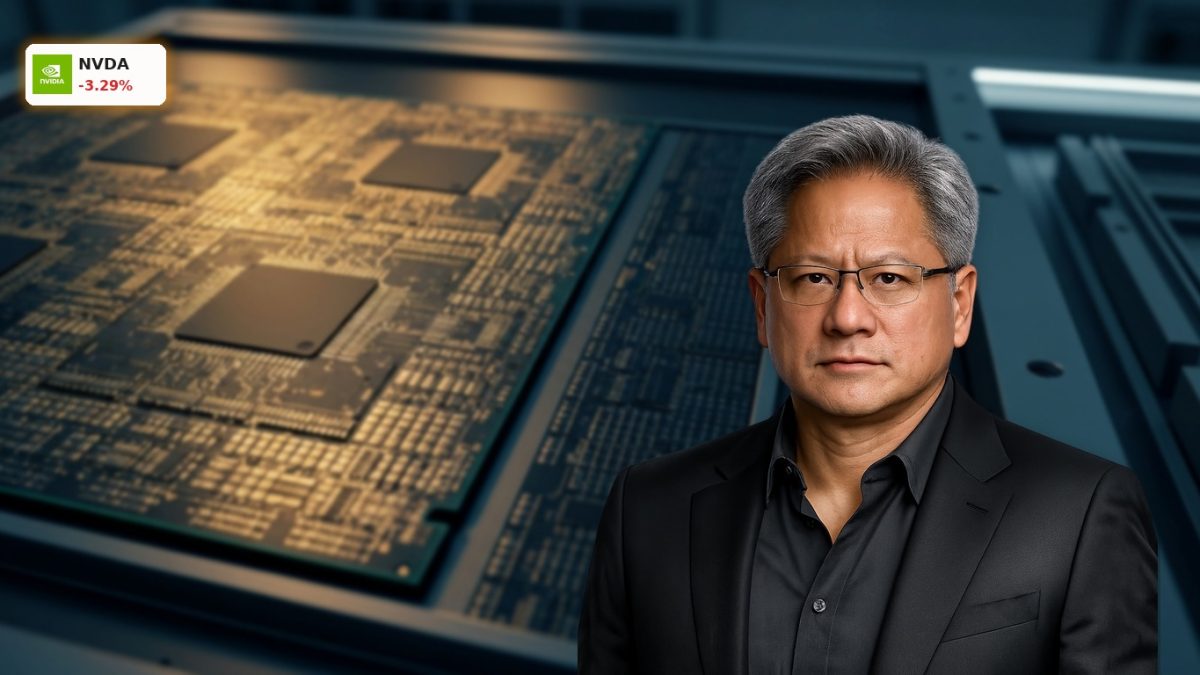
Wall Street experienced a challenging session on Monday, with the tech-heavy NASDAQ Composite sliding 1.06% to 26,002.95 and the S&P 500 dropping 0.49% to 7,538.37. The weakness was heavily concentrated in the semiconductor space, as the Philadelphia Semiconductor Index plunged 3.2%. Shares of NVIDIA Corporation fell 3.29% to close at $203.61, down from its previous close of $210.96. The decline was largely triggered by a broader risk-off mood and memory-cycle worries originating from South Korea’s SK Hynix, a primary supplier of high-bandwidth memory (HBM) for NVIDIA.
This market-wide pullback reflects growing investor caution after a massive run-up in tech valuations. Many on Wall Street are beginning to question whether the astronomical capital expenditures by hyperscalers like Alphabet, Microsoft, and Meta will yield the anticipated returns quickly enough. With the S&P 500 trading at elevated historical multiples, any perceived bottleneck or supply chain disruption in the NVIDIA AI hardware complex is being met with swift profit-taking rather than immediate dip-buying.
How secure is the NVIDIA AI software moat?
Despite the immediate market pressure, many analysts argue that the long-term investment thesis for the company remains incredibly robust. The primary reason for this resilience is the company’s proprietary CUDA software platform. CUDA acts as a powerful moat, ensuring that developers, cloud providers, and enterprise clients remain locked into the ecosystem. This software dominance allowed the chipmaker to print a non-GAAP gross margin of 75% in its most recent quarterly results, highlighting that this is a highly profitable proprietary platform rather than a commodity chip business.
Financially, the company continues to operate as a powerhouse. In its first quarter of fiscal 2027, total revenue grew 85.2% year-over-year to $81.61 billion, driven by data center revenue of $75.25 billion. Looking ahead, management has guided for Q2 revenue of $91 billion. While some investors worry about a potential growth deceleration, senior analyst Vivek Arya from Bank of America Securities reiterated his buy rating on the stock on July 10, 2026. Bank of America Securities set a highly bullish price target of $350, urging institutional funds to accumulate shares during pullbacks. This target represents a potential 68% return on investment from the current trading range.
Is the massive market capitalization sustainable?
With a market capitalization hovering around the $5 trillion mark, the company is constantly battling the law of large numbers. To put this in perspective, Apple recently reached an all-time high with a market cap of $4.73 trillion, narrowing the valuation gap to its semiconductor rival. Some market participants are concerned about how much future growth is left to capture. If the company’s valuation were to match its historical 900% return over the next five years, it would require a valuation of $50 trillion—an unrealistic share of the global economy.
Furthermore, rumors of a potential delay in the Kyber rack architecture initially caused some concern, though the company quickly clarified that the launch roadmap remains intact for the second half of 2027. While competition from custom silicon developed by hyperscalers is emerging, the absolute demand for high-end NVIDIA AI processors continues to outstrip supply, keeping the company on strict allocation.
Related Coverage
AI is growing faster and will be larger than any platform shifts before, including the Internet, mobile, and cloud.— Jensen Huang
For a deeper look into how international trade restrictions are shaping the semiconductor landscape, read our analysis on the NVIDIA China AI Chips: H200 Access Shock Boosts Outlook, which details how limited GPU access in Asian markets could reset the growth narrative. Additionally, the broader financial strain on tech infrastructure spending is explored in Oracle Debt Warning: Stock Plunges 6.2% After S&P Downgrade, highlighting the risks of aggressive debt-fueled AI expansions across Wall Street.