
Can the NVIDIA AI Partnership turn a chip leader into the operating system behind government AI, next-gen CPUs, and robotics?

What Does the NVIDIA AI Partnership Mean for U.S. Government AI?
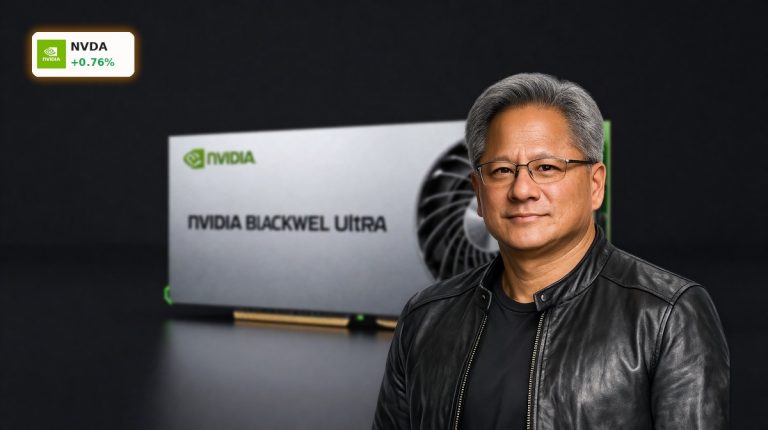
NVIDIA Corporation and Palantir Technologies have expanded their collaboration to deliver sovereign, air-gapped AI to U.S. federal agencies — a move with immediate implications for defense contractors, federal IT budgets, and Wall Street’s exposure to AI infrastructure risk. The partnership leverages NVIDIA’s Nemotron open-source models and Blackwell Ultra GPUs, integrated with Palantir’s Foundry and AIP platforms, to build turnkey AI operating systems for classified environments. This isn’t theoretical: the Palantir AI OS Reference Architecture (AIOS-RA) is already deployed in pilot programs across the Department of Defense and intelligence community. For investors, it transforms NVIDIA from a chip supplier into a mission-critical systems integrator — a structural upgrade that broadens its TAM beyond data center GPUs into software-defined AI governance.
Can NVIDIA Win the CPU War Against AMD and Intel?
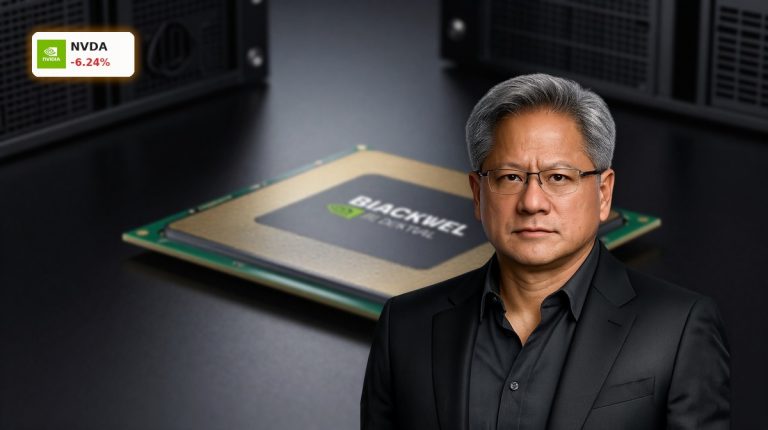
Yes — and it’s already shipping. NVIDIA Corporation’s first stand-alone CPU, launching this fall under the Vera Rubin platform, targets $20 billion in sales in 2026 alone. While AMD holds ~39% and Intel ~60% of the traditional PC CPU market, NVIDIA’s play is focused on the AI-optimized data center CPU — where its CUDA ecosystem, memory bandwidth, and GPU-CPU co-design create a moat competitors can’t replicate overnight. Bernstein recently reiterated its ‘Outperform’ rating on NVIDIA, highlighting its leadership in humanoid robotics processors — where the CPU functions as the ‘brain’ — further validating NVIDIA’s vertical integration strategy. This isn’t diversification; it’s convergence.
How Is the Mag 7 Rotation Impacting NVIDIA’s Valuation?
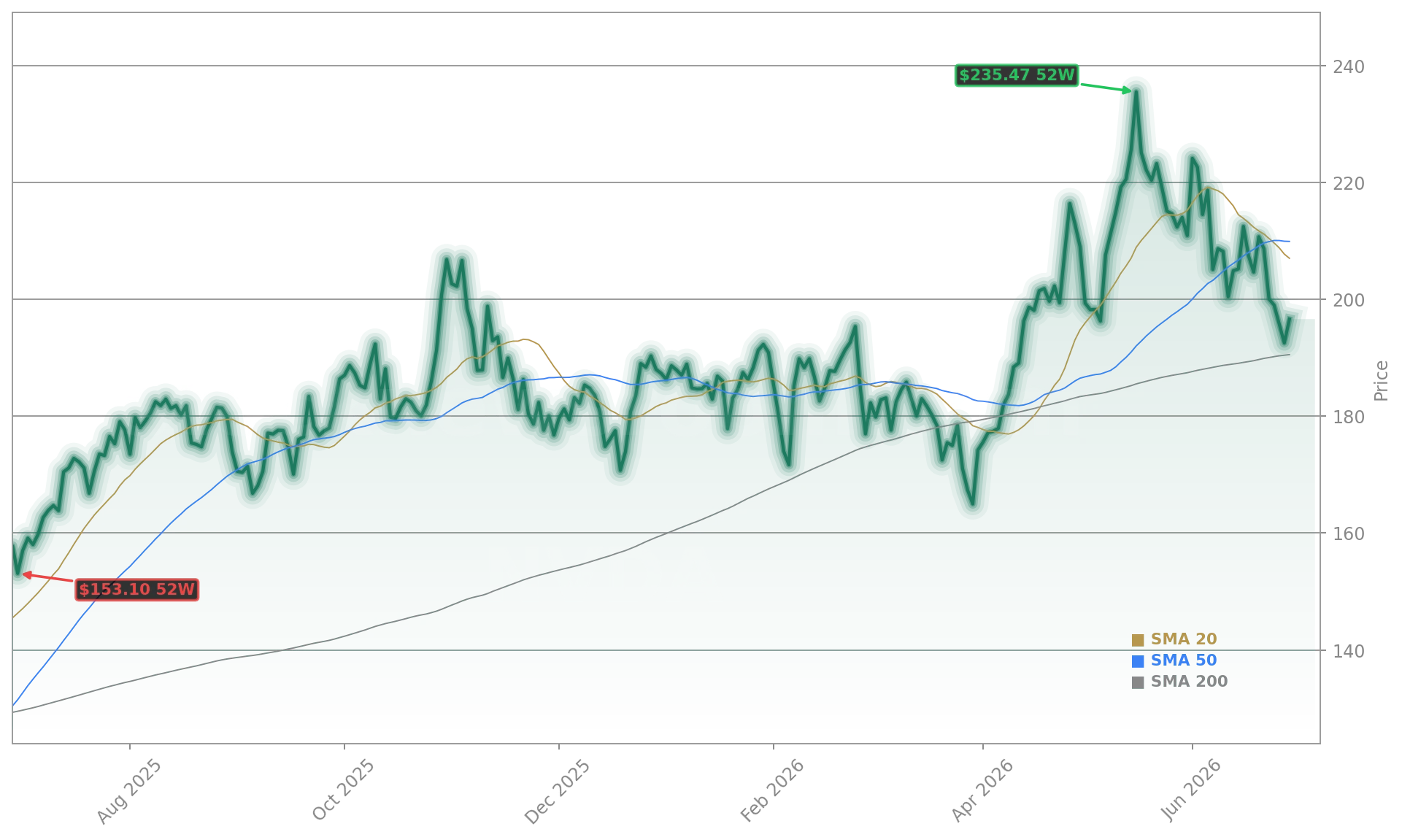
The Magnificent Seven collectively shed $2.3 trillion in market value in June, with NVIDIA down ~13% from its May high. Yet unlike Apple or Microsoft — whose valuations hinge on services and ad revenue — NVIDIA’s multiple remains anchored to tangible, accelerating infrastructure demand. At 21x forward earnings (versus AMD’s 70x), it trades at a steep discount to peers despite commanding 85–92% of the data center GPU market. Stacy Rasgon of Mizuho Securities maintains a ‘Buy’ rating and $315.00 price target, citing ‘unmatched execution on AI factory deployments’ and ‘visibility to $1 trillion in Blackwell/Vera Rubin revenue.’ That visibility matters: when hyperscalers like Meta and Microsoft report Q2 capex next month, NVIDIA’s revenue trajectory won’t hinge on sentiment — but on silicon shipment velocity.
Is Robotics the Next Leg of NVIDIA’s AI Dominance?
Absolutely — and Wall Street is taking notice. NVIDIA’s Jetson AI platform will power Firefly Aerospace’s Blue Ghost 2 lunar mission later this year, enabling on-orbit AI inference — a preview of real-time, low-latency robotic decision-making. Penguin Solutions has been named an NVIDIA AI Factory Specialized Partner, validating NVIDIA’s full-stack infrastructure model across defense, aerospace, and industrial robotics. Bernstein underscores NVIDIA and Qualcomm as ‘foremost in developing processors that serve as the central brain of the robot’ — a $70 billion+ market by 2030. For U.S. portfolios, this isn’t niche exposure: it’s direct leverage to the next wave of agentic AI, where NVIDIA’s software-defined hardware stack is already embedded.
Related Coverage: NVIDIA AI Infrastructure -2.7%: Warning or Next AI Leg? explores whether recent pullbacks reflect temporary rotation or structural risk in AI capex. Palantir Partnership +4.4% Drives AI Aviation Expansion details how the NVIDIA AI Partnership is accelerating AI adoption in defense aviation — a $120 billion market where software-defined infrastructure is now mission-critical.
NVIDIA’s secret weapon is CUDA, a library of software tools that helps developers harness the raw, number-crunching power of GPUs for computationally intensive applications — giving NVIDIA a vast competitive advantage.— Source material synthesis
NVIDIA Corporation remains the central node in the AI value chain — not just for chips, but for sovereign software, robotics intelligence, and CPU-led compute convergence. For investors, the NVIDIA AI Partnership isn’t a tactical win; it’s the architecture of AI’s next decade. The next quarterly earnings will confirm whether hyperscaler capex holds — and whether Wall Street rotates back into leadership or embraces NVIDIA’s broader platform story. For long-term portfolios, this is the moment to double down on infrastructure moats — not just megacap momentum.