Can NVIDIA AI Infrastructure keep defying gravity as trillion-dollar AI spending meets a sudden pullback in NVDA shares?

What’s Driving NVIDIA AI Infrastructure Growth?
NVIDIA AI Infrastructure is no longer just about GPUs — it’s a vertically integrated ecosystem spanning chips, networking, cooling, software, and safety architecture. The company’s Q1 FY27 Data Center revenue surged to $75.25 billion, up 92% annually, while networking revenue jumped 199% on demand for InfiniBand, Spectrum-X, and NVLink. This reflects a structural shift: hyperscalers aren’t just buying chips — they’re procuring full-stack AI factories. CEO Jensen Huang’s declaration that this is “the largest infrastructure expansion in human history” is backed by hard numbers: $650 billion in 2026 AI CapEx is expected to rise to $1 trillion in 2027 and $3–4 trillion annually by 2030. Crucially, NVIDIA’s share of that spend is anchored by long-term contracts with OpenAI (10 GW), Anthropic (1 GW), Meta, and CoreWeave — not just quarterly orders.
How Is Vera Rubin Reshaping AI Infrastructure?
The upcoming Vera Rubin platform — debuting in Q4 2026 — is NVIDIA’s most consequential infrastructure leap since Blackwell. Designed for agentic AI and scientific computing, Rubin enables converged FP64 simulation and accelerated AI, dramatically accelerating time-to-discovery in climate science, drug discovery, and materials research. Dell, Supermicro, and Helix have already launched Rubin-based server and data center building block solutions (DCBBS), integrating up to 1,152 GPUs and 576 Vera CPUs per scalable unit. Crucially, Rubin’s NVL4 architecture pairs with NVIDIA’s DLC-2 direct liquid cooling — cutting water use to near zero and slashing cooling costs by up to $4 million annually per 50-MW facility. This isn’t incremental; it’s redefining how AI infrastructure scales physically and economically.
Why Are Robotics and Physical AI Now Core to NVIDIA AI Infrastructure?
NVIDIA AI Infrastructure now extends far beyond data centers — into factories, warehouses, and logistics. The June 2026 launch of NVIDIA Halos for Robotics marks the industry’s first full-stack safety system unifying AI compute, software, sensors, and inspection tools. Agility — deploying humanoids for Amazon, Toyota, and Schaeffler — is the first adopter. Meanwhile, LG Electronics executives visited NVIDIA’s headquarters to formalize cooperation in physical AI and robotics. This aligns with Huang’s thesis that “every industrial company will become a robotics company.” With 35 AI HPC supercomputers now in development across Europe and partnerships with Fervo Energy and Pacific Northwest National Lab on geothermal AI digital twins, NVIDIA is cementing its role as the foundational infrastructure layer for the entire physical AI economy — estimated to be 10x larger than the digital AI opportunity.
Who Are NVIDIA’s Key Infrastructure Partners — and Why Does It Matter?
NVIDIA AI Infrastructure thrives on strategic, symbiotic alliances — not just chip sales. Its $2 billion investment in Marvell and co-development of NVLink Fusion enables hyperscalers to integrate Marvell’s custom AI accelerators directly into NVIDIA’s ecosystem — a move analysts at RBC Capital Markets call “a defensible moat expansion.” Similarly, NVIDIA’s $1 billion investment in Nokia for AI-native optical networking positions photonics as the next AI bottleneck solution. And with CoreWeave — where NVIDIA owns 47 million shares and guarantees purchase of unsold compute through 2032 — NVIDIA has created a self-reinforcing infrastructure flywheel. These aren’t vendor relationships; they’re infrastructure co-development partnerships that lock in multi-year demand and raise switching costs for competitors.
Is the AI Infrastructure Narrative Still Intact Amid Market Volatility?
When someone like OpenAI needs an investment of $30 billion scale because it’s still before their IPO, NVIDIA backs it.— Jensen Huang, CEO of NVIDIA
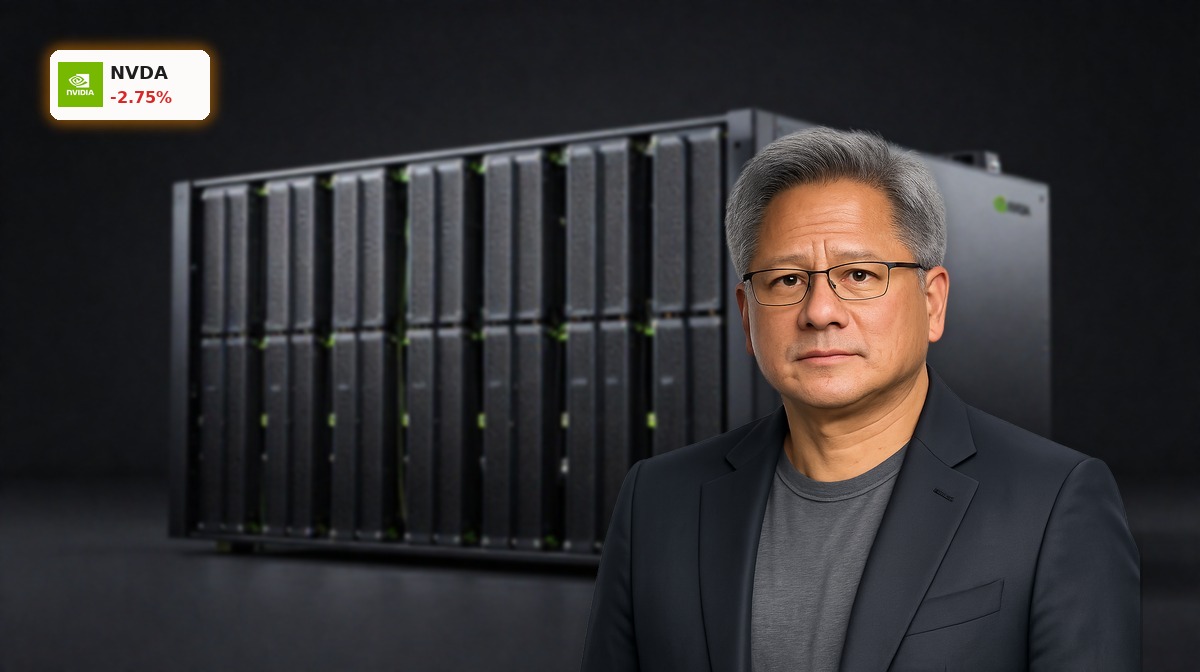
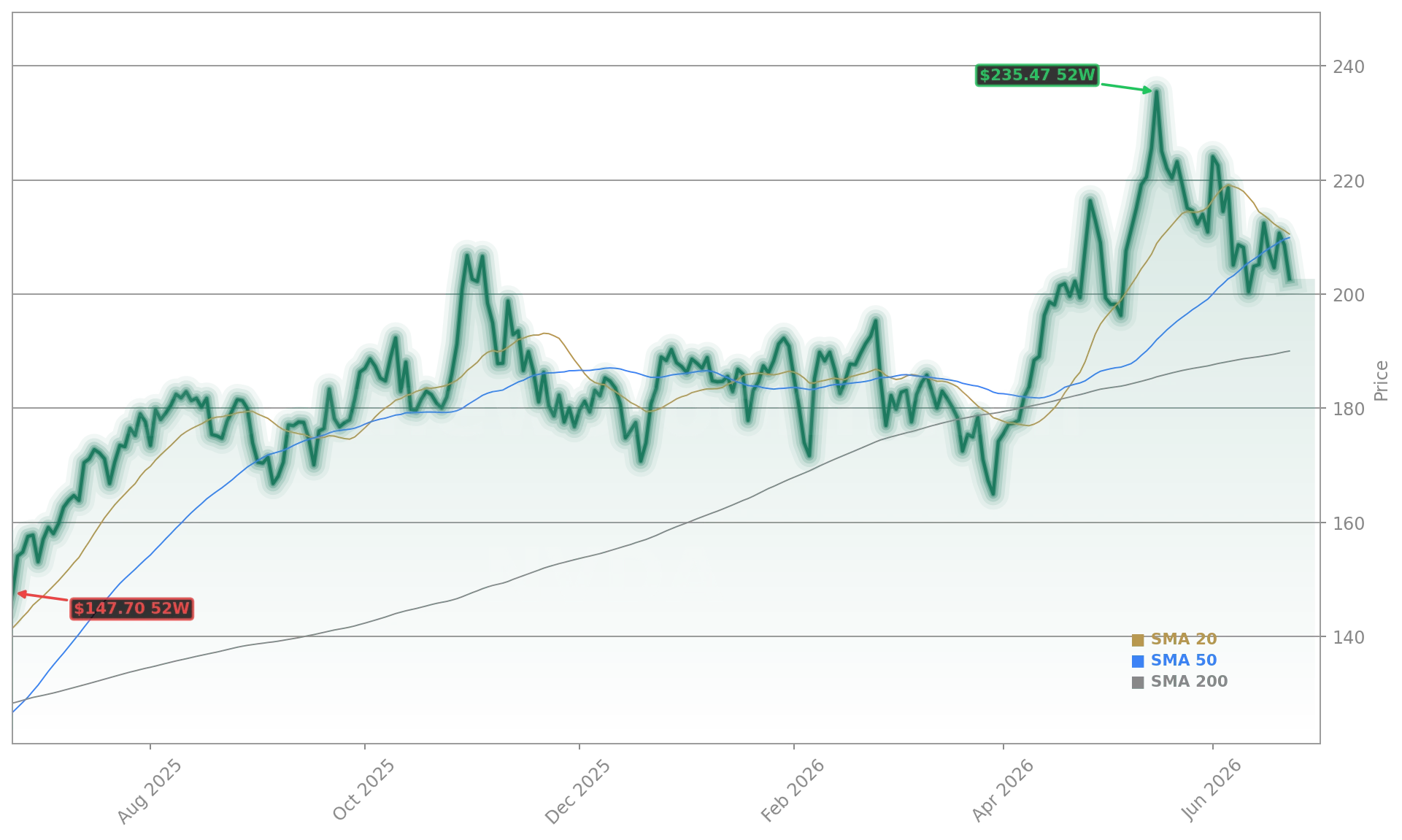
Yes — but the focus is shifting from pure chip supply to infrastructure resilience. While NVIDIA shares dipped 2.75% on June 23 amid a broad tech selloff triggered by South Korea’s KOSPI 10% plunge and Fed rate concerns, the underlying infrastructure demand remains unbroken. Analysts at Citigroup recently reiterated a $319 price target, citing “unrelenting hyperscaler CapEx” and “Rubin’s architectural advantage.” Goldman Sachs highlights optical interconnect as the “next mega-trend in AI infrastructure,” directly validating NVIDIA’s Marvell and Nokia bets. Even amid volatility, NVIDIA generated $48.55 billion in quarterly free cash flow and raised its dividend 25x — signaling confidence in the long-term infrastructure runway. The AI infrastructure play isn’t cooling; it’s maturing.