Can AMD Acquisition moves in memory software and cloud infrastructure turn AI ambition into a real edge against NVIDIA?

What Does the AMD Acquisition Solve for Data Centers?
Advanced Micro Devices, Inc. has acquired MEXT, a startup specializing in AI-driven memory optimization software that enables flash storage to behave more like DRAM—boosting usable memory capacity while slashing infrastructure costs. Unlike traditional memory upgrades, MEXT’s predictive offloading technology addresses the core constraint limiting AI scalability: memory bandwidth and latency. This is especially critical for inference and agentic AI, where sequential reasoning and real-time responsiveness demand efficient data movement—not just raw compute. Analysts at RBC Capital Markets note that ‘MEXT’s IP fills a critical gap in AMD’s stack, allowing EPYC and Instinct deployments to scale deeper into regulated enterprise environments without memory tax.’ The deal complements AMD’s Venice CPU architecture, explicitly engineered for AI agents requiring high-frequency, low-latency CPU orchestration.
How Does the Rackspace Deal Accelerate AMD’s Cloud Strategy?
The phased deployment of AMD-powered infrastructure across Rackspace’s global data centers—starting late 2026—represents more than a cloud partnership. It’s validation: Rackspace will integrate AMD Instinct MI450 GPUs and next-gen EPYC CPUs into its Enterprise AI Cloud platform, targeting healthcare, financial services, and large-scale inference workloads. Unlike hyperscaler-only deployments, this enterprise-focused footprint signals broadening adoption beyond tech giants. Morgan Stanley analysts highlight that ‘Rackspace’s commitment confirms AMD’s traction in regulated verticals where security, compliance, and predictable TCO matter more than peak FLOPs.’ At full scale, the 30-MW deployment could deliver over 2 exaFLOPS of AI compute—making it one of the largest dedicated AMD cloud infrastructures outside of Meta or Microsoft.
Can AMD Outpace NVIDIA in the Agentic AI Era?
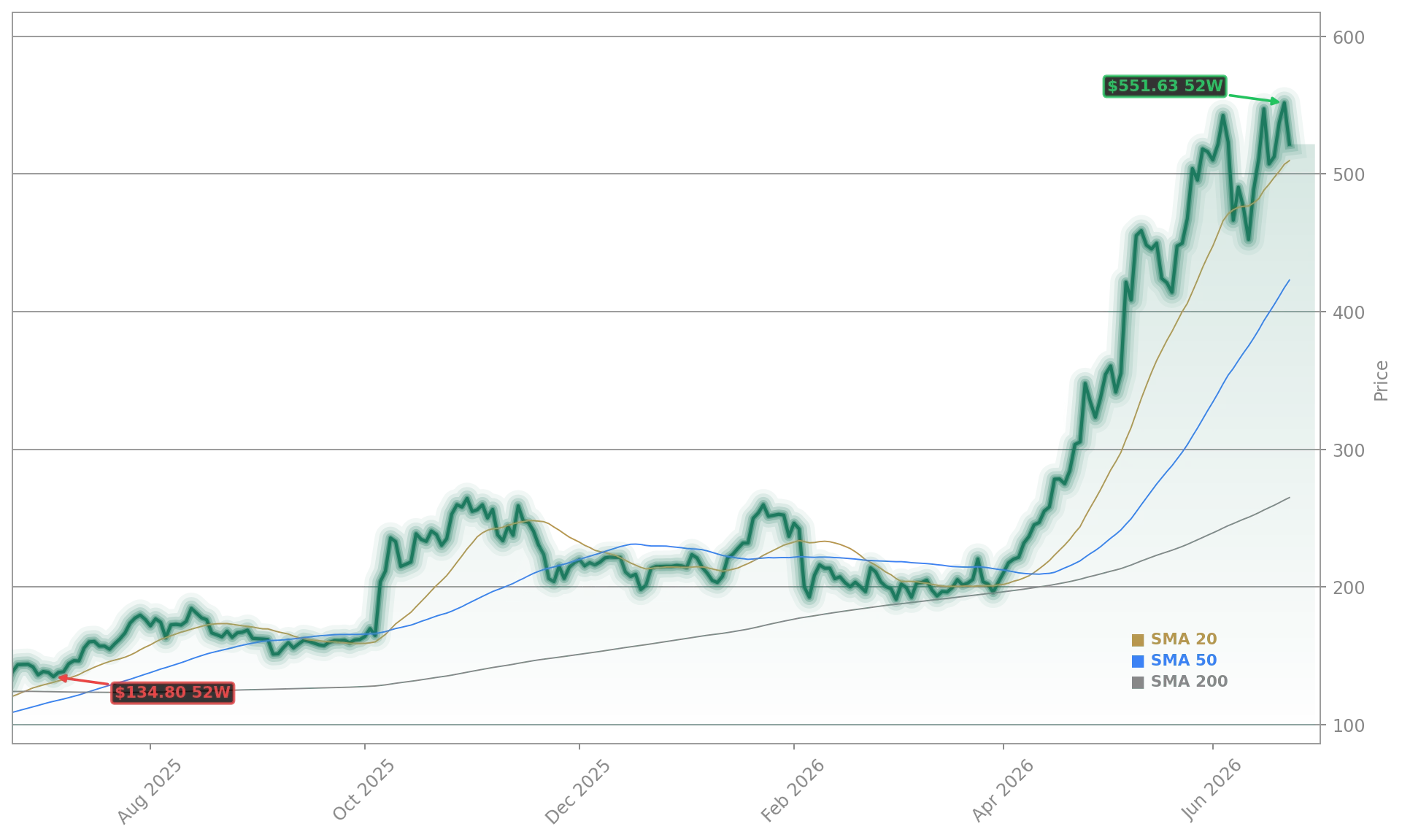
While NVIDIA dominates AI training, AMD is betting heavily on the next phase: agentic AI. With CPU-to-GPU ratios projected to shift from 8:1 in training clusters to 1:1 in AI agent servers, AMD’s dual leadership in EPYC CPUs and Instinct accelerators gives it structural advantage over pure-play GPU vendors. Intel’s 18A-P node progress and Apple’s rumored foundry talks with TSMC add competitive pressure—but AMD’s chiplet-based memory stacking (12-layer HBM integration) and MEXT-powered memory elasticity provide unique leverage. Citigroup raised its price target to $525, stating, ‘AMD’s agentic AI moat is widening—not narrowing—as inference workloads demand more memory-aware CPUs and less brute-force GPUs.’ Meanwhile, NVIDIA’s Vera CPU launch underscores how fiercely contested this frontier has become.
Is the Valuation Justified Amid Market Volatility?
MEXT’s technology fills a critical gap in AMD’s stack, allowing EPYC and Instinct deployments to scale deeper into regulated enterprise environments without memory tax.— RBC Capital Markets analyst
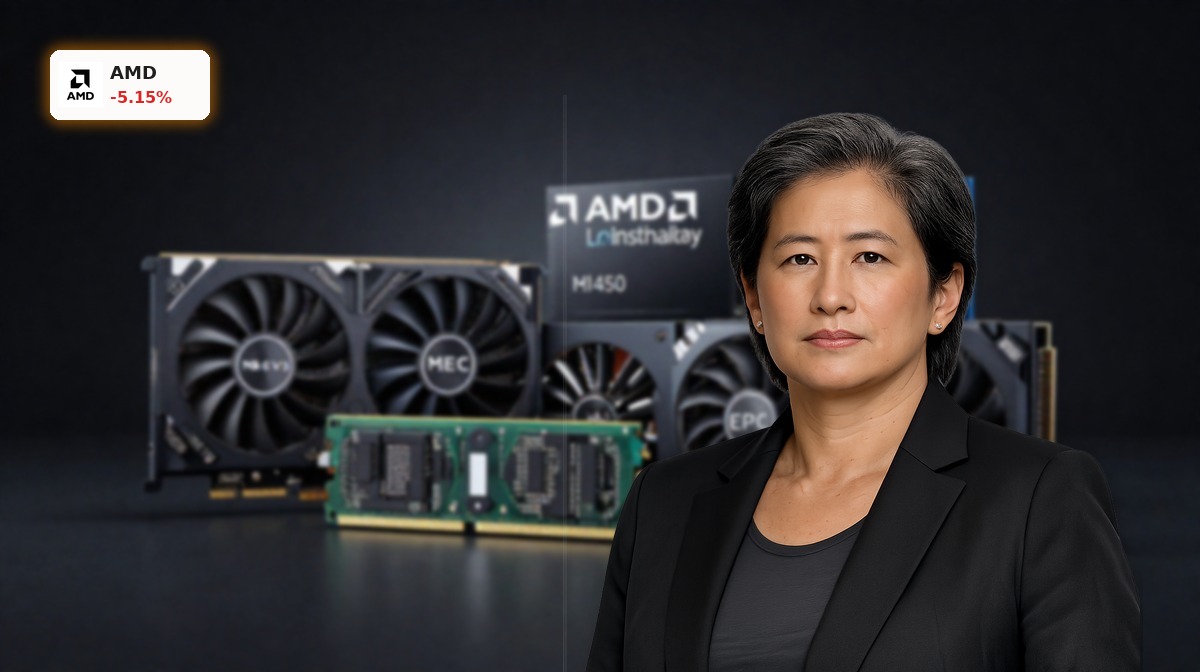
Despite a 5.15% intraday decline to $520.89—dragged down by a broad semiconductor sell-off and KOSPI-led memory weakness—AMD trades at a forward P/E of 192x, well above the S&P 500’s 24x. Yet institutional conviction remains strong: Generate Investment Management added $27.91 million in AMD shares, and Paragon Capital nearly doubled its stake. The disconnect reflects a market pricing in execution, not just potential. As Trefis notes, ‘AMD’s free cash flow tripled to $2.6 billion last quarter—giving it firepower to fund R&D, capacity expansion, and strategic M&A like the AMD Acquisition—without dilution or debt.’ With Q2 2026 earnings due August 4, Wall Street will scrutinize margin trends in the data center segment, where Instinct GPU shipments now carry below-corporate-average margins but drive long-term platform lock-in.