Can AMD AI Infrastructure turn a massive Rackspace buildout and a memory-tech buy into real enterprise AI market share?

Why is Rackspace betting big on AMD AI Infrastructure?
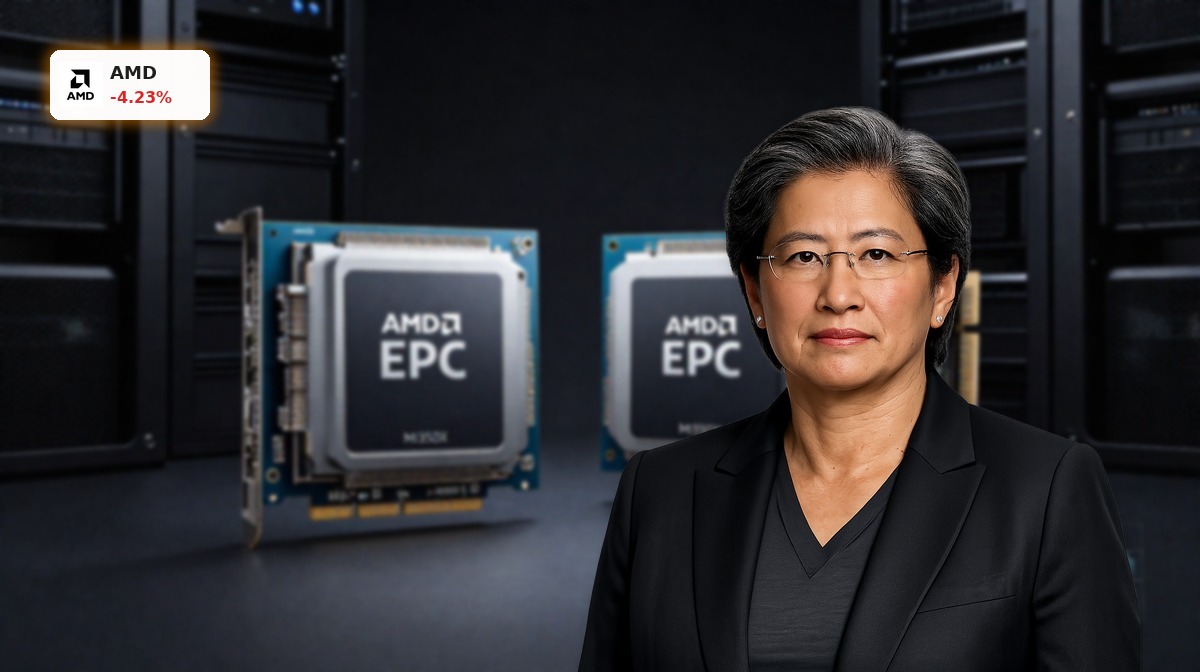
Rackspace Technology announced a definitive agreement to deploy 30 megawatts of dedicated AMD AI compute across its global data center footprint — starting in late 2026 and scaling through 2028. The deal formalizes a May memorandum of understanding and elevates AMD to a strategic silicon partner in Rackspace’s governed AI platform. The infrastructure will integrate AMD Instinct MI355X and MI350P GPUs alongside EPYC CPUs, powering four new offerings: Enterprise AI Cloud, Enterprise Inference Engine, Inference as a Service, and Bare Metal AMD Instinct. Crucially, this capacity is being positioned for regulated industries — especially healthcare — where clinical AI deployments demand security, accountability, and auditability. Rackspace shares surged 25% in premarket trading to $7.41, reflecting investor confidence in the pivot from legacy cloud services to AI-native infrastructure.
How does MEXT solve AMD’s memory bottleneck?
Memory constraints have emerged as one of the most acute bottlenecks in modern AI data centers — limiting throughput, inflating costs, and constraining inference scale. To address this, AMD acquired MEXT, a developer of AI-powered predictive memory technology designed to make NAND flash storage behave more like DRAM. This breakthrough enables greater usable memory capacity without sacrificing latency or bandwidth — a critical differentiator as hyperscalers and enterprises push for higher model density per rack. Unlike NVIDIA’s reliance on HBM3 and proprietary memory interconnects, AMD’s MEXT integration offers a cost-efficient, scalable path to memory expansion across its entire EPYC and Instinct portfolio. The deal also strengthens AMD’s ability to compete in inference-heavy workloads — where CPU-GPU synergy and memory efficiency matter more than raw training throughput.
What does this mean for AMD AI Infrastructure vs. competitors?
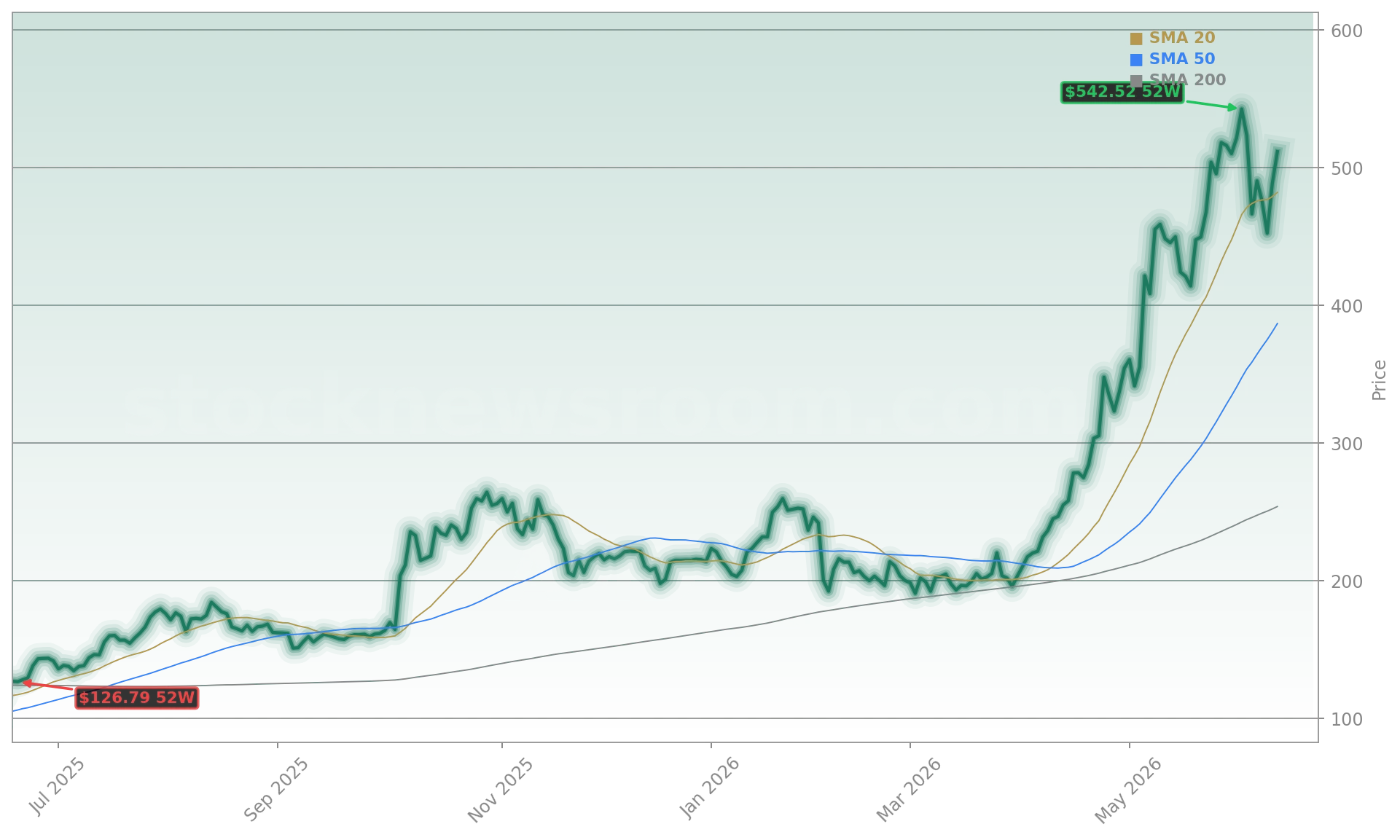
While NVIDIA dominates AI training with its CUDA ecosystem and H100/B100 stack, AMD is carving out a distinct niche in inference, regulated AI, and hybrid CPU-GPU deployments. Analysts note AMD’s dual-strength in both CPUs and GPUs gives it unique leverage in enterprise AI — particularly where workloads span legacy applications, real-time inference, and agentic systems. Citigroup’s Atif Malik raised AMD’s price target to $575 on June 15, 2026, reiterating a “Buy” rating, citing “accelerating enterprise AI adoption” and “increasingly credible MI450 Series traction.” Bank of America’s Vivek Arya lifted his target to $560, highlighting AMD’s “full-stack infrastructure momentum.” This contrasts with Intel’s recent 7% intraday drop despite a Bank of America double upgrade — underscoring investor preference for execution clarity over roadmap promises. AMD’s Q1 2026 Data Center revenue surged 57% year-over-year to $5.78 billion, outpacing the broader S&P 500’s tech-weighted gains.
Is AMD AI Infrastructure gaining institutional traction?
CPUs will become increasingly important in the AI domain — especially for inference, agentic workflows, and hybrid deployments where memory efficiency and security are paramount.— Stephan Gillich, former Intel Europe KI Specialist
Absolutely. Beyond Rackspace, AMD has secured design wins with AT&S — the Austrian printed circuit board leader — which reported a double-digit share surge following its AMD collaboration announcement. Meanwhile, Western Digital and Micron Technology (MU) hit record highs on Monday, signaling broad-based strength in the AI infrastructure supply chain. The 30 MW Rackspace deployment represents meaningful, near-term revenue visibility — not just a pilot — with commercial resources now jointly dedicated to enterprise customer acquisition. Importantly, the deal includes joint go-to-market initiatives targeting verticals where regulatory compliance is non-negotiable: healthcare AI validation, financial services model governance, and public-sector AI deployment. This institutional validation reinforces AMD’s narrative as a trusted infrastructure partner — not just a component supplier. As Citigroup noted, “AMD AI Infrastructure is transitioning from proof points to production scale.”