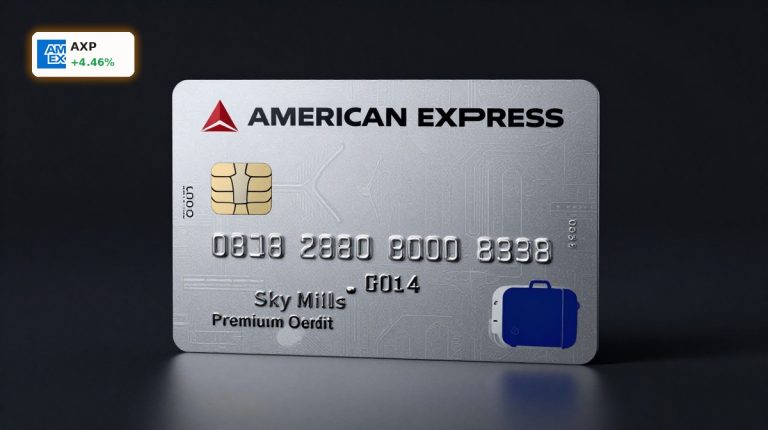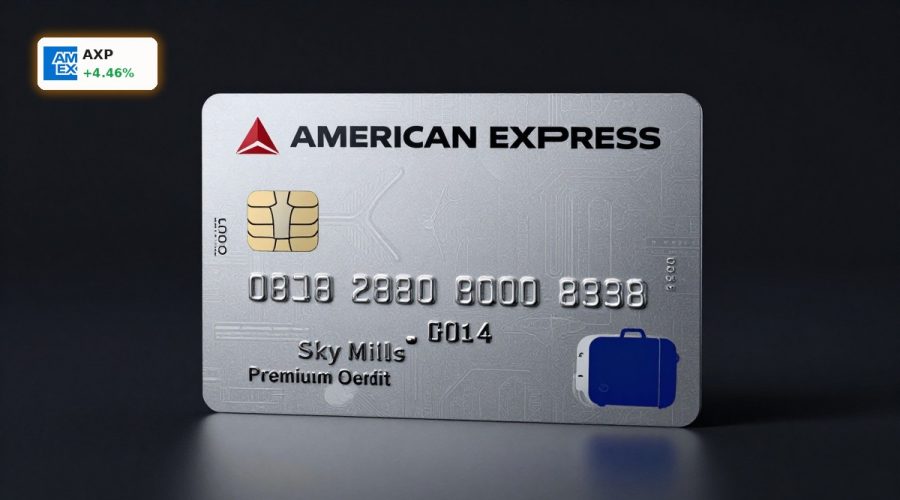

Can the American Express Delta Partnership turn richer travel perks into a lasting edge for AXP shares?

What’s New in the American Express Delta Partnership?
Effective immediately, Delta SkyMiles Gold, Platinum, and Reserve Card Members — both consumer and business — receive a complimentary second checked bag on all domestic Delta-operated flights. That benefit alone addresses a top pain point: 63% of high-income travelers say they spend more time deciding what to pack than planning their trip. Meanwhile, Gold and Gold Business Card Members gain access to a $120 annual Rideshare Credit — $10 per month for U.S. rideshare purchases — unlocking real-world convenience from curb to gate. The American Express Delta Partnership also introduces refreshed card designs, including a new Slate Grey Reserve option, celebrating its 30th anniversary. Crucially, all upgrades arrive with zero annual fee increases — a rare win for cardholders amid rising inflation and tightening monetary policy.
Why This Matters for American Express Stock?
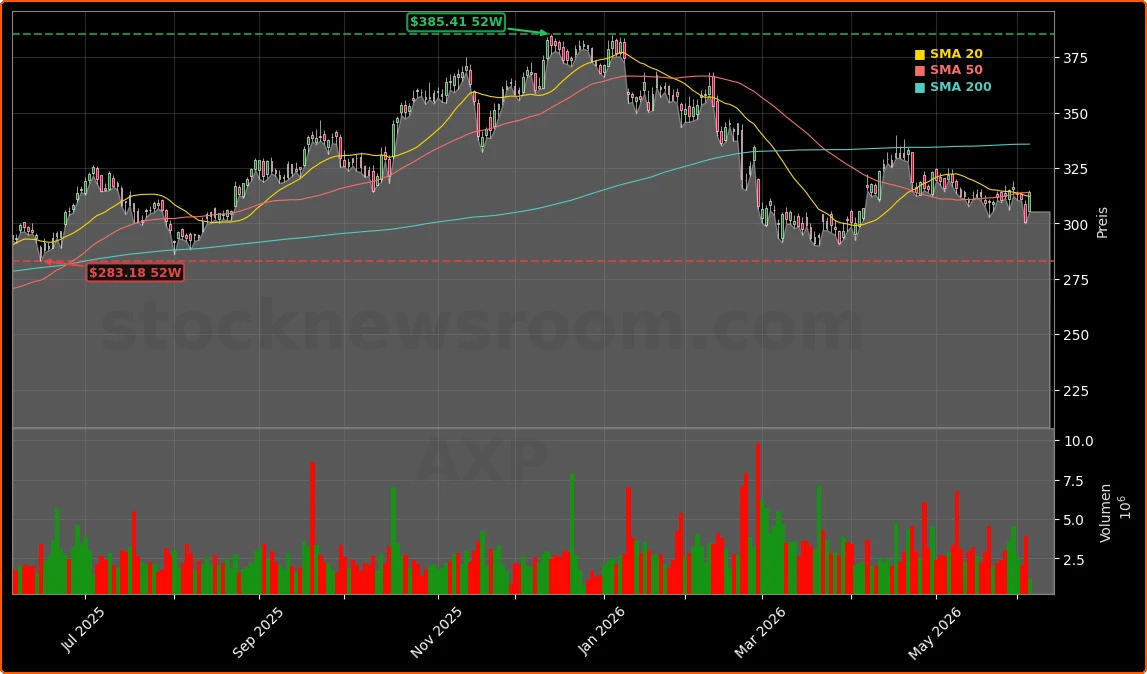
AXP jumped $13.95, or 4.46%, to $313.98 on Thursday — its strongest intraday performance since March — contributing 202 points to the Dow’s 898-point rally. The move reflects investor recognition that the American Express Delta Partnership continues to drive high-margin, sticky revenue. Unlike Visa (V) or Mastercard (MA), which operate open-loop networks, American Express maintains a closed-loop model: it issues cards, processes transactions, and earns fees at every stage. That control enables richer co-brand economics — and explains why Delta SkyMiles Cards generate ~15% of AXP’s total card fees. With card member spending up 9% year-over-year in Q1 — the strongest in three years — and 66% of new accounts coming from Millennial and Gen Z consumers, the partnership is proving resilient and scalable. Citigroup recently reiterated its ‘Buy’ rating on AXP, raising its 12-month price target to $345, citing “sustained premium engagement and unmatched co-brand monetization.”
How Does This Compare to Other Travel Card Programs?
While Apple’s Apple Card and Tesla’s upcoming credit offering focus on digital-first simplicity and EV integration, the American Express Delta Partnership doubles down on experiential value — free bags, lounge access, and milestone bonuses that convert travel into status. Competitors like Chase Sapphire and Capital One Venture rely heavily on transferable points, but Delta’s fixed-mile ecosystem — backed by American Express’s underwriting and service infrastructure — offers predictability and speed. That’s critical for business travelers: 41% of small business owners say a second free bag would let them pack more outfit options, directly supporting client-facing professionalism. RBC Capital Markets notes that AXP’s Delta portfolio has delivered 22% higher cardmember acquisition cost (CAC) payback versus its standalone Platinum Card — a key metric for Wall Street’s valuation models. The new welcome offers — up to 125,000 bonus miles for Reserve Business applicants — further widen that gap, especially as Visa and Mastercard face regulatory scrutiny over interchange fees.
What’s the Broader Market Signal?
AXP’s rally didn’t happen in isolation. It joined UnitedHealth, Goldman Sachs, and Merck in lifting the Dow — underscoring financials’ role in today’s market leadership. At 17x forward P/E, AXP trades at a meaningful discount to the S&P 500’s 22x average, despite outpacing peers in spending growth and dividend growth (58% increase over three years). The stock’s 16% YTD decline now looks increasingly like an overreaction to crypto regulation fears and interest-rate uncertainty — not fundamentals. As Goldman Sachs emphasized in its latest note: “American Express remains the most resilient payments franchise in the S&P 500 — and the Delta partnership is its most defensible moat.” That moat matters especially now: with travel demand surging and airfare inflation easing, Delta’s network strength amplifies AXP’s ability to monetize high-income spenders — a cohort less sensitive to rate hikes than mass-market cardholders.
What’s Next for the American Express Delta Partnership?
With Q1 2026 earnings already showing double-digit EPS growth and record cardmember engagement, the next catalyst lies in execution: how quickly Delta integrates these benefits across its global alliance partners (like Air France-KLM and Virgin Atlantic), and whether AXP leverages this momentum to expand into new verticals — think Delta-branded small business tools or embedded insurance. The 30th-anniversary refresh isn’t an endpoint — it’s a platform. As Jon Gantman, Executive Vice President of Cobrand Products at American Express, stated: “We’ve worked together to add meaningful benefits… so our shared Card Members get more value along the way.” That value translates directly to Wall Street: higher fee income, lower churn, and stronger long-term cash flow visibility — all essential for dividend growth and buyback execution.
Related Coverage: For deeper analysis of AXP’s Q1 earnings — including record cardholder spending and cautious analyst targets — see American Express Earnings: Q1 Record Shock as Stock Drops 2.5%.
This is what our partnership with Delta does best: bringing together our strengths to deliver more value across the full travel journey.— Jon Gantman, Executive Vice President – Cobrand Products & New Product Development at American Express
American Express remains a cornerstone of Warren Buffett’s Berkshire Hathaway portfolio — holding 3.21% of its equity assets — and its dividend yield of 1.2% is backed by 30+ years of consecutive increases. The American Express Delta Partnership continues to be one of the most successful co-brand alliances in financial services history. For U.S. investors, this isn’t just about airline miles — it’s about durable, high-margin revenue in a volatile macro environment. The next quarterly earnings report will test whether this momentum extends into summer travel season. Long-term shareholders should view today’s strength as validation — not a peak.