

Can booming American Express Earnings and record cardholder spending outweigh a sliding share price and cautious Wall Street targets?

How strong were American Express Earnings?
American Express Company posted Q1 2026 earnings per share of $4.28, up about 18% from $3.64 a year earlier and ahead of consensus near $4.00–$4.03. Net income rose to roughly $2.97 billion, an increase of about 15% year over year. Revenue climbed 11% to around $18.9 billion, also topping Wall Street expectations.
Behind the headline American Express Earnings, cardmember spending remained the key growth engine. Billed business rose about 10% to $428 billion, with spending by affluent cardholders growing at the fastest quarterly pace in three years. Luxury retail purchases surged roughly 18%, restaurant spending gained 9%, and premium airline cabin outlays increased about 12%, even as U.S. households faced higher fuel prices and geopolitical travel disruptions.
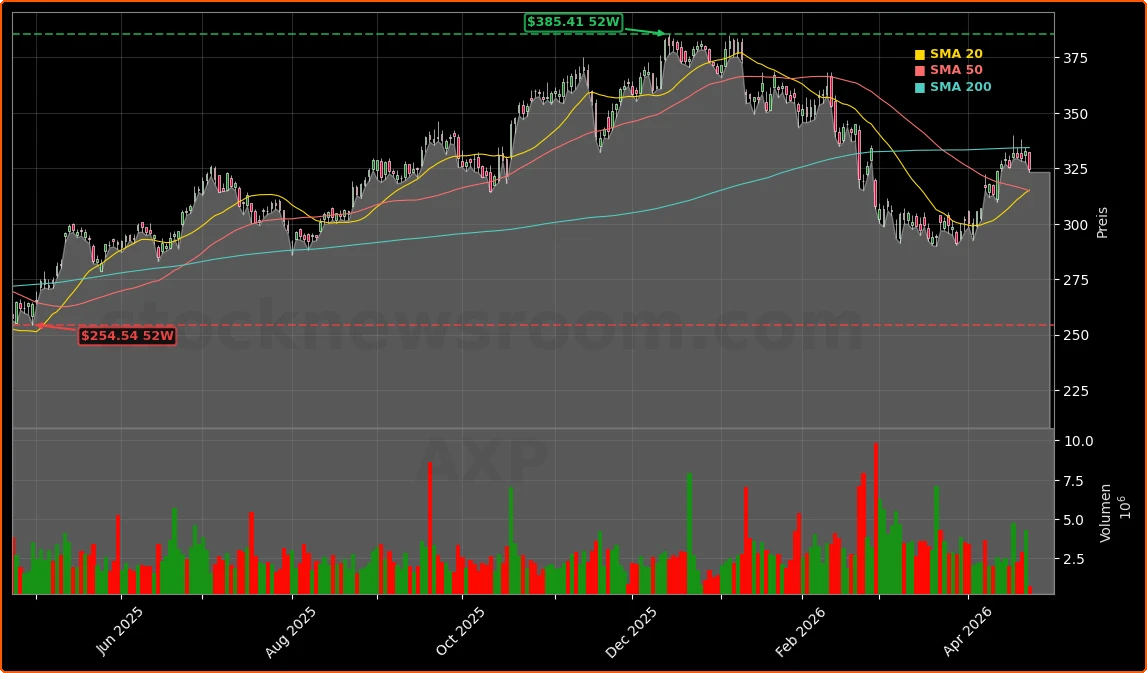
Despite the beat, AXP shares have lagged in 2026. The stock recently traded around $324.69, down about 2.5% on the day and roughly 11% year to date, leaving the shares below their 52‑week high. That divergence between American Express Earnings momentum and share performance is now central to the investment debate on Wall Street.
What is the outlook for American Express Company?
Management reiterated its full‑year 2026 guidance following the Q1 American Express Earnings release. The company continues to target 9%–10% revenue growth and $17.30–$17.90 in EPS for the year. That range brackets the current analyst consensus around $17.5–$17.6 and implies that double‑digit profit growth can continue, even as the firm steps up investment.
Customer engagement costs rose in Q1 as cardmembers took advantage of refreshed benefits, particularly on the U.S. Platinum card, which saw its annual fee raised to $895 in late 2025. Net card fees grew at a double‑digit rate, up about 16% on a currency‑adjusted basis, making them the fastest‑growing revenue line. Net interest income increased around 12%, outpacing roughly 7% balance growth, while credit metrics remained better than pre‑2019 levels with stable delinquencies and slightly lower write‑offs.
The company also plans to increase spending on marketing and technology for the remainder of 2026, directing Q1 over‑performance back into growth initiatives rather than dropping all of it to the bottom line. That choice keeps the EPS outlook unchanged, but if spending pays off in stronger account growth and higher long‑term fee and interest income, it could extend the earnings runway beyond 2026.
How are analysts and big investors reacting?
Wall Street remains cautious despite solid American Express Earnings. JPMorgan recently cut its price target on AXP from $375 to $325 while maintaining a Neutral rating, citing an uncertain macro backdrop and potential pressure on premium consumer spending if economic conditions deteriorate. The broader analyst community has converged on a consensus “Hold” recommendation, with an average one‑year price target near $354, leaving upside but not signaling a clear conviction buy.
Institutional ownership of AXP remains high, with estimates around the mid‑80% range. Recent filings show mixed behavior: some investors, such as M&T Bank Corp. and B. Metzler seel. Sohn & Co., have increased their stakes, while others have trimmed positions. The company raised its quarterly dividend to $0.95 per share and continues to repurchase stock, returning about $2.3 billion to shareholders in Q1 alone, helped by a robust return on equity of roughly 35%.
Notably, Warren Buffett’s Berkshire Hathaway still holds American Express as one of its long‑standing core positions, reinforcing the perception of AXP as a durable, cash‑generative franchise rather than a high‑beta growth play like NVIDIA or Tesla. For income‑oriented U.S. investors, the combination of dividend growth and buybacks, supported by consistent American Express Earnings, remains a key part of the thesis.
Where does American Express stand versus peers?
Compared with U.S. megabanks and mass‑market card issuers, American Express is leaning harder into its premium niche and fee‑centric model. While many traditional lenders rely more heavily on revolving balances and are sensitive to credit cycles, the bulk of AXP’s economics still comes from transaction fees and annual card fees paid by higher‑income customers. That has helped keep credit losses contained and supported pricing power, even after the Platinum fee hike.
At the same time, the company is pushing deeper into areas where tech‑driven rivals and fintechs operate. Recent moves include acquiring AI‑focused expense management firm Hypercard and rolling out a suite of new commercial cards and software tools designed to deepen relationships with small and mid‑sized businesses. Management is also investing in AI and “agentic commerce” capabilities, betting that its closed‑loop network and rich transaction data will allow it to offer more secure, intelligent payment flows than open‑network competitors or big tech ecosystems like Apple Pay.
Regulatory risk remains a key differentiator. Proposals in Washington to cap credit card interest rates—floated at levels around 10%—have weighed on the sector, even if the path to implementation is uncertain. For now, American Express Earnings suggest that its focus on affluent, low‑loss customers and strong fee income could leave it somewhat better positioned than mass‑market card issuers in a stricter regulatory regime, but investors will be watching closely.
The impressive statistic to focus on is 18% growth in retail luxury spend and record global travel bookings — our premium customers are still spending.— Stephen Squeri, CEO of American Express
In summary, American Express Earnings confirm that the franchise is still delivering double‑digit growth from a premium customer base, even as the stock trades below recent highs. For U.S. portfolios, AXP offers a blend of steady cash returns, resilient spending trends and long‑term upside from AI and commercial expansion, balanced against macro and regulatory overhangs. The next few quarters of American Express Earnings will be crucial in showing whether this strategy continues to outpace the broader financial sector.