

Is Wayfair’s latest slide just noise or a fresh warning shot for investors betting on an e-commerce turnaround?

How critical is this Wayfair News Analysis for Wall Street?
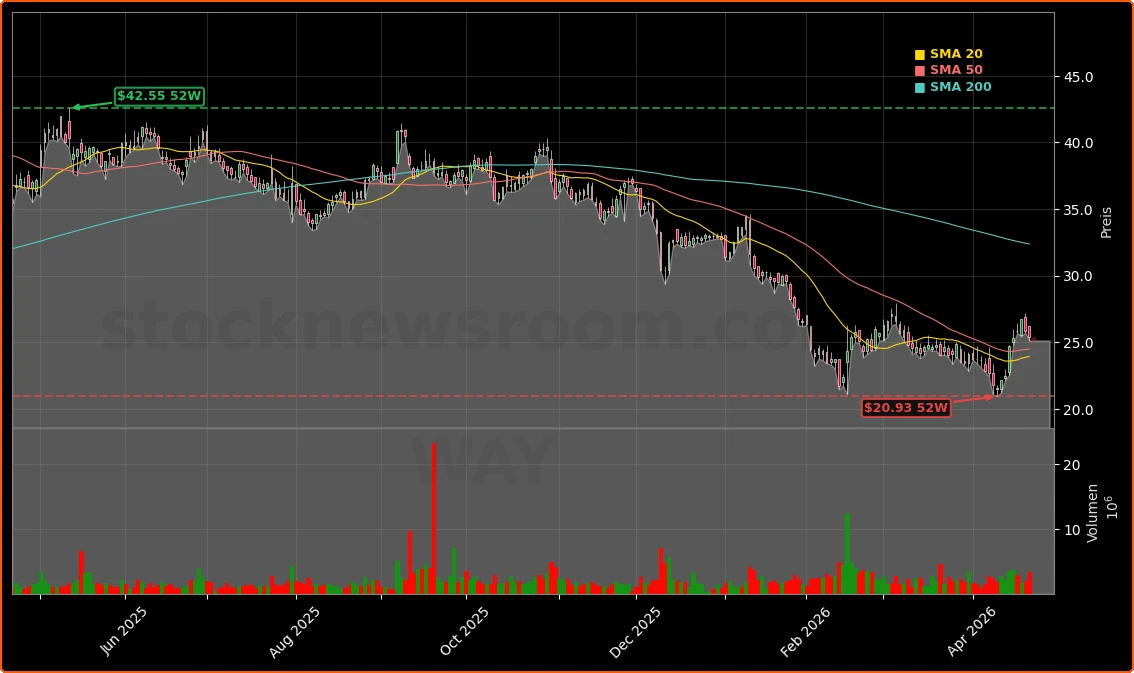
Wayfair Inc. has become a high-beta proxy for U.S. consumer sentiment and online retail risk. After an earlier rebound on cost-cutting and improved operating metrics, the shares have slipped back toward the lower end of their recent range, trading around the mid‑$20s and down nearly 2% in the latest session. That leaves the stock well below its 52‑week high and far from the euphoric peaks seen during the stay-at-home boom, but still on a rich multiple versus lagging profits.
For U.S. investors, this matters in three ways. First, Wayfair is a pure-play on discretionary home spending at a time when higher-for-longer interest rates and stretched consumers are pressuring big-ticket purchases. Second, it competes head‑to‑head with giants like Amazon, Apple via its services ecosystem, and big-box operators growing their digital channels. Third, its volatility can amplify portfolio swings, especially in growth-heavy accounts already exposed to leaders such as NVIDIA or Tesla.
Is Wayfair closing the profitability gap?
The market’s central question is not whether Wayfair can grow again – but whether it can grow profitably. Management has spent the last several quarters trimming fixed costs, optimizing logistics and pushing toward a leaner marketing model. That has delivered better adjusted EBITDA and narrower net losses, but investors want to see a clear and durable path to GAAP profitability, not just occasional green shoots tied to promotional events.
With borrowing costs elevated, the market is far less forgiving of cash-burning models than during the 2020–2021 liquidity wave. That backdrop helps explain why the stock sells off quickly on any sign that margin progress is stalling. In this context, each coming earnings print becomes a binary catalyst: evidence of sustained operating leverage could trigger a sharp short-covering rally, while any backsliding on costs or guidance may reinforce the bear case.
Wayfair News Analysis: how does competition shape the outlook?
Any serious Wayfair News Analysis has to account for intensifying competition in U.S. online retail. Wayfair Inc. still commands strong brand recognition in e‑commerce furniture and décor, but it is increasingly squeezed from above and below. At the high end, specialty retailers are refining omnichannel strategies, blending showrooms with online customization. At the value end, discount chains and club stores are enhancing digital capabilities, click‑and‑collect, and direct‑ship offerings.
Meanwhile, platform giants like Amazon use scale to pressure shipping times and prices, and tech ecosystems anchored by Apple and other hardware brands are deepening consumer engagement through finance, media and home services, competing for the same discretionary dollar. To defend share, Wayfair must keep prices sharp while still funding logistics and service improvements – a tough balance when investors are demanding margin expansion.
What are analysts saying about Wayfair today?
On Wall Street, opinions remain sharply divided, which is exactly what keeps the name volatile. Some growth-oriented firms still highlight Wayfair’s large addressable market and the structural shift to online furniture purchases, arguing that current levels already discount a harsh macro scenario. Others focus on execution risk, balance sheet sensitivity to any renewed downturn in U.S. housing, and the threat from better-capitalized rivals.
Across the analyst community, the pattern on similar high-growth consumer tech names has been a split between bullish houses emphasizing long-term optionality and more cautious shops prioritizing near-term cash flow. That same fault line runs through current Wayfair commentary. For investors, the takeaway is that broker targets should be treated as scenario markers rather than precise roadmaps – the stock’s path will depend heavily on whether management can deliver consistent positive earnings surprises and reassure the market on liquidity.
Wayfair News Analysis: what does this mean for portfolios?
From an allocation perspective, this Wayfair News Analysis suggests the stock remains a tactical, not core, holding for most U.S. investors. The name can make sense as a small satellite position in aggressive growth portfolios prepared for significant drawdowns, but it is far less compelling for income-focused accounts or those already concentrated in cyclical consumer exposure. Against benchmarks like the S&P 500 or Nasdaq Composite, Wayfair is likely to continue behaving as a high-volatility outlier rather than a steady contributor.
Investors comparing it with secular tech winners such as NVIDIA or Tesla should also recognize that Wayfair is tied more directly to U.S. consumer cycles than to long-duration innovation themes. That doesn’t eliminate the upside – a string of profitable quarters in a stabilizing macro environment could re-rate the stock quickly – but it does mean risk management and position sizing are critical.
For now, the balance of evidence points to a name where stock-picking skill, entry timing and a clear tolerance for volatility will matter more than broad sector calls. The next earnings season and any updates on cost discipline, logistics efficiency and demand trends will be the key checkpoints investors should watch.