
Can a Nike veteran as the new Lululemon CEO reverse a 35% stock slide and revive the brand’s North American momentum?

How is Lululemon Athletica Inc. trading now?
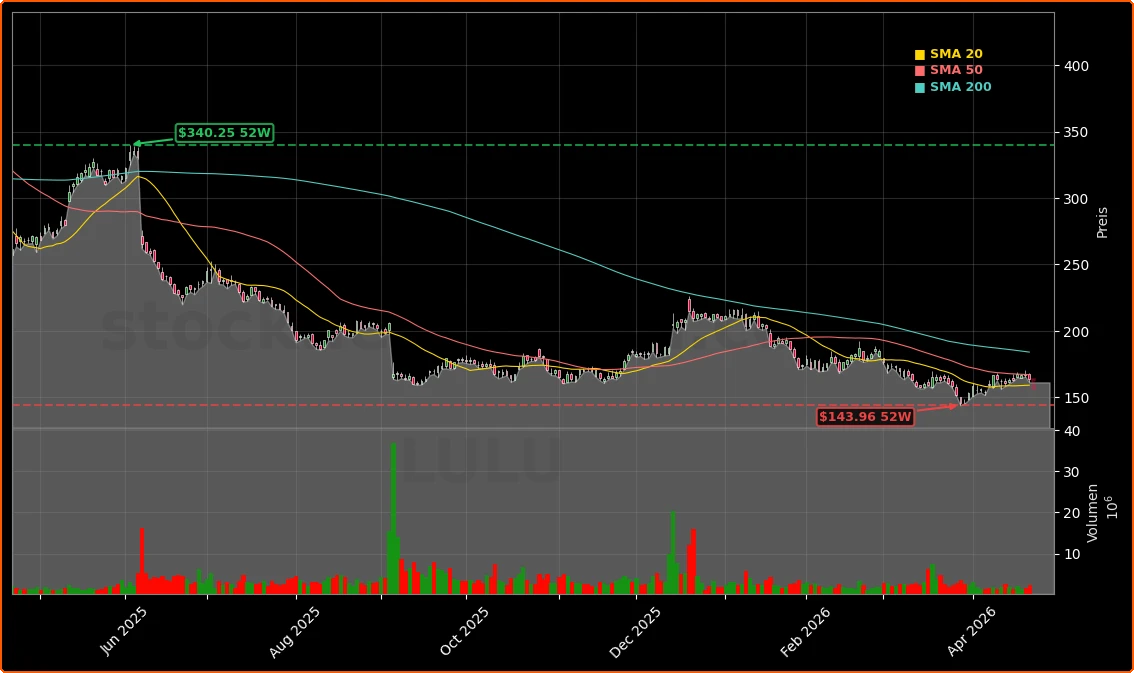
Lululemon Athletica Inc. (NASDAQ: LULU) closed Wednesday at $163.45, down 1.95% from the prior close of $166.81, and slipped further in after-hours trading to about $156.40, a drop of roughly 4.3%. The move extends a 12‑month slide of more than 35%, shrinking the company’s market value from a peak near $67 billion in 2023 to below $20 billion today. While the broader S&P 500 and consumer discretionary peers have held up better, LULU’s multiple has compressed as investors reassess its premium growth narrative.
The stock’s weakness reflects slowing momentum in North America and heightened competition from giants like Nike and Adidas as well as newer athleisure challengers. For Wall Street portfolios, LULU has shifted from a high‑growth apparel winner toward a turnaround story whose trajectory now hinges on the incoming Lululemon CEO and her first strategic moves.
Who is the new Lululemon CEO Heidi O’Neill?
The board has appointed Heidi O’Neill, a veteran of more than two decades at Nike, as the next Lululemon CEO and a member of its board, effective September 8. At Nike, O’Neill most recently served as president of consumer, product and brand, a role that put her at the center of global merchandising, marketing and direct‑to‑consumer strategy before it was later split into three positions. She was widely credited with helping build Nike’s women’s business and boosting apparel sales, capabilities that map directly onto Lululemon’s core categories.
O’Neill left Nike in September 2025 and currently sits on the boards of Spotify, Hyatt Hotels and automotive retailer Lithia & Driveway, giving her a broad view of digital platforms, hospitality and large‑scale retail operations. Her pay package at Lululemon underscores how much is riding on this hire: she will receive a $1.4 million base salary, a 200% target annual performance bonus and roughly $10 million per year in equity awards, largely in performance‑vesting restricted stock units, plus one‑time equity grants of about $7 million and a $2 million cash retention bonus.
In the interim, CFO Meghan Frank and chief commercial officer André Maestrini have been serving as co‑CEOs and are expected to return to their original roles once O’Neill takes charge.
What challenges does Lululemon face in its home market?
Lululemon’s latest reported quarter showed net revenue rising just 1% year over year to $3.6 billion. The Americas, its largest region, actually declined 4%, while international revenue grew a robust 17%, highlighting a widening gap between its maturing U.S. business and faster‑growing overseas markets. That makes the mandate for the new Lululemon CEO clear: reignite demand in North America without sacrificing margin or diluting the brand’s premium positioning.
Management has already begun tweaking the formula. Under new creative director Jonathan Cheung, the company has rolled out fresh product collections that are helping to support full‑price sell‑through. Stores are being reconfigured to reduce clutter and sharpen visual storytelling in an effort to improve traffic conversion and average ticket. Yet investors remain cautious, particularly as competitors like Nike, Apple’s fitness ecosystem and digitally native brands fight aggressively for the same health‑conscious, higher‑income consumer.
Institutional sentiment is similarly mixed. Mirae Asset Global Investments, for example, cut its LULU stake by more than half in Q4, while other funds modestly increased positions, leaving hedge funds and institutions owning over 85% of the float. On the research side, several Wall Street firms, including major houses such as Morgan Stanley and Goldman Sachs, have trimmed price targets in recent months, and the consensus rating has drifted toward “Hold” as growth expectations cool, even if longer‑term brand value remains recognized.
How do activists and governance shape the next Lululemon CEO’s agenda?
The CEO search played out under intense governance pressure. Activist investor Elliott Investment Management built a stake exceeding $1 billion by mid‑December and took the rare step of publicly pushing for a specific candidate, advocating former Ralph Lauren CFO and COO Jane Nielsen as the next Lululemon CEO. At the same time, founder Chip Wilson, now estranged from management, launched a proxy fight to overhaul the board, arguing that leadership changes alone would not repair what he sees as deeper governance flaws.
Lululemon has moved to partially defuse that tension by refreshing its board. It recently added former Levi Strauss CEO Chip Bergh, who is set to succeed outgoing chair David Mussafer of Advent International. Executive chair Marti Morfitt, who led the CEO search, has emphasized that the candidate pool was strong but that O’Neill stood out as a “clear choice” capable of rebuilding brand heat from the inside out.
For investors, this backdrop means the new Lululemon CEO is not just overseeing product and stores; she will also have to manage activist expectations, improve board‑level trust and deliver enough operational progress to stabilize the share price. That combination of brand turnaround and governance reset is likely to keep LULU volatile on the NASDAQ, especially around key catalysts such as the next two earnings reports and O’Neill’s first detailed strategic update.
Related Coverage
For a deeper dive into the governance tensions and growth slowdown that set the stage for this leadership change, read Lululemon Governance Warning After Q4 Growth Slowdown. That analysis looks at how boardroom disputes and decelerating North American sales have weighed on the brand’s premium equity story and what may be required to restore investor confidence.
She builds brands from the inside out, grounded in what people actually feel and want, and she doesn’t stop when she’s already won.— Daniel Ek, Spotify founder and executive chairman
The appointment of Heidi O’Neill as Lululemon CEO marks a decisive bet on a proven sportswear operator to revive U.S. growth and unlock the brand’s international upside. For Wall Street, LULU is transforming into a high‑quality but challenged franchise whose recovery will be judged quarter by quarter under the new leadership. The next phases of product innovation, store optimization and activist engagement will determine whether the Lululemon CEO transition becomes a catalyst for a durable rerating of the stock.