

Are blockbuster Netflix Earnings enough to offset a softer outlook that has suddenly turned this streaming giant into a show-me stock?

How did Netflix Earnings move the stock?
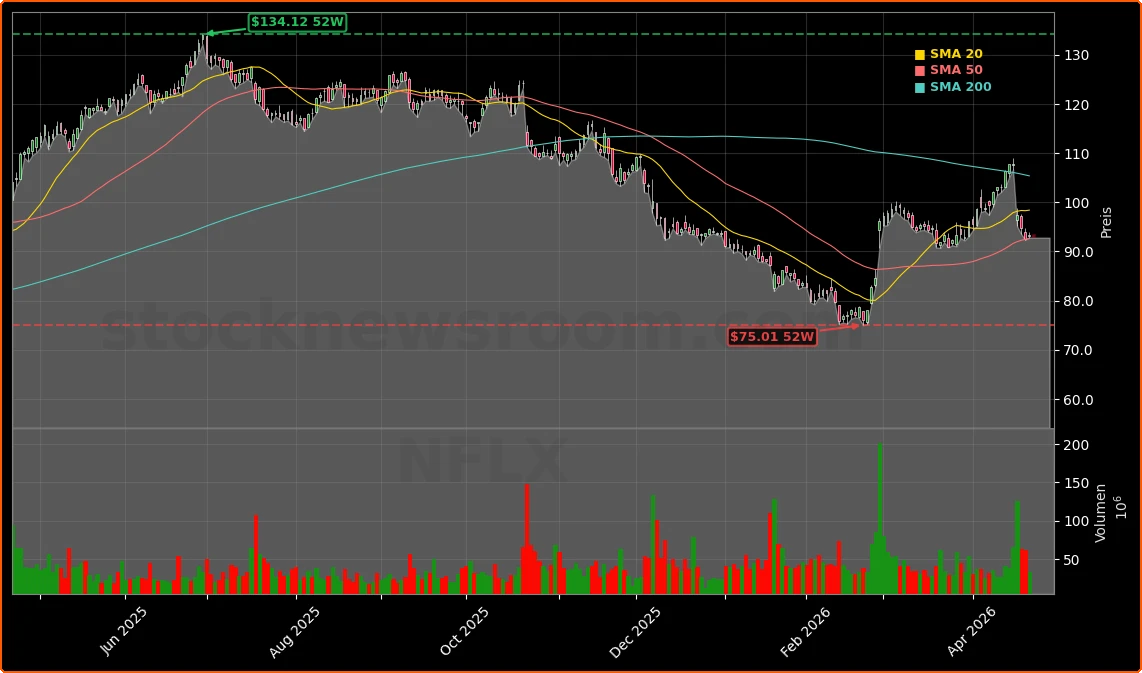
Netflix, Inc. (NFLX) has been volatile since releasing its Q1 2026 report. The stock initially plunged nearly 10% on April 17 after management issued a softer-than-expected Q2 outlook, briefly dropping to about $97. Shares have since stabilized but remain below longer-term averages. As of the latest close, Netflix trades at $93.24, up 0.71% on the day, with after-hours levels around $92.92 (‑0.35%). That leaves the company far under its 200‑day moving average near $106 reported earlier this month and well beneath its 52‑week highs, signaling that sentiment is still fragile.
The immediate negative reaction contrasts with the headline Q1 beat. Market participants focused less on the past quarter and more on what the guidance implies for growth over the next few quarters. For investors benchmarking against the NASDAQ and S&P 500, Netflix has shifted from a clear momentum winner to a show‑me story where execution on advertising, content, and margins must justify a premium multiple.
What is behind the latest Netflix Earnings numbers?
In Q1 2026, Netflix generated $12.25 billion in revenue, an increase of roughly 16% year over year and slightly ahead of Wall Street estimates around $12.18 billion. Net income almost doubled to $5.28 billion, pushing earnings per share to about $1.23, well above consensus near $0.76. On an operating basis, profit rose to $3.96 billion, while gross profit climbed to $6.36 billion, both broadly in line with analyst expectations when adjusted for one‑time items.
A large non‑recurring gain played a key role: Netflix received about $2.8 billion from Paramount Skydance as compensation for terminating an earlier content deal involving Warner Bros. Discovery. That payment significantly inflated net income and EPS in the quarter, so many institutional investors are focusing instead on operating income, cash flow, and the sustainability of revenue growth. Stripping out the windfall, Netflix Earnings still show healthy margin expansion, but the headline profit jump is not a pure reflection of the core streaming business.
Why did Q2 guidance disappoint Wall Street?
The main pressure point in the latest Netflix Earnings was the outlook for Q2 2026. Management guided revenue to about $12.5 billion, slightly below the roughly $12.6 billion analysts had penciled in. For EPS, the company expects around $0.78, compared with consensus forecasts near $0.84. The miss is not huge in absolute terms, but after a strong run in the stock and high expectations around profitability, the softer guidance was enough to trigger profit‑taking.
Nevertheless, Netflix reaffirmed its full‑year 2026 targets, including revenue between $50.7 billion and $51.7 billion, an operating margin of about 31.5%, and free cash flow of roughly $12.5 billion. Those goals imply a stronger second half of the year, especially if advertising ramps as planned and the fall content slate drives engagement. For long‑only U.S. funds and ETF allocators, this split picture—near‑term caution but solid full‑year ambition—creates room for debate over whether Netflix should still command a valuation premium to media peers and high‑growth tech names like NVIDIA or Apple.
How important is advertising and leadership change for Netflix?
A critical pillar of the long-term Netflix Earnings story is the ad-supported tier. In markets where the plan is available, more than 60% of new sign‑ups reportedly choose the cheaper ad option. The number of advertising partners has surged by about 70% to over 4,000, and Netflix is targeting approximately $3 billion in ad revenue in 2026, roughly double the prior year. If achieved, that would diversify revenue beyond pure subscription fees and could help Netflix better compete with ad-heavy platforms run by Tesla rival streamers and Big Tech firms.
On the governance side, co‑founder Reed Hastings plans to leave the board at the annual meeting in June, about three years after handing the CEO role to Greg Peters and Ted Sarandos. The company frames the move as allowing Hastings to focus on philanthropy, and Sarandos has pushed back on speculation that the exit is related to the failed Warner Bros. Discovery acquisition attempt, noting that Hastings strongly backed the deal and that the board had supported it unanimously. A broader refresh of the board is expected over the coming months, which institutional investors will watch closely for signals on future strategic direction, especially around M&A and capital allocation.
How are analysts on Wall Street reacting?
Despite the post‑earnings selloff, major Wall Street banks remain constructive on the Netflix story. Morgan Stanley, JPMorgan, and Bank of America all maintain buy‑equivalent ratings on the stock, emphasizing the company’s strong cash generation and the potential upside from advertising and pricing power. Across 27 tracked analysts, the consensus price target sits near $115 per share, implying roughly 18% upside from current levels around $93. At that target, Netflix would still trade at a premium to many traditional media names but more in line with faster‑growing digital leaders.
Wedbush analyst Alicia Reese has acknowledged that Q2 guidance came in softer than expected but argues that the reiterated full‑year framework suggests a robust back half of 2026. For U.S. investors comparing Netflix with other mega‑cap growth names in the NASDAQ 100, the debate now centers on whether the company can sustain double‑digit revenue growth while expanding margins, especially as competition from Disney+, Amazon Prime Video, and other platforms intensifies.
Related Coverage
For a deeper dive into the market’s initial reaction to the latest Netflix Earnings and how the profit surge collided with a sudden stock selloff, readers can explore our detailed analysis in “Netflix Earnings Shock: -2.8% Plunge After Profit Surge”. That piece examines investor concerns around the company’s AI ambitions, leadership changes, and the balance between short‑term volatility and the long‑term streaming thesis.
The softer Q2 guide got everyone’s attention, but the full-year targets still point to a very solid 2026 for Netflix if execution is there.— Alicia Reese, Analyst at Wedbush Securities
Overall, the most recent Netflix Earnings underscore a company in transition: core operations are throwing off more cash, advertising is gaining traction, and leadership is evolving, yet guidance missteps can still rattle the stock. For long-term investors, the combination of a lower share price, solid full‑year targets, and supportive analyst ratings may offer an opportunity, provided Netflix executes on content and ads in the second half of 2026. The next quarterly report will be crucial in determining whether the shares can reclaim technical levels and reassert their leadership among global growth stocks.