
Can The Gap Hormuz Oil Market shock derail Gap’s margin recovery just as its AI and fashion reboot gain traction?

How does The Gap Hormuz Oil Market link hit apparel margins?
The Strait of Hormuz formerly carried around 20% of the world’s oil; its effective closure has supercharged crude prices and exposed how dependent Asian buyers are on Gulf flows. China and India, two of the world’s largest importers, have seen shipments through the strait collapse from several million barrels per day to a few hundred thousand, forcing both to pivot aggressively toward Russian and Saudi supply. That tug-of-war tightens the global barrel count and raises the clearing price for fuel and petrochemical feedstocks.
For retailers like The Gap, Inc., the The Gap Hormuz Oil Market shock shows up indirectly but meaningfully. Higher oil prices lift ocean freight costs, air cargo surcharges, and the price of synthetic fibers derived from petrochemicals. Even as Gap pushes premium collaborations and brand elevation, it still ships massive volumes of basics across the Pacific. Every dollar added to bunker fuel or container rates chips away at gross margin unless the company can offset the hit elsewhere.
India is particularly exposed, with only about 30 days of import cover and limited domestic buffers. As its refiners bid more aggressively for Russian crude, Asian refining spreads and product prices can stay elevated, keeping shipping and logistics inflation in play longer than Wall Street currently assumes. That raises the hurdle for Gap’s cost-control and pricing strategy just as U.S. apparel demand softens in parts of the middle-income cohort.
Can Gap’s AI and traceability moves counter rising costs?
Management is not standing still in the face of the The Gap Hormuz Oil Market backdrop. Gap has rolled out an AI-powered traceability and quality platform from Inspectorio across its brands, replacing manual checks with automated exception detection and structured data flows between vendors and internal teams. By flagging quality issues earlier and standardizing compliance, the system is designed to shorten lead times, reduce rework, and lower the rate of costly product delays.
Separately, a joint study with Microsoft on the use of Copilot inside Gap’s corporate workforce found that “AI mindset” training—teaching employees to treat AI as a thought partner rather than a mere tool—meaningfully improved work quality versus traditional feature training. For investors, this matters because process-level productivity improvements are one of the few levers a retailer can pull quickly when external cost pressures, like shipping and fuel, move against it.
These investments also bring Gap closer to technology-forward operators in the broader retail and consumer universe, even if it still trails execution leaders like Apple in supply-chain sophistication. For a mid-cap apparel name, incremental efficiency and better inventory turns can have an outsized effect on earnings power when gross margins are under pressure from macro forces rooted in the Hormuz disruption.
How do fashion collaborations fit into this energy-driven backdrop?
At the same time, Gap is leaning hard into what CEO Richard Dickson has called a “Gapaissance,” emphasizing collaborations and what he describes as “fashiontainment.” The most visible move is a multi-season partnership with Victoria Beckham, launching April 24 with a 38-piece collection that reimagines Gap classics—denim, khaki, tees—through a more elevated, luxe lens. UK store reopenings and the introduction of the more premium GapStudio line underscore a pivot toward “affordable aspiration” rather than pure basics.
Creative director Zac Posen, recently honored as Designer of the Year for his work at Gap, has framed this shift as a deliberate effort to rebuild the creative community across Old Navy, Gap, Banana Republic, and Athleta. The idea is clear: if macro energy shocks, including those tied to The Gap Hormuz Oil Market, squeeze disposable incomes and raise operating expenses, differentiated product and cultural relevance become the primary tools to defend pricing and traffic.
For U.S. investors, that sets up a trade-off. On one side, higher oil-linked costs and potential consumer belt-tightening from elevated gasoline and travel prices. On the other, a more compelling product story that could allow Gap to maintain higher average unit retails without losing share to fast-fashion players like NVIDIA-powered recommendation engines at rival e-commerce platforms or vertically integrated giants such as Tesla-style direct-to-consumer brands. Execution on design, drop cadence, and marketing will decide which force dominates earnings over the next few quarters.
The Gap Hormuz Oil Market risk and valuation on Wall Street
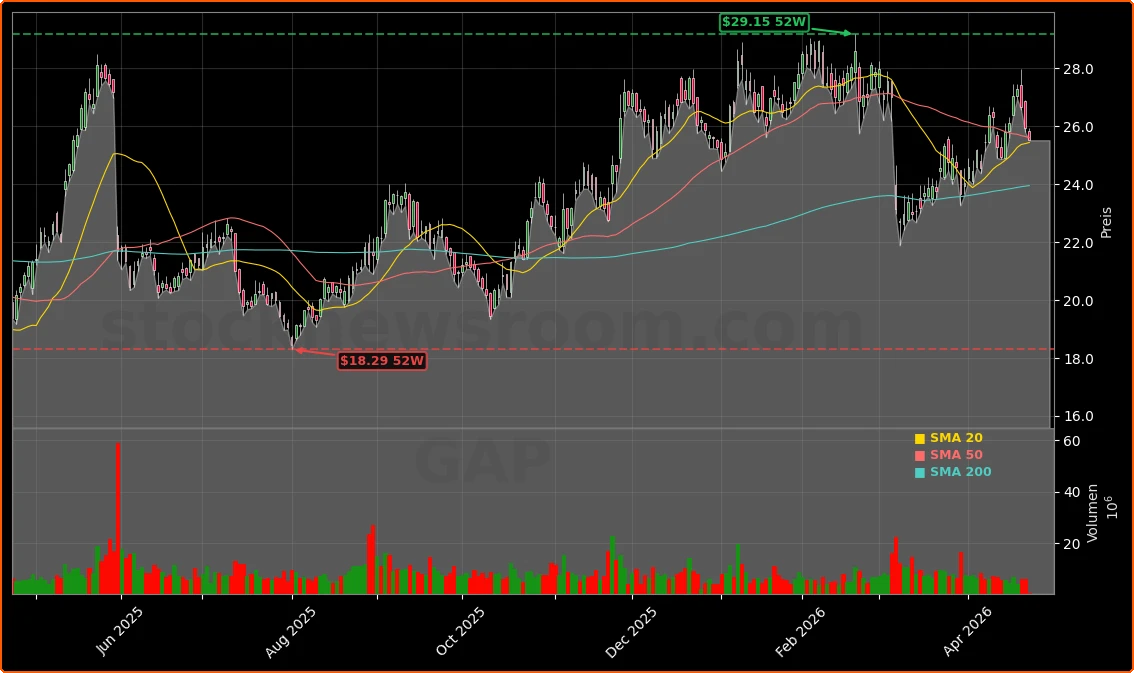
At $25.52, Gap shares are down about 1.5% from the prior close but still reflect optimism that the turnaround is gaining traction. Recent analysis of the stock by trading-oriented research shops has highlighted weak near-term sentiment but a potentially improving medium- and long-term technical setup, with attention on key support and resistance levels for rotational strategies. While no major Wall Street bank like Goldman Sachs or Citigroup has made high-profile rating changes in the last few days, earlier commentary from analysts has generally framed Gap as a high-beta way to play a discretionary rebound rather than a defensive consumer staple.
The The Gap Hormuz Oil Market environment complicates that thesis. If elevated oil prices persist and Asia’s scramble for Russian barrels keeps global energy markets tight, investors may need to haircut margin expectations for retailers broadly, including Gap. However, the company’s AI-enabled supply-chain initiatives, premium collaborations, and brand portfolio diversification provide real levers to defend profitability even in a tougher cost regime.
The closure of Hormuz has shown that assumptions about energy security were breakable — retailers now have to plan for structurally higher volatility in their cost base.— Maisoon Kafafy, energy policy adviser
For diversified U.S. portfolios anchored in the S&P 500 and NASDAQ, Gap remains a tactical satellite position rather than a core holding. The story will appeal most to investors comfortable balancing geopolitical energy risk against company-specific catalysts, in the same way they weigh secular AI tailwinds at names like Apple against cyclical headwinds elsewhere. If management can keep delivering cleaner inventory, culturally resonant product, and measurable productivity gains, the stock could absorb much of the The Gap Hormuz Oil Market shock and still offer upside as sentiment stabilizes.