

Can BioNTech Oncology turn its huge cash pile into a real cancer breakthrough before investors lose patience?

Why is BioNTech Oncology moving now?
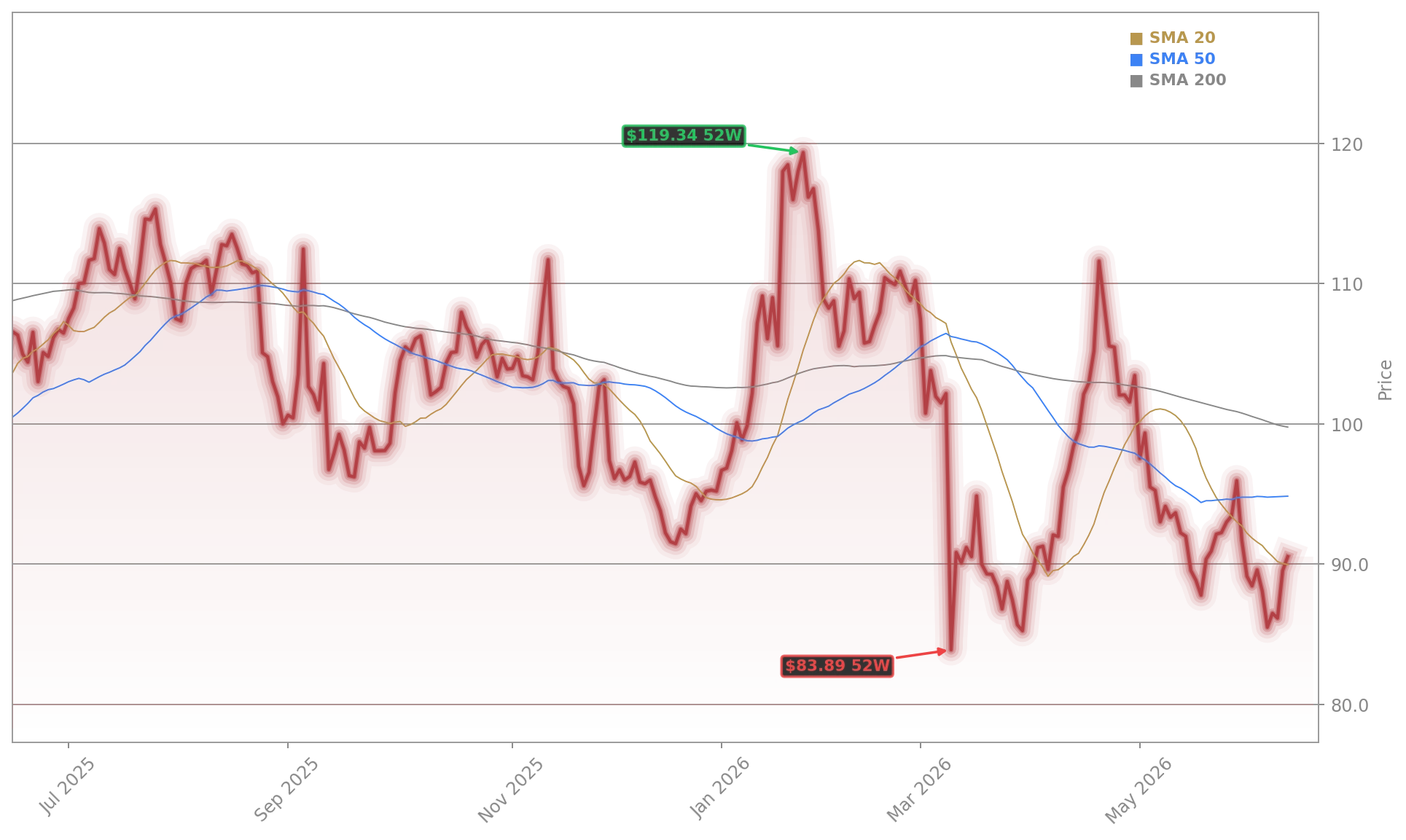
Shares of BioNTech SE are drawing renewed attention after Bernstein SocGen Group launched coverage with a neutral-to-cautious stance. The firm set a $96 price target and a Market Perform rating, signaling that upside may remain limited unless late-stage oncology assets deliver clearer clinical wins. That view matters because BNTX is trading below the target but not at a distressed level, with the stock at $90.93 versus a previous close of $95.00, while pre-market action showed a rebound to $93.19.
For US investors, the setup is familiar: a former pandemic winner trying to prove it can become a durable oncology growth name. BioNTech Oncology now sits at the center of that transition, and the market appears unwilling to fully reward the pipeline before pivotal data remove some uncertainty.
Can BioNTech balance cash and risk?
Bernstein’s call highlights the split at the heart of the investment case. On one side is a company with one of biotech’s strongest balance sheets. On the other is concern around clinical execution, especially for Pumitamig, the company’s PD-L1/VEGF candidate. Bernstein pointed to prior disappointments across that drug class, where studies failed to show statistically significant survival benefits, raising the bar for confidence.
Still, BioNTech enters this phase with major financial flexibility. As of March 31, 2026, the company held EUR 16.76 billion in cash and securities, including nearly EUR 10 billion in cash. That gives management room to keep funding an expensive pipeline even as COVID-related sales continue to contract. Q1 revenue fell to EUR 118 million, while net loss widened to EUR 531.9 million and R&D expense rose to EUR 557 million.
The company also approved a share repurchase program of up to $1 billion through May 2027. That move, alongside reaffirmed 2026 guidance of EUR 2.0 billion to EUR 2.3 billion, suggests management wants to show confidence even during an investment-heavy period. Compared with biotech peers that rely on frequent capital raises, BioNTech looks unusually well financed.
What could ASCO mean for BioNTech?
The next catalyst is the ASCO annual meeting in Chicago from May 29 to June 2. BioNTech plans to present new data on Pumitamig and Gotistobart, as well as updates tied to registration-intended studies and ADC combinations. For investors, that puts BioNTech Oncology back on the event calendar in a meaningful way.
The key Pumitamig update is expected from the ongoing Phase 2/3 ROSETTA Lung-02 study in first-line non-small cell lung cancer. Management has said this will be the third global dataset showing encouraging anti-tumor activity for Pumitamig plus chemotherapy. BioNTech will also share Phase 2 data for Gotistobart in platinum-resistant ovarian cancer, with overall survival in focus as the company tries to build a case for a potential chemotherapy-free option.
Beyond ASCO, investors are also waiting for 2026 data from the Phase 3 DYNASTY-Breast02 trial of Trastuzumab-Pamirtecan in HR-positive, HER2-low metastatic breast cancer, and from FERN-EC-01 in HER2-positive endometrial cancer. Those readouts may matter more for valuation than any short-term market bounce.
How does BioNTech compare on Wall Street?
Analyst views remain mixed rather than outright bearish. Bernstein’s $96 target contrasts with a more bullish stance from Berenberg, which recently cut its target to $140 from $155 but kept a Buy rating. That gap shows how widely opinions differ on execution risk versus long-term platform value. Governance moves may also support sentiment after BioNTech added oncology veterans to its supervisory board, reinforcing the company’s shift away from the COVID era.
For broader market context, investors rotating between high-growth healthcare and mega-cap names like NVIDIA, Apple, and Tesla may view BioNTech as a more event-driven biotech holding. It has the liquidity many development-stage peers lack, but unlike diversified pharmaceutical giants such as Bristol Myers Squibb, its near-term rerating depends heavily on oncology data.
Related Coverage: Earlier this year, stocknewsroom examined whether management upheaval and deepening losses had turned the stock into a recovery play or a value trap. That piece, BioNTech Leadership Change: -17.9% Crash After Billion-Euro Loss, offers useful context on how quickly sentiment can shift when execution questions collide with a large cash pile.
Our presentations at this year’s ASCO annual meeting underscore our oncology strategy to build a diversified portfolio of complementary modalities with differentiated therapeutic profiles for multiple tumor types with high unmet medical need.— Özlem Türeci
BioNTech Oncology remains a high-stakes transition story: cash-rich, clinically ambitious, and still waiting for decisive proof. For investors, Bernstein’s cautious start reinforces that balance-sheet strength alone is not enough. The next big test comes at ASCO, where strong data could begin closing the gap between BioNTech’s resources and Wall Street’s conviction.