Is Bitcoin quietly building for a breakout, or is global tightening about to pull the floor from under the trade?

How Did the BOJ Rate Hike Impact Bitcoin?
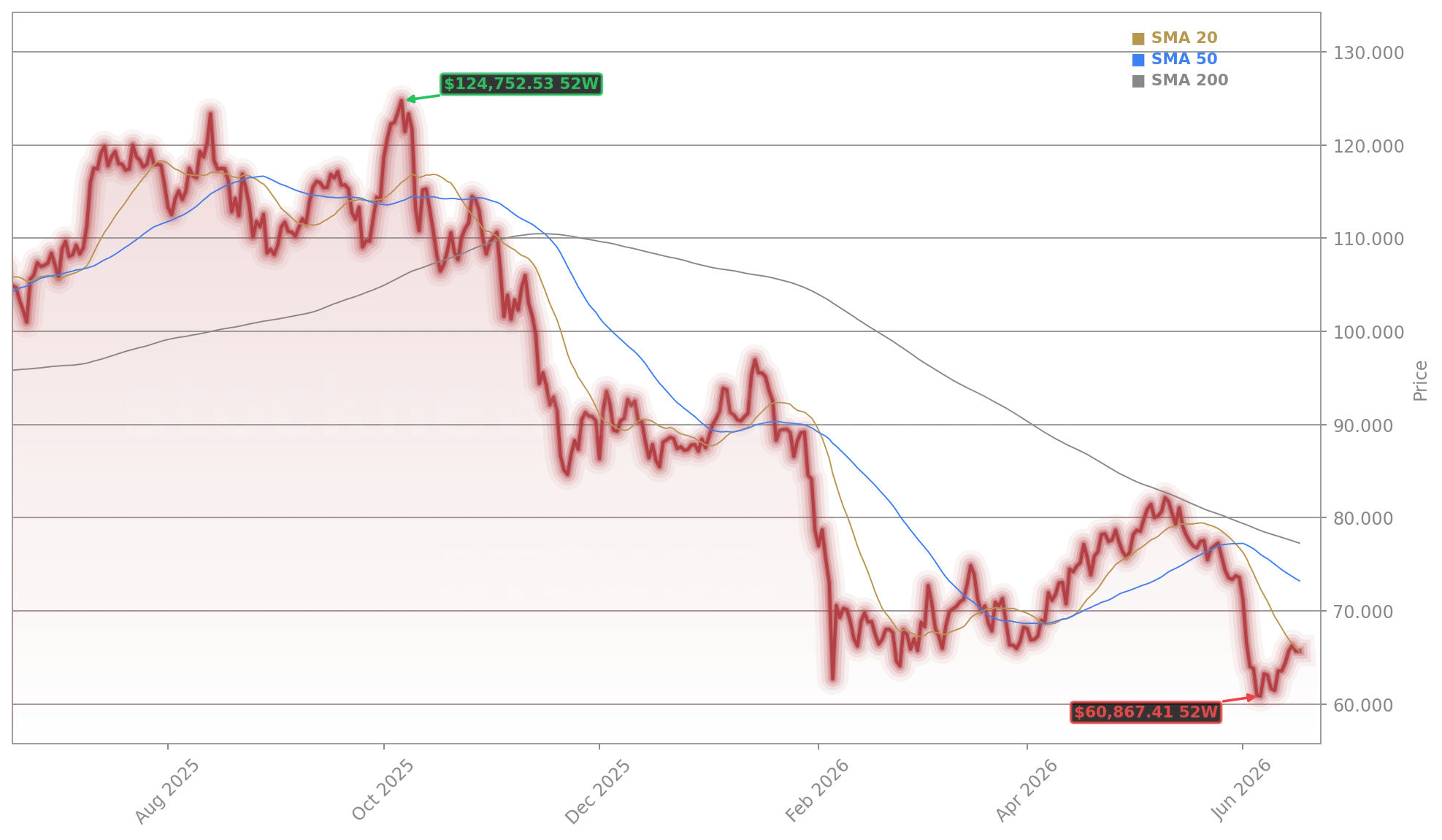
The Bank of Japan’s decision to lift its policy rate to 1.0% — its highest level in over 30 years — triggered immediate recalibration across global risk assets. While the BOJ made no mention of cryptocurrency, its tightening directly pressures the yen carry trade, a decades-old liquidity engine where institutions borrow cheap yen to fund long positions in U.S. equities, Treasuries, and Bitcoin (BTC/USD). With funding costs now surging, leveraged crypto positions face margin pressure. Historical data shows Bitcoin averaged a 5.74% correction within 30 days following the past four BOJ hikes — a pattern now playing out again. Traders are eyeing $62,700 as the next downside target, with a 15% worst-case drop potentially testing $56,700 — a level that would mark a new bear-market low.
What Do CFTC Perpetual Futures Mean for Wall Street?
The Commodity Futures Trading Commission’s May 29 approval of Calci’s Bitcoin perpetual futures — the first U.S.-regulated perp — marks a structural inflection. Kraken and Coinbase have since launched compliant versions, accelerating the U.S. as the global hub for institutional crypto derivatives. Global crypto perpetual volume now exceeds $60 trillion annually. CFTC Chair Michael Seeley defended the move as essential for market maturity, citing demand for ‘regulated futures contracts with no expiration date.’ This regulatory clarity — alongside parallel progress on the bipartisan Clarity Act — is drawing institutional capital that previously sat on the sidelines. Notably, BlackRock’s newly launched Bitcoin ETF (IBIT) now lets institutions earn up to 15% annual yield by selling covered calls — a product bridging yield-seeking and crypto exposure for traditional portfolios.
Why Is Strategy’s $100 Million Bitcoin Buy Significant?
Strategy disclosed the purchase of 1,587 BTC at an average price of $63,024 — a $100 million addition to its balance sheet between June 8–14. This continues one of the most closely watched corporate Bitcoin treasury strategies, reinforcing the company’s identity as a public-market proxy for institutional BTC adoption. According to Bank of America analysts, Strategy’s disciplined accumulation — even amid volatility — signals confidence in Bitcoin’s long-term reserve asset thesis. The firm’s stock now trades as a leveraged BTC vehicle, with its premium to underlying Bitcoin value directly influencing its ability to raise capital for future purchases. Michael Saylor, Executive Chairman of Strategy, stated: ‘I think that we found the bottom at 60,000… We’re in the mid-70s right now. There seems to be a good base for support.’
Bitcoin Market Analysis: Is the Range Break Imminent?
Current price action shows Bitcoin (BTC/USD) consolidating in a tight $60,000–$70,000 range — a pattern reminiscent of pre-breakout conditions ahead of the 2024 ETF approval surge. Derivative-driven momentum dominates, while spot ETFs report net outflows, underscoring divergent investor behavior. Upcoming catalysts could tip the balance: a U.S.-Iran peace deal signing expected Friday, positive commentary from Kevin Walsh on Wednesday, and continued inflows into tokenized Treasury and digital credit markets like STRC — which has drawn $700 million in 12 weeks. Rick Rieder, BlackRock’s Global Fixed Income CIO, remains bullish: ‘I think it’s going higher,’ he affirmed on Bloomberg’s ETF IQ — even as Bitcoin trades 45% below its all-time high. His view reflects broader institutional sentiment: $8–9 trillion sits idle in U.S. money market funds, ready to deploy into risk assets once liquidity conditions stabilize.
How Do Broader Markets Influence Bitcoin?
I think it’s going higher.— Rick Rieder, BlackRock Global Fixed Income CIO
Bitcoin’s correlation with the NASDAQ and S&P 500 remains elevated, especially amid AI-driven equity rallies. As NVIDIA and Tesla surge on AI infrastructure demand, some strategists draw parallels to the 2000 dot-com rotation — where tech peaks preceded broad-market and crypto rallies. With the Dow Jones Industrial Average yet to peak, NASDAQ’s next leg may precede Bitcoin’s breakout. Meanwhile, gold and Bitcoin are moving inversely to oil — reinforcing Bitcoin’s evolving identity as a macro-sensitive, non-sovereign store of value. Regulatory adoption by Schwab, J.P. Morgan, and Goldman Sachs — alongside tokenization advances — is accelerating Bitcoin’s integration into mainstream finance. Bitcoin Market Analysis now must weigh not just technicals, but the pace of banking system convergence with digital assets.