
Will Eli Lilly’s aggressive expansion completely sideline Novo Nordisk in the multi-billion-dollar battle for weight-loss supremacy?

Why is the Eli Lilly Market Share Expanding So Rapidly?
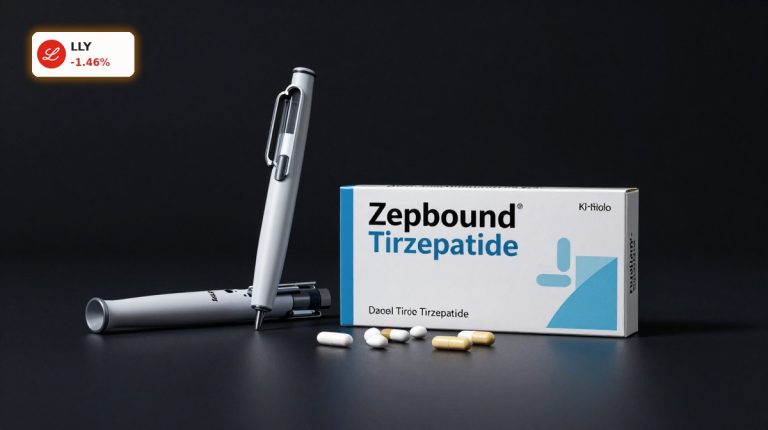
For years, Novo Nordisk enjoyed a first-mover advantage with its blockbuster weight-loss drug, Wegovy. However, the market dynamics have shifted dramatically over the past year. Eli Lilly has aggressively rolled out its own highly effective treatments, Mounjaro and Zepbound. This rapid commercial execution has allowed the US pharmaceutical giant to capture a significant portion of new patient starts. As a result, the Eli Lilly Market Share has grown substantially, forcing Novo Nordisk to implement defensive price cuts to protect its remaining position.
Wall Street analysts have taken note of this shift. For instance, investment banks like Morgan Stanley have pointed out that Eli Lilly’s superior manufacturing scale and aggressive marketing have allowed it to resolve supply bottlenecks much faster than its Danish competitor. This operational efficiency has been a primary catalyst behind the growing Eli Lilly Market Share, especially in the lucrative US market where commercial insurance coverage is expanding. According to a recent note from Citigroup, Eli Lilly’s pricing power and clinical efficacy data give it a distinct edge, prompting analysts to maintain a highly bullish outlook on LLY stock as it continues to outperform its peer group.
How is Novo Nordisk Responding to Eli Lilly?
In a move that some market observers interpret as a sign of growing pressure, Novo Nordisk recently filed a lawsuit against Eli Lilly. The lawsuit claims that Eli Lilly’s advertising campaigns for its GLP-1 treatments are misleading. While legal experts note that the claims may have some technical merit, many Wall Street analysts view the litigation as a defensive, perhaps even desperate, attempt to slow down Eli Lilly’s momentum in the market.
This legal clash comes at a challenging time for Novo Nordisk. The company’s stock has declined significantly from its 2024 peak, and 2026 is increasingly being viewed as a “reset” year for the firm. The necessity of a strategic reset has arrived much sooner than investors anticipated, largely because the Eli Lilly Market Share gains have been so rapid and disruptive. The global market for obesity therapeutics is projected to exceed $100 billion by the end of the decade, making every percentage point of market share incredibly valuable. Consequently, the battle over advertising claims highlights just how high the stakes are for both companies.
Related Coverage
For those tracking the ongoing legal and corporate battles between these two healthcare giants, the article Eli Lilly Lawsuit: LLY Stock Rallies +2.3% Amid Novo Nordisk Clash provides deep insights into how the legal dispute is affecting short-term stock performance. Additionally, investors looking at broader healthcare technology trends should read about how AI is impacting other medical leaders in Intuitive Surgical AI: 18% Revenue Surge Sparks Unexpected Plunge, which details the volatile market reactions to tech-driven healthcare earnings.