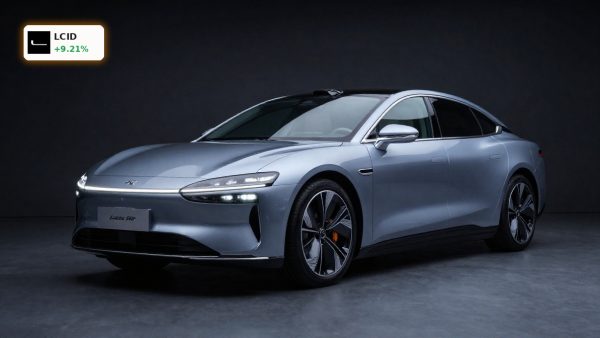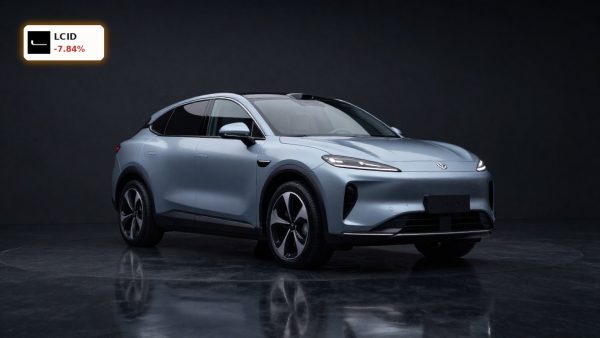

Will Lucid Group’s luxury EV lineup survive a staggering $3.8 billion net loss, or is the cash burn too severe to overcome?

Why Do Lucid Financials Raise Red Flags?
The primary concern for Wall Street is the sheer scale of the company’s losses relative to its actual sales. Last year, the EV maker reported revenue of nearly $1.4 billion. However, its net loss was more than double that figure, totaling a staggering $3.8 billion. This means the cost of producing these luxury vehicles far exceeds the price consumers are paying for them. When analyzing **Lucid Financials**, analysts at Citigroup pointed out that the company’s cost of revenue is currently higher than its top-line revenue, making sustainable profitability a distant dream.
This structural deficit is particularly dangerous in a highly competitive EV market dominated by Tesla and aggressive low-cost foreign manufacturers. Unlike established players, this luxury brand does not have the luxury of high-margin legacy business lines to subsidize its electric vehicle development. As competition intensifies, pricing pressure will likely put an even greater strain on margins, making it incredibly difficult for the firm to close the gap between its costs and its earnings.
Is Lucid Group Burning Through Too Much Cash?
From a cash flow perspective, the situation appears even more precarious. The company burned through $2.9 billion last year just from its day-to-day operating activities. This is a sharp increase from the $2 billion operating cash burn recorded in the previous year. Typically, as a manufacturing business scales up production, efficiency improves and cash burn begins to moderate. However, the trajectory of **Lucid Financials** indicates the exact opposite: as the business scales, its financial health is actually deteriorating.
This rapid depletion of capital recently triggered intense market rumors that the company was considering filing for bankruptcy. Although the company quickly denied these reports, stating it possesses sufficient liquidity to fund its current operations, the rumor alone was enough to send shockwaves through the investment community. RBC Capital Markets recently noted that while immediate insolvency might be off the table, the long-term capital requirements of the company will inevitably require further dilutive capital raises or debt issuance, both of which would penalize existing shareholders.
How Can Lucid Group Achieve Profitability?
To regain the trust of institutional investors, the automaker must demonstrate a viable, clear path to profitability. A modest market capitalization of $2.8 billion might tempt some growth-oriented investors who see the stock as a cheap contrarian play. However, without a fundamental shift in the company’s cost structure, the low valuation could simply be a value trap. Wall Street firms remain highly cautious, with many advising clients to avoid the stock until there is clear evidence that production costs are coming under control. Until the company can prove its business model is sustainable, the stock will likely remain highly volatile.
Related Coverage
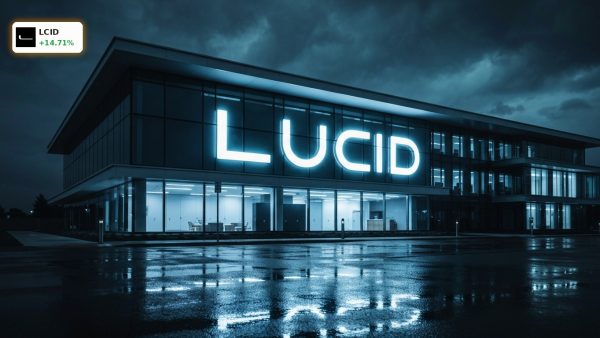
For more insights into the company’s recent corporate drama, read about how Lucid Bankruptcy Rumors Denied: Stock Surges +14.7% on CEO Comments to see how management responded to insolvency fears. Additionally, for investors looking at broader market trends and consumer slowdowns, check out the Chipotle Sales Analysis: Stock Plunges 4% on Growth Slowdown to evaluate other high-profile market movements.
Ultimately, the trajectory of **Lucid Financials** will determine whether the electric vehicle manufacturer can survive this industry downturn or if it will face further downside. For long-term investors, monitoring the company’s upcoming quarterly cost-reduction measures and production efficiency will be crucial to evaluating its recovery potential. If management can successfully execute its scaling strategy, the current low stock price may eventually serve as an attractive entry point for risk-tolerant portfolios.