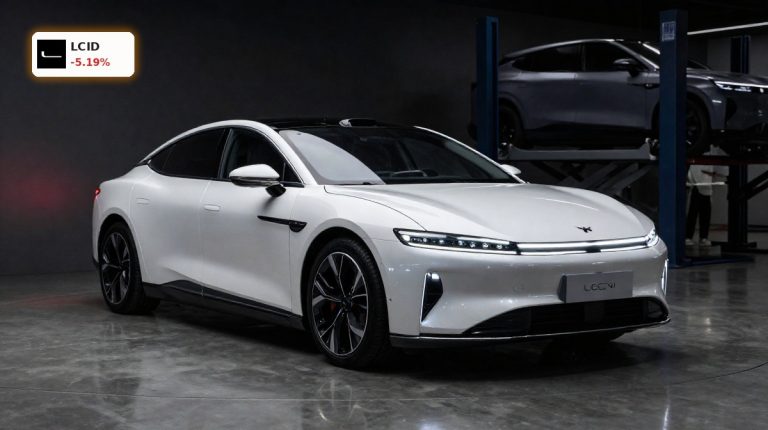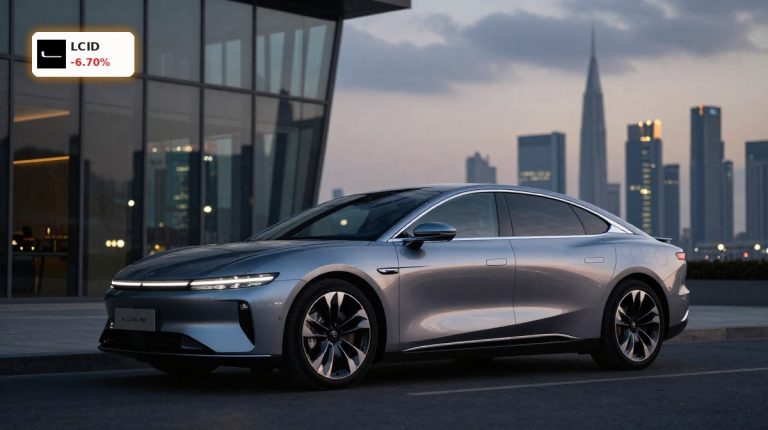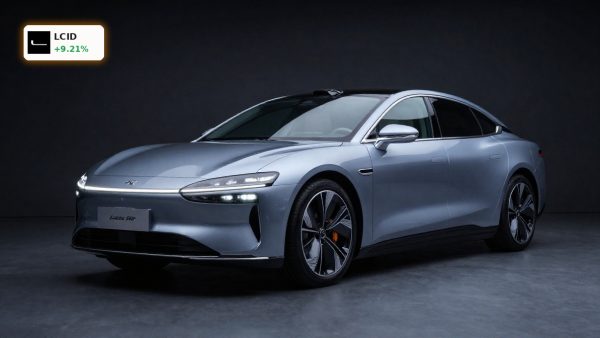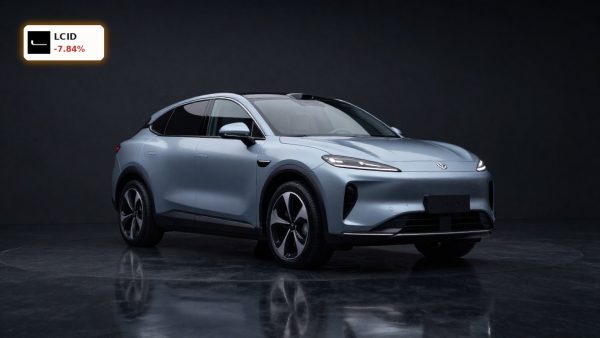

Could rumors of a Lucid Group Bankruptcy push the luxury EV maker over the edge, or is this a massive buying opportunity?

Why Did Lucid Group Shares Plunge?
The dramatic sell-off began after an industry report from Electric-Vehicles.com claimed that Lucid Group, Inc. was working closely with restructuring advisory firm AlixPartners to evaluate strategic options. According to the report, these options included a potential take-private transaction or a voluntary filing for Chapter 11 protection. The mere mention of a possible Lucid Group Bankruptcy triggered an immediate avalanche of sell orders, causing the stock to plunge by as much as 57% during intraday trading on Tuesday.
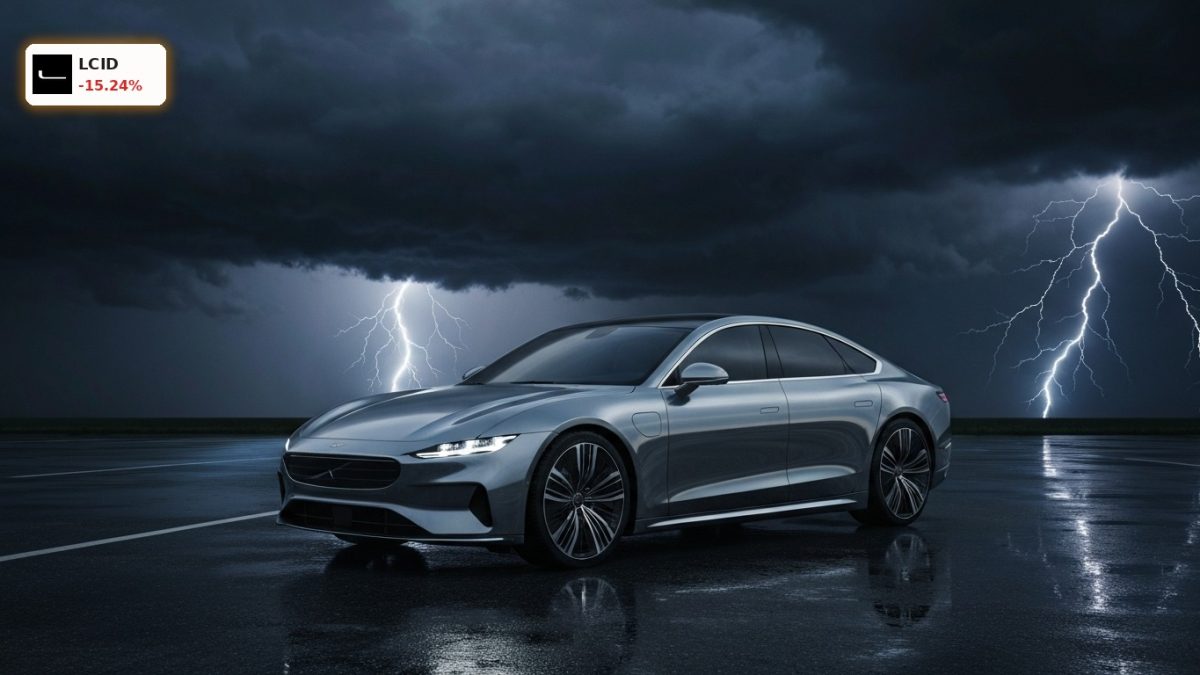
As the sell-off intensified, NASDAQ halted trading of the stock multiple times due to extreme volatility. The stock eventually resumed trading, recouping some of its steepest losses but still finishing the day down 15.24% at $4.67, hovering near its 52-week lows. The sharp decline reflects deep-seated investor anxiety regarding the financial sustainability of capital-intensive EV startups in a high-interest-rate environment.
How Did Lucid Group Respond to the Rumors?
In an effort to control the narrative and soothe nervous investors, the EV maker filed a Form 8-K with the U.S. Securities and Exchange Commission (SEC) to formally address the speculation. The company stated unequivocally that the rumors of an impending Lucid Group Bankruptcy or take-private discussions are completely false. Management clarified that the board has not formed any special committee to explore such scenarios.
While the company confirmed that it has engaged AlixPartners, it emphasized that the advisory firm is assisting solely with operational execution and cost-efficiency strategies. According to the official statement, AlixPartners has not recommended bankruptcy to management or the board. Furthermore, the company reassured the market that it possesses sufficient liquidity to fund its operations well into next year, backed by its previous quarterly financial filings.
What Are the Broader Challenges for the EV Maker?
Despite the company’s firm denial, the market’s nervous reaction underscores the fundamental hurdles facing the brand. Under the leadership of new CEO Silvio Napoli, the company is grappling with slower-than-expected consumer adoption of electric vehicles and a challenging regulatory landscape. The recent elimination of the federal $7,500 EV tax incentive under the Trump administration has further dampened demand for high-end electric cars.
To combat these headwinds, the company has had to make painful adjustments. Last month, the manufacturer announced plans to lay off 18% of its U.S. workforce as part of a broader cost-reduction strategy. Additionally, the company recently suspended its production guidance to address elevated vehicle inventory and missed Wall Street expectations for second-quarter deliveries. While the company’s primary backer remains Saudi Arabia’s Public Investment Fund (PIF), which owns a majority stake, the pressure to scale production efficiently has never been higher.
Related Coverage
The company has sufficient liquidity to carry its operations well into next year, as recently published in its last quarterly filings, and it has not formed any special Board committee to explore the scenarios reported today.— Lucid Group, Inc. Spokesperson
For investors tracking the financial health of the luxury EV maker, understanding its capital structure is essential. Just days before this volatility, the company secured a major financial lifeline. Our detailed analysis on the Lucid Financing +9.2% as Lucid Draws $800M Credit Line explores how this newly drawn credit facility impacts the company’s cash runway. This coverage examines whether the $800 million injection can successfully ease persistent liquidity fears and help the company avoid any future restructuring risks.