

Can MicroStrategy’s new capital playbook protect shareholders without weakening the Bitcoin bull case that made MSTR a market phenomenon?

What Does the New Capital Framework Mean for MSTR?
MicroStrategy Incorporated has formally transitioned from a singular, leveraged Bitcoin accumulator to a flexible capital allocator — a structural inflection point embedded in its newly published MicroStrategy Capital Strategy. The framework authorizes selective Bitcoin sales to fund preferred dividends, permits STRC repurchases, greenlights common stock buybacks, and enforces a minimum cash reserve covering 17 months of preferred dividend and interest obligations — well above the mandated 12-month threshold. With $2.55 billion in cash and $52 billion in liquid Bitcoin assets against just $7 billion in debt, the company’s balance sheet remains robust, but its operational mandate has fundamentally shifted. This recalibration is not defensive retreat — it’s strategic recalibration designed to preserve optionality amid late-cycle crypto leverage unwinds.
How Is STRC Volatility Reshaping Investor Expectations?
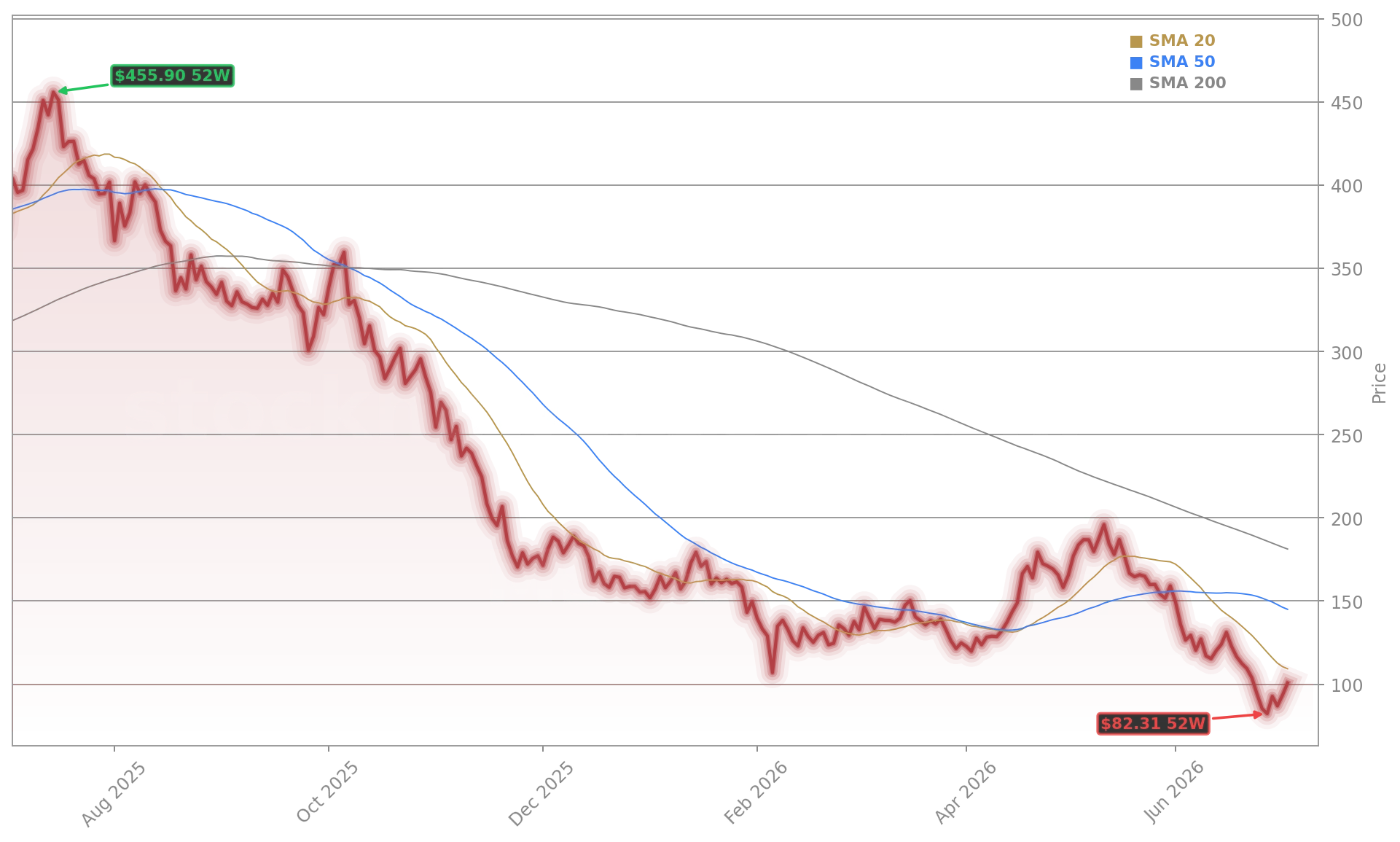
STRC — MicroStrategy Incorporated’s perpetual preferred stock — has dropped to $88 from its $100 par value, triggering market-wide concern about dividend sustainability and Bitcoin price sensitivity. Bitwise Chief Investment Officer Matt Hougan called the selloff a ‘classic late-cycle deleveraging event,’ not a sign of corporate distress. He emphasized that the volatility reflects broader market dynamics, not MSTR-specific weakness. JPMorgan analysts, however, warned that the new policy permitting Bitcoin sales to cover dividends introduces ‘two-way risk’ — meaning MSTR’s Bitcoin holdings could now act as a source of both price support and downward pressure depending on market conditions. That duality adds uncertainty for traders who previously viewed MSTR purely as a long-only crypto proxy.
MicroStrategy Capital Strategy: Is Institutional Demand the Next Catalyst?
The most consequential implication of MicroStrategy Capital Strategy lies beyond MSTR itself: the anticipated handoff of dominant Bitcoin demand from a single corporate buyer to diversified institutions. Bitwise projects that asset managers, pensions, sovereign wealth funds, and banks will soon supplant MicroStrategy Incorporated as the primary source of institutional Bitcoin accumulation — a trend already visible in recent filings by BlackRock, Fidelity, and State Street. This transition reduces MSTR’s systemic influence but elevates its strategic relevance as a bellwether for institutional adoption velocity. For U.S. investors, this means MSTR’s price action may increasingly reflect macro sentiment about regulatory clarity, ETF inflows, and custody infrastructure — not just Bitcoin’s spot price.
What’s the Fallout for U.S. Policy and Portfolio Risk?
Disclosure lapses by U.S. policymakers — including FBI Director Kash Patel’s delayed reporting of a Strategy position now down 44% — have intensified scrutiny of conflicts of interest involving government contractors holding volatile crypto-linked assets. While Patel’s filing was amended to declare ‘no current conflict,’ the episode underscores how political exposure now compounds market risk for MSTR investors. Meanwhile, Wall Street’s technical analysts are watching key resistance: Tim Knight, a noted crypto bear, cites $100 as a critical level — and is considering shorting MSTR if Bitcoin falls below $60,000. That confluence of policy, technical, and macro risk makes MSTR a uniquely leveraged barometer for both crypto markets and broader Nasdaq sentiment.
How Do Crypto Peers Compare on This Shift?
Unlike Coinbase (COIN), which relies on trading revenue and regulatory licensing, or Circle (CRCL), whose value hinges on stablecoin adoption, MicroStrategy Incorporated’s entire equity thesis rests on its Bitcoin balance sheet and financing structure. That makes its MicroStrategy Capital Strategy uniquely sensitive to interest rate shifts, Bitcoin volatility, and preferred stock market liquidity. While COIN rose 3.35% and CRCL gained nearly 5% on the same day MSTR surged 7%, those gains reflect operational momentum — not balance sheet recalibration. By contrast, MSTR’s 20% weekly rebound signals a broader reassessment of crypto’s risk-reward profile among U.S. institutional investors — one that now includes active capital management, not passive accumulation.
The volatility in STRC is a natural and important part of the crypto cycle. I think we’re nearing the bottom.— Matt Hougan, Bitwise Chief Investment Officer
Related coverage explores the $2 billion warning embedded in MSTR’s new framework: MicroStrategy Capital Strategy: Why the $2B Warning Matters. That analysis details how the company’s shift could simultaneously insulate it from near-term liquidity stress while diluting its long-term leverage advantage — a duality critical for investors weighing exposure against broader technology sector holdings.