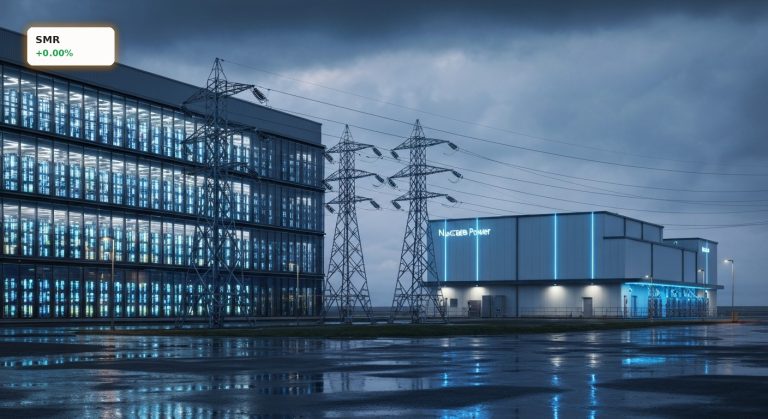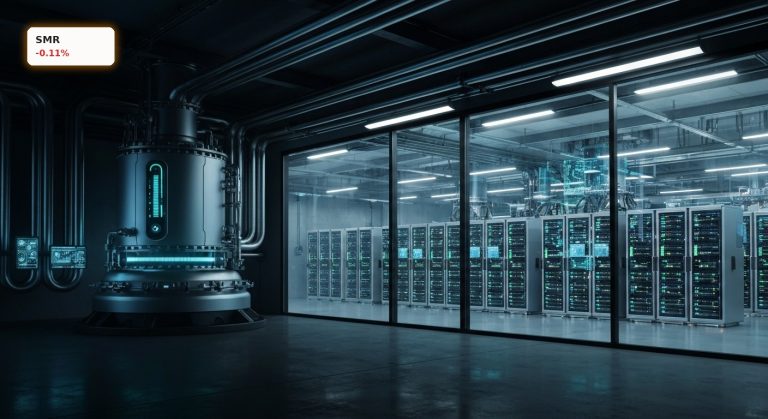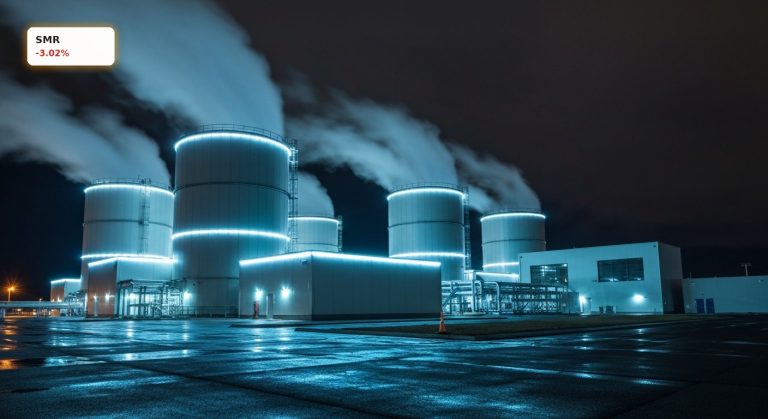
Can NuScale Power SMR successfully bridge the massive energy gap for AI data centers before competitors close the regulatory gap?

Why is NuScale Power SMR leading the race?
The primary competitive advantage for the company lies in its regulatory progress. NuScale Power Corp. is currently the only developer to secure Standard Design Approval (SDA) from the U.S. Nuclear Regulatory Commission (NRC) for its small modular reactor designs. The NRC has approved both its 50-megawatt and 77-megawatt modules. This regulatory milestone gives the NuScale Power SMR a substantial head start over rivals in a sector notorious for lengthy approval processes.
Beyond powering data centers, these versatile reactors can be utilized for hydrogen production and water desalinization. In the long term, the company plans to deploy micro-reactors to support remote mining operations, military installations, and off-grid communities. According to industry forecasts from Global Market Insights, the global market for small modular reactors is projected to grow from $5.3 billion in 2026 to $15.6 billion by 2035, representing a compound annual growth rate of 12.7%.
How does AI demand impact NuScale Power?
Training complex large language models requires thousands of high-performance graphics chips from companies like NVIDIA running continuously. To maintain these operations, tech giants like Alphabet, Microsoft, and Meta Platforms need uninterrupted, 24/7 carbon-free baseload power. Intermittent sources like wind and solar cannot support these massive loads alone.
Financial institutions are highlighting this massive energy gap. Analysts at Goldman Sachs forecast that U.S. data center power demand could spike to 66 GW by 2027, accounting for up to 8.5% of peak summer demand. Meanwhile, Bank of America predicts that data centers will add 125 GW of new electric capacity over the next five years. This unprecedented demand is forcing hyperscalers to look directly at nuclear energy. While traditional utilities like Constellation Energy are leveraging existing nuclear plants, the flexibility of the NuScale Power SMR offers a scalable solution that can be built directly adjacent to new data center hubs.
What obstacles does NuScale Power face?
Despite its technological edge, the company faces significant execution risks. NuScale Power is working on a landmark project in Romania to install six modules at a former coal plant site, aiming for operations to begin in 2033. However, proving commercial viability remains a hurdle, as the initial phase relies on a single 77 MW module proving its operational success before the remaining five are built.
Additionally, the company is collaborating with ENTRA1 to deploy up to 6 GW of power modules with the Tennessee Valley Authority, with hopes of finalizing a power purchase agreement soon. Investors must also monitor competitive threats. The U.S. Department of Energy is actively utilizing its Reactor Pilot Program to fast-track and reduce red tape for alternative reactor technologies, which could allow competitors to close the gap.
Related Coverage
For investors tracking this rapidly evolving sector, keeping up with market shifts is essential. The article NuScale Power SMR Market: $15B Boom or High-Risk Speculation? analyzes whether the company can overcome regulatory hurdles to capture the multi-billion-dollar market. Meanwhile, looking at broader industrial trends, the report Archer Aviation Thunder: Defense Boom Sparks eVTOL Stock Rally explores how defense-driven demand is sparking rallies in other high-growth technology sectors.
The growing demand for clean, reliable energy to power the artificial intelligence revolution makes the NuScale Power SMR one of the most intriguing stories in the energy transition. While the stock carries notable execution risks and regulatory hurdles, its first-mover advantage provides a unique entry point for forward-looking portfolios. For long-term investors, the current valuation could represent an attractive opportunity to gain exposure to the future of nuclear energy.