Can NVIDIA Quantum Computing and its AI-driven control stack really turn today’s GPU dominance into tomorrow’s quantum advantage?

Is NVIDIA Quantum Computing now a real growth driver?
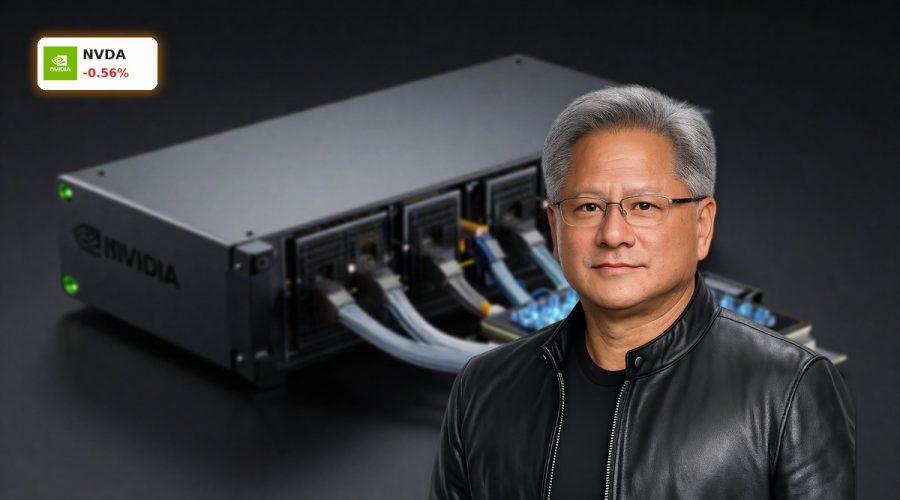
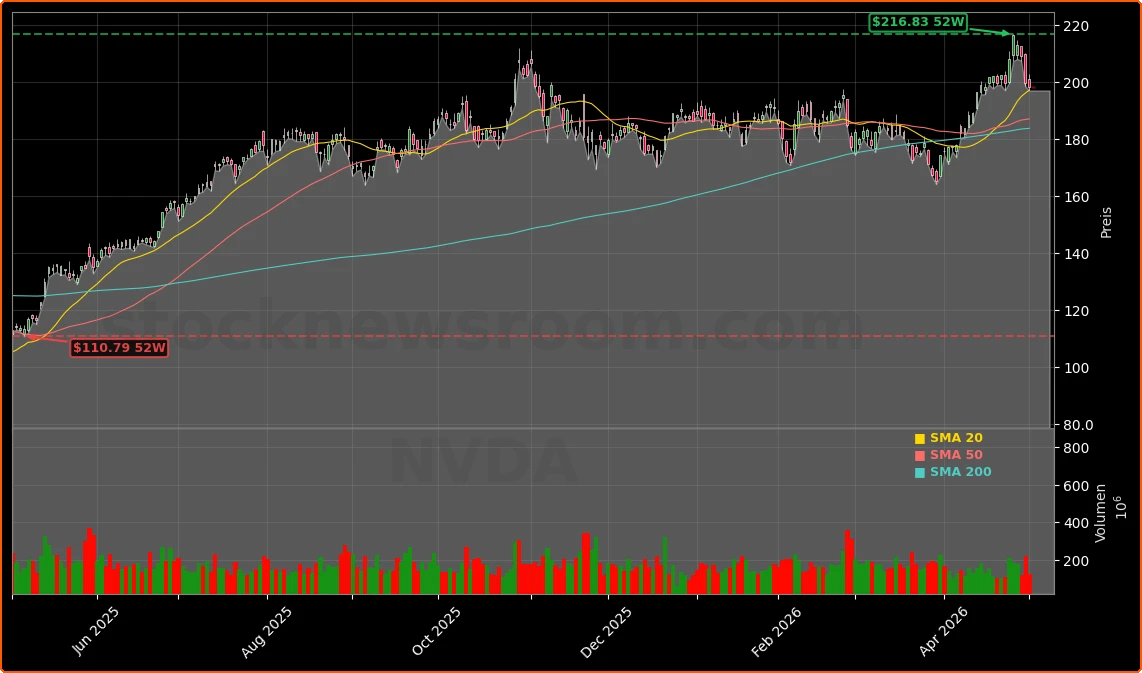
After a historic AI run, NVDA shares have cooled, slipping about 0.56% today to $198.45 with a modest 0.17% dip to $198.12 in post-close trading. Yet the narrative is shifting from near-term price swings to how NVIDIA can anchor the next phase of high-performance computing. The company has unveiled Ising, an open family of AI models specifically designed to manage and calibrate quantum processors, alongside its CUDA-Q software stack and NVQLink hardware to physically tie GPUs to quantum processing units (QPUs).
Ising tackles one of quantum’s core bottlenecks: fragile qubits and high error rates. By using AI to optimize calibration and error decoding, NVIDIA claims its approach delivers up to 2.5x faster and three times more accurate error correction than traditional methods. CEO Jensen Huang describes this as turning AI into the “control plane” or operating system for quantum machines, effectively making GPU-accelerated clusters the orchestrators of future quantum workloads.
Crucially, Ising is open source, echoing the strategy behind CUDA, which helped make NVIDIA GPUs the default engine for modern AI research. By inviting quantum pure plays and research labs into its ecosystem early, NVIDIA Quantum Computing efforts could create a de facto standard long before the technology becomes mainstream revenue.
How does NVIDIA stack up against Alphabet, IBM and Microsoft?
While NVIDIA focuses on AI-driven control and hybrid architectures, rivals are attacking quantum from different angles. Alphabet is pushing hardware breakthroughs like its Willow processor, designed to reduce error rates exponentially as qubit counts scale. IBM continues to iterate on larger, more stable superconducting systems, while Microsoft is pursuing error-resistant hardware designs and a topological approach.
The distinction is that NVIDIA’s edge lies less in building the qubits themselves and more in owning the surrounding infrastructure: GPUs, interconnects, and now AI models that make quantum devices usable in real-world settings. CUDA-Q and NVQLink are meant to plug quantum accelerators into the same GPU-centric data centers that already power generative AI and simulation workloads.
This quantum push complements NVIDIA’s broader AI positioning with hyperscalers and the US government. A recent Pentagon initiative to deploy advanced AI on classified networks includes participation from NVIDIA alongside Microsoft, Amazon and Oracle, underlining that the company is no longer just a chip vendor but an end-to-end compute platform provider. As defense and cloud contracts increasingly require secure, heterogeneous compute (CPUs, GPUs, and eventually QPUs), NVIDIA Quantum Computing integration could become a differentiation point.
What does the market and Wall Street think of NVIDIA?
Institutional behavior shows profit-taking rather than a wholesale exit. Cove Private Wealth LLC, for example, trimmed its NVDA stake by about 6.2% in Q4 but still holds roughly $27.8 million in shares, keeping NVIDIA Corporation as its second-largest position at 8.3% of assets. That pattern—reducing but not abandoning—reflects how central the name remains in many US growth portfolios.
On the Street, sentiment is broadly bullish. Consensus price targets from large banks such as Morgan Stanley, Goldman Sachs and Citigroup cluster well above the current sub-$200 level, with MarketBeat data pointing to an average around $275.25 and a majority of “Buy” or “Overweight” ratings. Analysts highlight NVIDIA’s 70%-plus gross margins, explosive data center revenue and early lead in AI accelerators as reasons the stock can remain a core NASDAQ and S&P 500 growth holding despite recent volatility.
Options flow also points to long-dated optimism. A recent bullish call sweep worth roughly $1.6 million targeted March 2027 $260 strikes, implying traders are betting on about 30% upside over the next year and a half. For investors trying to gauge whether NVIDIA Quantum Computing is “too early,” this long-term positioning suggests many see today’s quantum spend as a relatively cheap option on a potentially massive future market.
How big could NVIDIA Quantum Computing become?
Forecasts for quantum’s addressable market vary wildly, but even conservative estimates see double-digit billions of dollars in value by the next decade. NVIDIA has cited research that puts the quantum market at around $11 billion by 2030, while McKinsey scenarios stretch to $100 billion by 2035 as finance, pharmaceuticals, logistics and materials science adopt quantum-accelerated workflows.
NVIDIA is betting that most of these workloads will not run on standalone quantum machines but on hybrid systems where classical supercomputers—powered by its GPUs and new data center CPUs—handle orchestration and pre/post-processing. NVQLink, designed to connect QPUs directly to GPU clusters at high bandwidth and low latency, is the hardware backbone of that vision. If that architecture becomes standard, NVIDIA Quantum Computing revenue may flow less from selling qubit devices and more from selling the GPUs, networking and software that make those devices productive.
The company is also extending its AI infrastructure reach through partners. Coherent recently highlighted a strategic collaboration with NVIDIA around AI data center components, and Lumentum secured a $2 billion NVIDIA investment related to optical gear for ultra-high-speed GPU clusters. As data center networking shifts to optical to support 800G to 1.6T speeds, these relationships reinforce NVIDIA’s role at the center of the broader AI and quantum-capable compute stack.
Related coverage: defense, AI and valuation risks
Investors looking at the long-term NVIDIA Quantum Computing story should also consider how it intersects with defense spending and geopolitics. A deeper dive into the company’s growing Pentagon footprint, export constraints to China and valuation risks is available in this analysis of NVIDIA’s Pentagon AI deal and the balance between defense boom and China headwinds. Together with today’s quantum announcements, that piece helps frame how national security, AI infrastructure and new compute paradigms could shape NVDA’s trajectory.
With Ising, AI becomes the control plane — the operating system of quantum machines — transforming fragile qubits to scalable and reliable quantum-GPU systems.— Jensen Huang, CEO of NVIDIA
In sum, NVIDIA Quantum Computing is less about near-term revenue and more about securing the company’s role as the operating layer for whatever comes after today’s GPU-driven AI cycle. For US investors, that makes NVDA a high-beta bet not just on AI demand, but on quantum’s eventual arrival and the hybrid architectures that will power it. The next few years of product launches and partnerships will show whether this strategy cements NVIDIA’s platform status across both classical and quantum compute.