Can the latest Rivian Earnings beat and Georgia expansion plan finally put the EV upstart on a credible path to profitability?

How did Rivian Earnings surprise Wall Street?
Rivian posted an adjusted operating loss of $621 million on $1.4 billion in Q1 2026 sales, beating analyst expectations for a roughly $819 million loss on the same revenue base. The company also reported quarterly gross profit of $119 million, more than double the $56 million analysts had projected, signaling tighter cost control on both manufacturing and overhead. On a net basis, the loss came in at just $0.33 per share, underscoring that the path toward break-even is slowly getting shorter even as volumes remain modest compared with legacy automakers.
Vehicle deliveries reached 10,365 units in the quarter, up from 8,640 a year earlier. That growth, while not explosive, comes against a backdrop of soft U.S. EV demand that has forced players like Tesla and Ford to rethink aggressive capacity expansions. In that context, the latest Rivian Earnings paint a picture of a company that is holding its ground on pricing and scaling cautiously, rather than chasing market share at any cost.
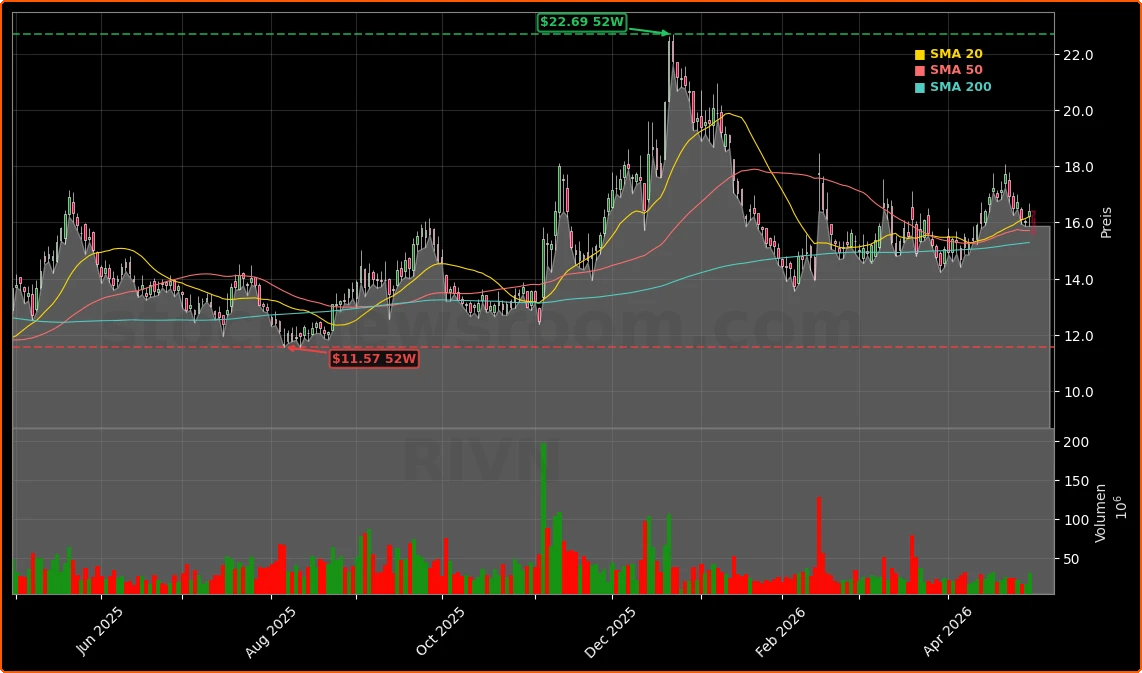
The stock reacted in two stages: it gained more than 2% in after-hours trading following the release, then gave back some of those gains in pre-market action on Friday. At around $16 per share, Rivian is still down sharply from its post-IPO highs near $180, but has advanced roughly 21% over the last 12 months as investors reassess long-term EV adoption and the company’s execution.
What is Rivian planning in Georgia?
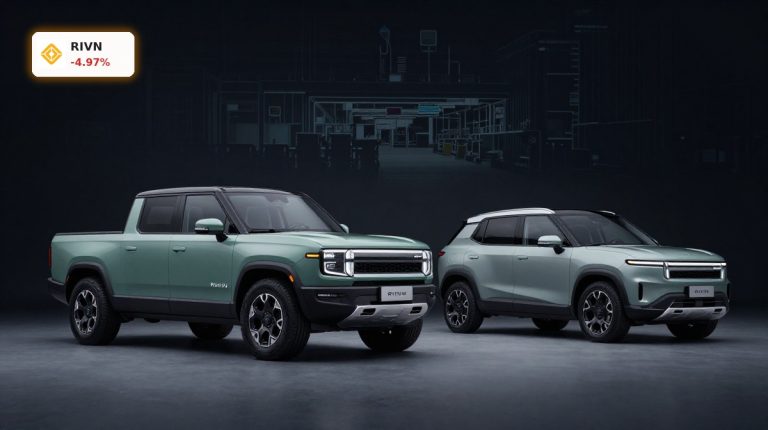
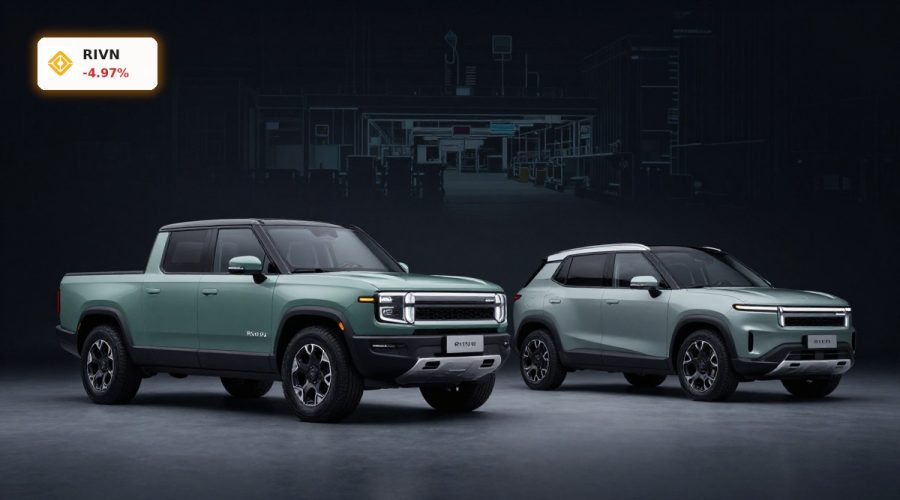
Alongside the Rivian Earnings print, management delivered a major update on its manufacturing blueprint. The company now plans to start building a new plant in Georgia this year and has increased the initial targeted production capacity for that site to 300,000 vehicles annually, up from the prior 200,000. The first R2 SUVs from the Georgia facility are slated to roll off the line by late 2028, positioning the plant as the backbone of Rivian’s mass-market strategy heading into the next decade.
To help fund the project, Rivian has restructured an existing loan commitment with the U.S. Department of Energy to up to $4.5 billion, with draws expected to begin by early 2027. The company ended Q1 with about $5.4 billion in cash and additional liquidity, while Wall Street currently models cash usage of roughly $3.8 billion in 2026. That gives Rivian some runway, but not unlimited time, to prove that higher volumes at Georgia and its existing Illinois plant can push per-unit costs down and move the business toward positive operating income, which many analysts do not expect until around 2030.
Rivian reaffirmed its full-year 2026 delivery guidance of 62,000 to 67,000 vehicles, up from approximately 42,000 in 2025. Hitting the midpoint of that outlook will be critical to validating the company’s capacity expansion plans and supporting the more optimistic scenarios baked into some bullish Wall Street models.
How do Rivian Earnings fit into the broader EV narrative?
The latest Rivian Earnings arrive at a time when sentiment toward EV stocks remains fragile. U.S. EV penetration is hovering around 6% of new car sales, far below early projections that once underpinned lofty valuations across the sector. Detroit incumbents like General Motors and Ford have written down parts of their EV investments, while pure-play competitors such as Tesla battle margin pressure and intensifying competition from Chinese manufacturers.
Rivian’s strategy is to lean into its EV-only, premium-leaning positioning while building software and services that can complement hardware revenue. A recent collaboration with Uber on autonomous R2-based robotaxis, tied to a potential $1.25 billion investment, has reinforced that ambition. In Q1, the software and services segment generated a gross profit of about $181 million, helping offset a gross loss in the auto segment and highlighting an emerging revenue stream that could become more important as the fleet grows.
On the valuation front, some research shops argue that Rivian remains undervalued versus long-term potential, with recent estimates suggesting fair value above the current share price, while others highlight a still-elevated price-to-sales multiple compared with traditional automakers. Technical traders tracking RIVN on platforms like TradingView note mixed signals, citing potential bottoming patterns but also lingering downside risk if macro conditions or EV demand weaken further.
What should investors watch after these Rivian Earnings?
For U.S. equity portfolios, the key takeaway from the latest Rivian Earnings is that execution is improving, but the financial journey is far from over. Rivian is still burning cash and remains highly sensitive to capital markets, battery costs and consumer sentiment on EVs. Insider activity has also drawn attention: CEO Robert Scaringe recently sold around 21,000 shares under a Rule 10b5-1 plan, while CFO Claire McDonough disposed of just over 10,000 shares under a similar pre-arranged program. At the same time, multiple board members, including John Krafcik and Sanford Schwartz, have seen fresh restricted stock units vest, increasing or deferring their equity exposure.
Analyst coverage remains polarized. Some banks, such as Baird, rate Rivian “Outperform” and see the R2 mid-size SUV—with an EPA-certified range potentially around 335 miles—as a serious challenger to models like the Tesla Model Y. Others remain cautious, pointing to the heavy capex required for the Georgia plant, uncertain U.S. EV subsidies and the risk that Rivian may need to raise additional equity if market conditions deteriorate.
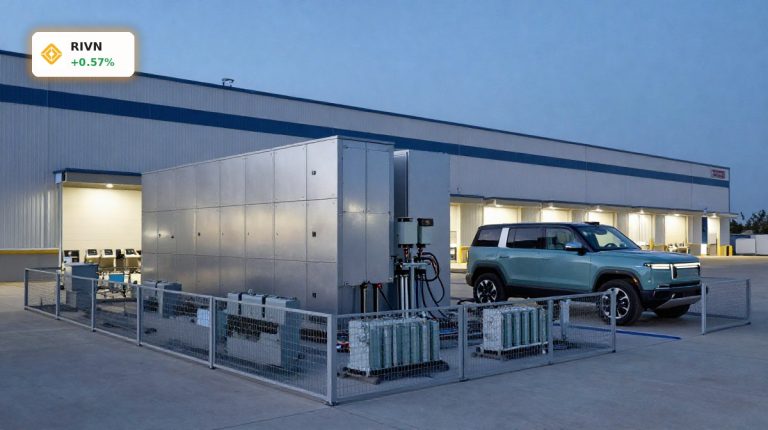
Related Coverage: Investors interested in how Rivian’s long-term strategy extends beyond vehicles can dive deeper into its battery ecosystem push. The article “Rivian Energy Storage Boom Turns Old EV Packs Into Power” explores how partnerships aimed at turning retired EV packs into stationary storage could give Rivian a second-life revenue stream and differentiate it from EV peers like NVIDIA-powered autonomous platforms and consumer giants such as Apple. Together with the latest Rivian Earnings, that piece helps frame whether Rivian can build a durable energy and software platform around its core truck and SUV lineup.
In summary, the newest Rivian Earnings show a company that is cutting losses, lifting gross profit and doubling down on future capacity just as the broader EV market hits a more realistic phase. For investors, Rivian remains a higher-risk, higher-reward EV pure play whose valuation hinges on successful R2 ramp-up, Georgia plant execution and continued progress in software and energy storage. The next few quarters of Rivian Earnings and delivery data will be crucial in determining whether today’s discounted share price is a long-term opportunity or a value trap.