
Can Robinhood Blockchain turn crypto infrastructure into a durable profit engine, or is HOOD taking on more risk than investors expected?

What does Robinhood Blockchain actually do?
Launched on July 1, 2026, the Robinhood Blockchain enables seamless onchain settlement for tokenized U.S. equities and — critically — routes perpetual futures trading directly through Lighter (LIT), a decentralized derivatives exchange. Unlike earlier crypto integrations, this isn’t a third-party API wrapper: Robinhood Wallet users in eligible jurisdictions now deposit stablecoins into Lighter’s smart contracts as collateral without leaving the app. That eliminates friction that previously deterred retail traders from leveraged crypto products. The chain is Ethereum-compatible, supports EVM tooling, and is optimized for low-latency order execution — a necessity for perpetuals where slippage and liquidation risk are paramount.
How does this impact HOOD’s revenue model?
Robinhood Markets, Inc. stands to earn recurring routing fees from Lighter’s perpetuals volume, though the exact revenue split remains undisclosed. With global decentralized perpetuals trading volume surging to $448.1 billion over the past 30 days — more than the cumulative total from two years ago — even a 0.05% fee share could generate $22.4 million monthly. That’s incremental to HOOD’s $1.1 billion in Q1 2026 revenue, up 15% year over year. Morgan Stanley analysts note that ‘infrastructure monetization’ now accounts for 12% of their updated 2026 revenue forecast, up from 3% in Q4 2025. Meanwhile, Lighter’s tokenomics overhaul — burning 15.5 million LIT tokens (6.3% of supply) — further aligns incentives with HOOD’s long-term ecosystem play.
Robinhood Blockchain: Bullish catalyst or competitive risk?
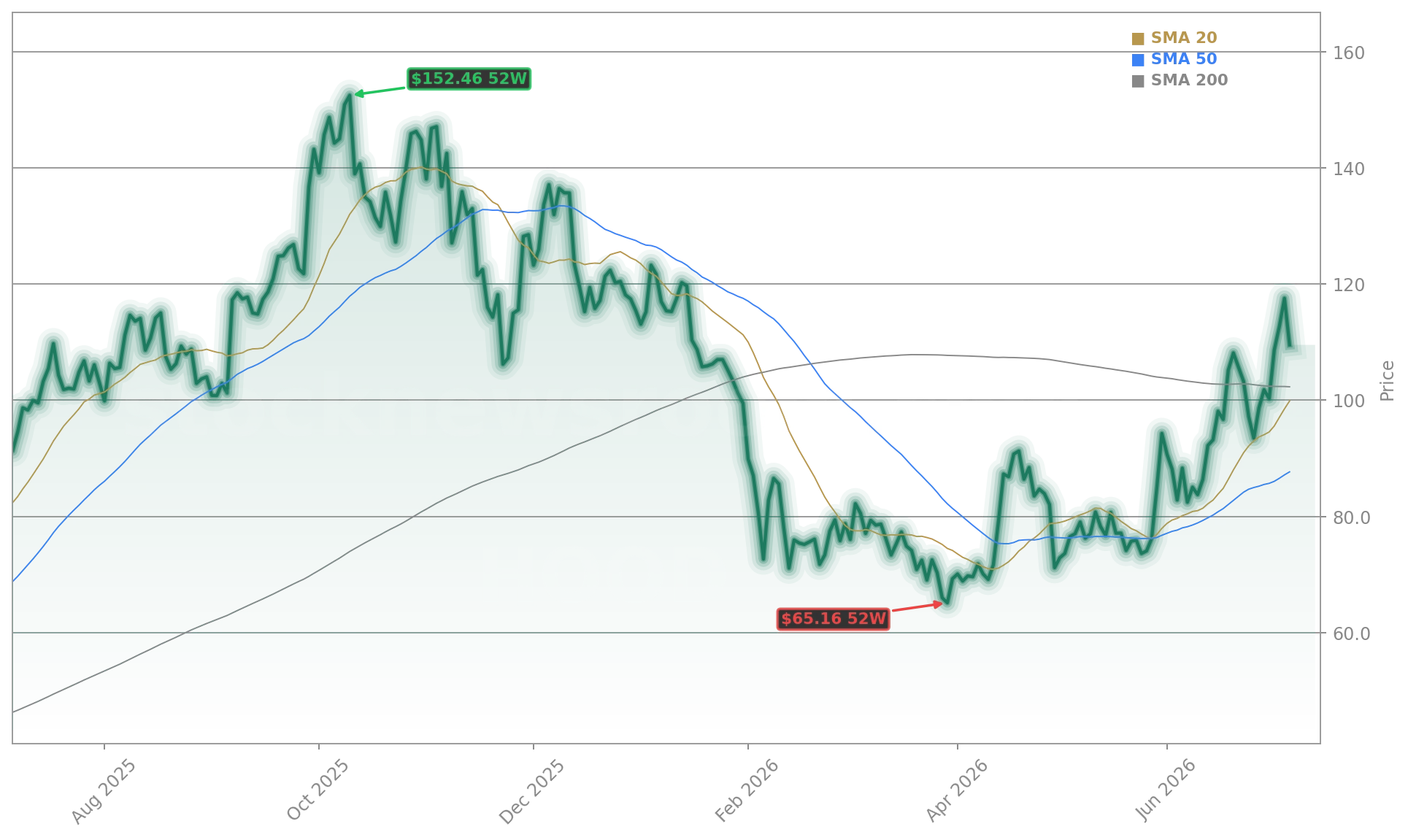
While the Robinhood Blockchain strengthens HOOD’s moat in crypto-native finance, it also intensifies head-to-head competition with Hyperliquid (HYPE) and Aster — both of which have secured partnerships with Coinbase and Circle. RBC Capital Markets recently downgraded HOOD to ‘Sector Perform’ citing ‘increasing capital intensity in infrastructure buildout’ and ‘uncertain path to margin expansion’ in the derivatives layer. That said, Citigroup raised its price target to $128, citing ‘first-mover advantage in retail-perpetuals integration’ and ‘materially improved capital allocation discipline’ following the $2.2 billion convertible note offering. Notably, HOOD used $290 million of those proceeds to repurchase shares — reducing dilution risk and boosting EPS estimates by 8% for Q3 2026.
How do insiders view the strategy?
Despite the bullish infrastructure push, insider activity tells a nuanced story. Chief Brokerage Officer Steven Quirk sold $2.32 million in shares on July 2 — executed under a Rule 10b5-1 plan — while CFO Shiv Verma offloaded $393,779 worth in mid-June. Director Baiju Bhatt sold $5.19 million in June. Yet all transactions occurred amid a 17.22% weekly stock surge, suggesting alignment with longer-term value creation. CEO Vlad Tenev reinforced the vision in a July 7 X post: ‘Only 62% of Americans have exposure to U.S. stocks — I’d like to get that to 100.’ His ‘North Star’ remains direct equity ownership, now expanded to include onchain tokenized assets via the Robinhood Blockchain. That ambition resonates with investors in Apple-adjacent fintech ecosystems and broader S&P 500 tech exposure.
Only 62% of Americans have exposure to U.S. stocks — I’d like to get that to 100.— Vlad Tenev, CEO of Robinhood Markets, Inc.
Related Coverage: Robinhood Crypto Expansion Drives HOOD Up 4% on DeFi Push details how the company’s earlier DeFi integrations paved the way for today’s infrastructure leap — from wallet-to-wallet swaps to full-stack chain ownership. Robinhood Markets, Inc. stock profile provides real-time price action, analyst ratings, and earnings calendar tracking. And The Manila Times report confirms the $2.2 billion convertible note close — a key enabler of HOOD’s capital-light infrastructure rollout.