
Can a major Apple deal lock in Broadcom’s future growth even as AVGO stock slides on Wall Street nerves?

What Does the Broadcom Apple Partnership Mean for AVGO’s Revenue?
Broadcom Inc. confirmed a new multi-year agreement to supply Apple with custom ASIC silicon products through 2031 — extending a relationship that already underpins key components in every iPhone, iPad, and Mac. The deal covers radio frequency, cellular, Wi-Fi, and Bluetooth chips, including next-generation surface acoustic wave (FBAR) filters manufactured at Broadcom’s Fort Collins, Colorado facility. Analysts at Citigroup note the agreement ‘de-risks near-term revenue’ and reinforces AVGO’s role as a top-tier custom silicon provider — not just a component vendor. With Apple responsible for approximately $11.2 billion of Broadcom’s $56 billion in fiscal 2025 revenue, the extension delivers critical visibility into Q3 and Q4 2026 earnings and beyond.
How Does This Affect Broadcom Apple Partnership vs. Competitors?
While Apple has accelerated in-house chip development — notably the M-series and A-series processors built with Taiwan Semiconductor Manufacturing Company (TSMC) — Broadcom remains indispensable for RF and networking subsystems that demand extreme integration and power efficiency. This contrasts sharply with Intel’s stalled efforts to regain Apple’s modem business and NVIDIA’s focus on general-purpose AI accelerators. RBC Capital Markets highlights that ‘Broadcom’s ASIC expertise in RF and AI inference silicon creates a defensible moat’ — especially as Apple’s cloud-based Apple Intelligence features demand low-latency, domain-specific chips. The deal also complements Broadcom’s April 2026 agreement with Google to co-develop next-generation tensor processing units, positioning AVGO as a dual-track supplier to both device OEMs and cloud AI leaders like Meta.
Why Did AVGO Drop Despite the Positive News?
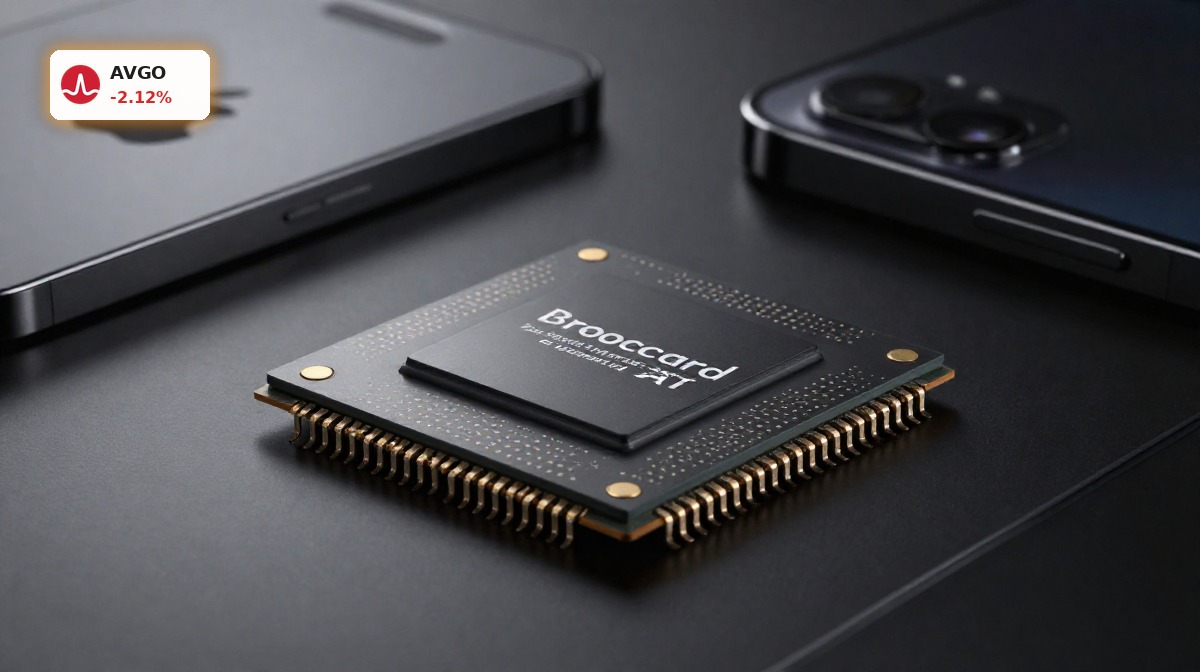
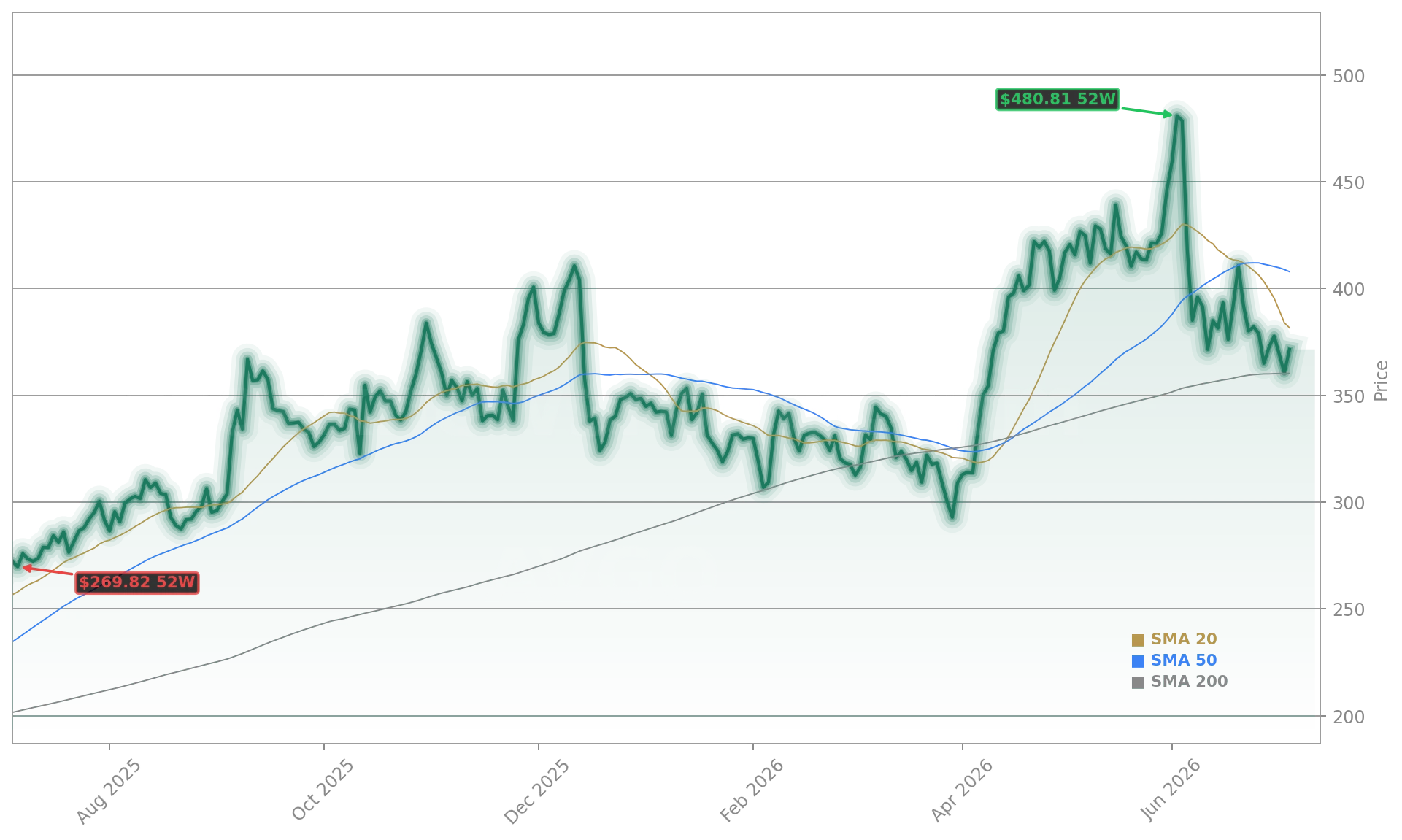
Despite the partnership extension, Broadcom Inc. shares fell 2.12% to $365.80 on Tuesday, July 7, 2026 — a reaction to broader tech sector pressure. The NASDAQ fell 1.3% pre-market, with NVIDIA down 0.8% and AMD off 4.2%. Erste Group downgraded AVGO to Hold from Buy, citing valuation concerns: ‘Gross and operating margins remain stable at ~75% and ~48%, respectively, but the stock’s current multiple already prices in much of the AI upside.’ Consensus price targets still average $512 — implying ~36% upside — per Morgan Stanley and Goldman Sachs. The pullback from all-time highs (down 24.5% since early June) reflects investor caution ahead of Q3 earnings, not weakness in fundamentals.
How Does This Broadcom Apple Partnership Fit Into the AI Chip Arms Race?
This agreement validates our leadership in custom silicon for AI-driven endpoints — it’s not just about scale, but about architectural influence inside the most sophisticated devices on the planet.— Hock Tan, CEO of Broadcom Inc.
The 2031 agreement is a direct vote of confidence in Broadcom’s AI inference silicon roadmap. Unlike general-purpose GPUs, Broadcom’s custom ASICs are optimized for edge-AI tasks — such as on-device speech recognition, real-time camera processing, and secure neural engine offloads. This aligns with Apple’s strategy to keep sensitive AI operations on-device while scaling cloud inference. Broadcom’s recent $22 billion inference silicon revenue projection — detailed in its Broadcom AI Chip: $22B Revenue Boom Fuels Inference Push — gains credibility as Apple joins Alphabet and Meta as anchor customers. HSBC’s recent Adobe Upgrade +4.9%: HSBC Turns Bullish on AI Fears underscores how Wall Street is recalibrating AI infrastructure exposure — and AVGO now sits at the center of that shift.