
Can Broadcom’s new AI chip turn custom inference silicon into the next big threat to NVIDIA’s dominance?

What Does Jalapeño Mean for Broadcom’s AI Leadership?
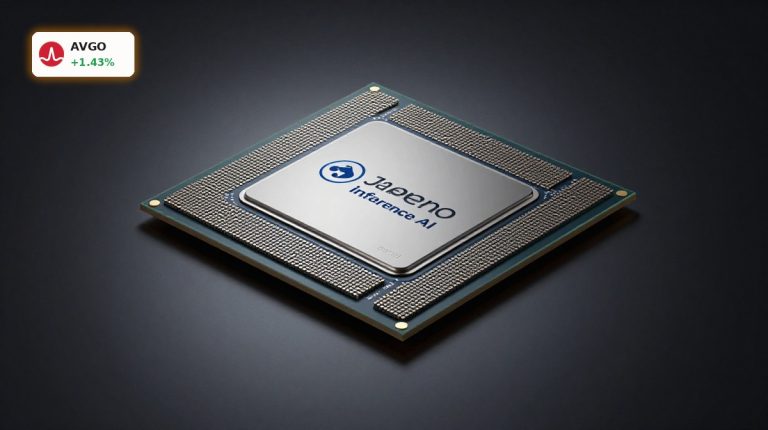
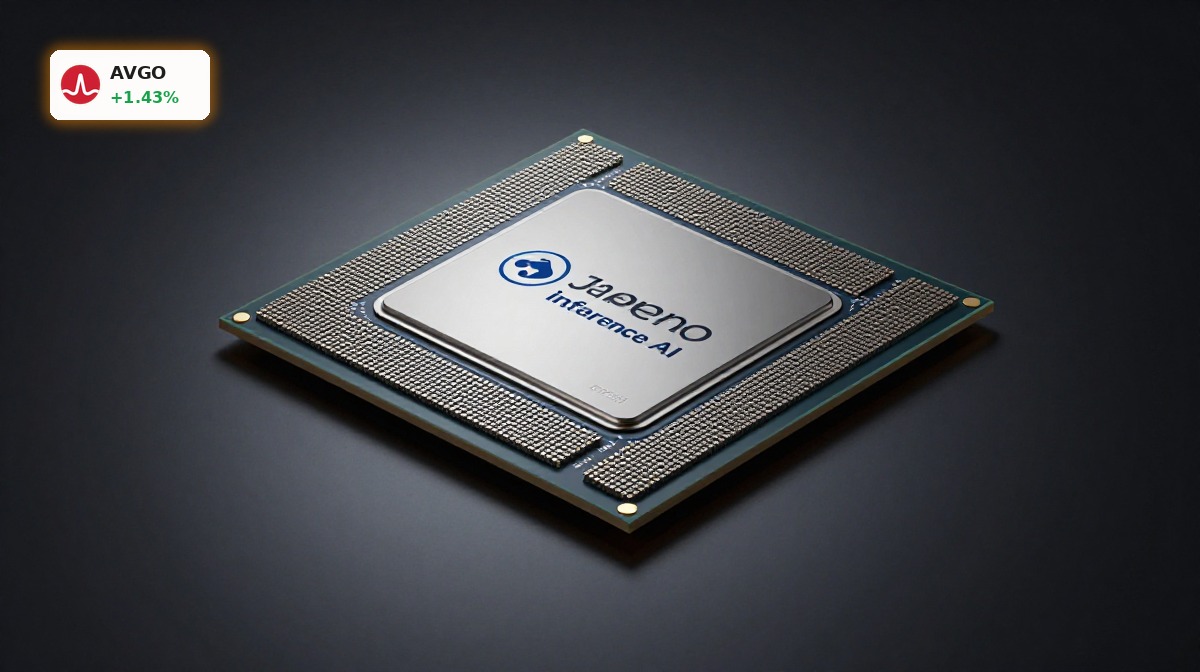
Broadcom Inc. has moved decisively beyond networking and storage silicon to dominate the custom AI chip space — now commanding an estimated 70% market share in application-specific integrated circuits (ASICs) for AI inference. The Jalapeño processor, unveiled last week, is not a general-purpose GPU like NVIDIA’s H100 or Blackwell series, but a tightly optimized ASIC built for OpenAI’s evolving LLM architecture and agentic workflows. Broadcom claims Jalapeño delivers ‘substantially better’ per-watt performance than current state-of-the-art chips — a critical advantage as hyperscalers like Meta and Microsoft push toward 24/7 inference operations with constrained power budgets. Unlike training-focused silicon, Jalapeño is purpose-built for real-time, multi-step reasoning — positioning Broadcom to capture demand from next-generation AI assistants, enterprise copilots, and autonomous agents.
How Does the Broadcom AI Chip Stack Up Against Competitors?
While NVIDIA remains the dominant force in AI acceleration overall, its inference leadership is now under pressure. Broadcom’s $16 billion AI revenue forecast for this quarter — up from $10.8 billion in Q2 — dwarfs Marvell Technology’s projected 20% AI chip revenue growth this fiscal year. Qualcomm (QCOM), meanwhile, trades at a more attractive valuation but lacks Broadcom’s hyperscaler integration depth: its inference chips are still in early adoption, whereas Broadcom already ships at scale to OpenAI and multiple Tier-1 cloud providers. RBC Capital Markets recently upgraded Broadcom Inc. to ‘Outperform’, citing ‘Jalapeño’s potential to displace GPU-based inference in latency-sensitive, high-volume deployments.’ Morgan Stanley analysts added that the chip could drive ‘incremental $3–4 billion in annual revenue by fiscal 2027’ — a figure that assumes only partial substitution of NVIDIA-based inference stacks.
Why Did Q2 Earnings Not Move the Stock?
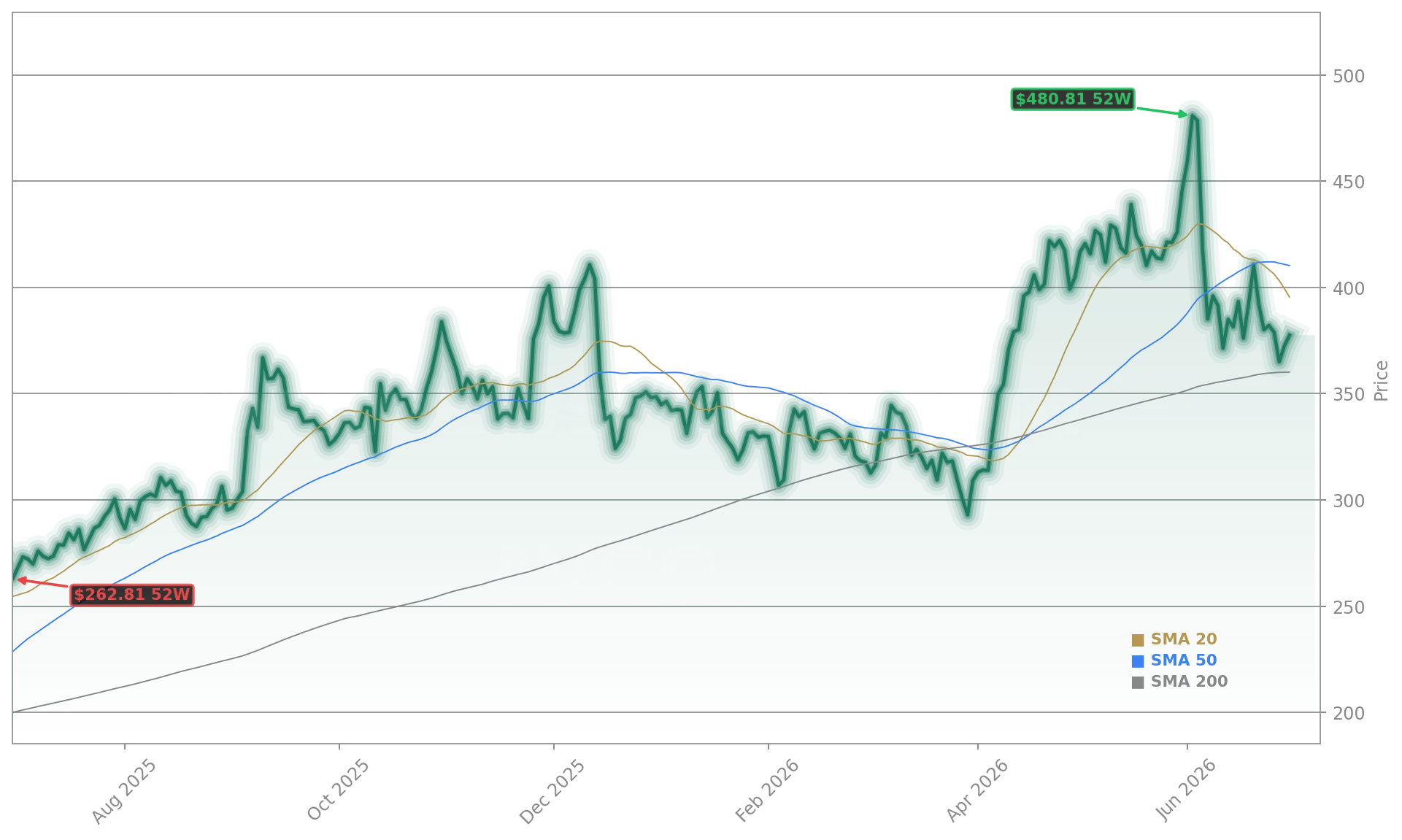
Broadcom Inc. reported $22.2 billion in quarterly revenue — a 48% year-over-year jump — and 54% earnings growth. Yet shares remain 25% below their $500 peak, reflecting Wall Street’s valuation discipline: at 61x forward earnings and 24x sales, the stock demands flawless execution. Citigroup maintains a $420 price target but warns that ‘any delay in Jalapeño’s volume ramp or OpenAI’s deployment timeline could trigger renewed multiple compression.’ Notably, the S&P 500’s Magnificent 7 cohort lost $2.3 trillion in market value in June — a headwind that suppressed even high-quality tech names. Still, Broadcom’s AI revenue now accounts for nearly 50% of total semiconductor sales — up from 18% just 12 months ago — validating its aggressive R&D pivot.
What’s Next for Broadcom’s AI Roadmap?
Jalapeño is just the opening salvo. Broadcom Inc. confirmed plans to release Jalapeño-X — a scaled-up variant supporting multimodal inference — by Q4 2026. The company also disclosed ongoing co-design work with Meta on a custom chip for its open-source Llama ecosystem, signaling broader ecosystem expansion beyond OpenAI. With $100 billion in AI revenue targeted for fiscal 2027, Broadcom is no longer a component supplier — it’s becoming an AI infrastructure architect. That shift is resonating with institutional investors: SOXL, the leveraged semiconductor ETF, holds Broadcom Inc. as its second-largest position at 4.51%, trailing only AMD. As AI inference demand triples between 2024 and 2027 (per Counterpoint Research), the Broadcom AI Chip isn’t just a product — it’s the cornerstone of a new revenue architecture.
Jalapeño’s per-watt performance is substantially better than current state-of-the-art — a decisive advantage for inference at hyperscale.— Broadcom Inc. spokesperson
Related Coverage: Broadcom’s recent partnership with Google faced skepticism after JPMorgan questioned long-term TPU alignment — Broadcom Google AI Deal -4% as JPMorgan Backs TPU Path. Meanwhile, Palantir’s enterprise AI monetization surge — driven by vertical partnerships like its deal with Surf Air — shows how inference infrastructure is enabling real-world AI adoption — Palantir Partnership: 85% Revenue Surge Tests Skeptics.