If NASA just handed Rocket Lab two critical science launches, why did RKLB still close lower on the day?

Why Did Rocket Lab NASA Missions Ignite After-Hours Buying?
Rocket Lab USA, Inc. surged 5.59% to $85.20 in after-hours trading on Thursday, June 25, 2026, following NASA’s formal selection of the company to launch two high-priority Earth science missions: PolSIR (Polarized Submillimeter Ice-cloud Radiometer) and TSIS-2 (Total and Spectral Solar Irradiance Sensor-2). PolSIR will fly on two dedicated Electron launches no earlier than June 2027 to study high-altitude ice clouds — data critical for next-generation climate modeling. TSIS-2, scheduled for early 2027, will precisely measure solar irradiance to calibrate Earth energy budget models. These missions aren’t experimental: they’re fully funded, mission-critical NASA science programs — and Rocket Lab NASA Missions now directly underpin them.
How Does This Fit Into Rocket Lab’s Broader NASA Portfolio?
This win extends a decade-long partnership. Rocket Lab USA, Inc. has already delivered over a dozen NASA missions, including the recent LOXSAT in-space refueling demo and the upcoming Aspera astrophysics mission. The PolSIR and TSIS-2 contracts add to a $2.20 billion backlog — up 20.2% sequentially — and reinforce the company’s dual vertical: launch services and spacecraft systems. Unlike pure-play launch competitors, Rocket Lab integrates Photon spacecraft with Electron, giving it higher-margin mission assurance contracts. That differentiation matters as Wall Street reassesses space stocks post-SpaceX IPO — where investors are now demanding tangible, contracted revenue, not just launch cadence promises.
What’s the Wall Street Reaction to These Rocket Lab NASA Missions?
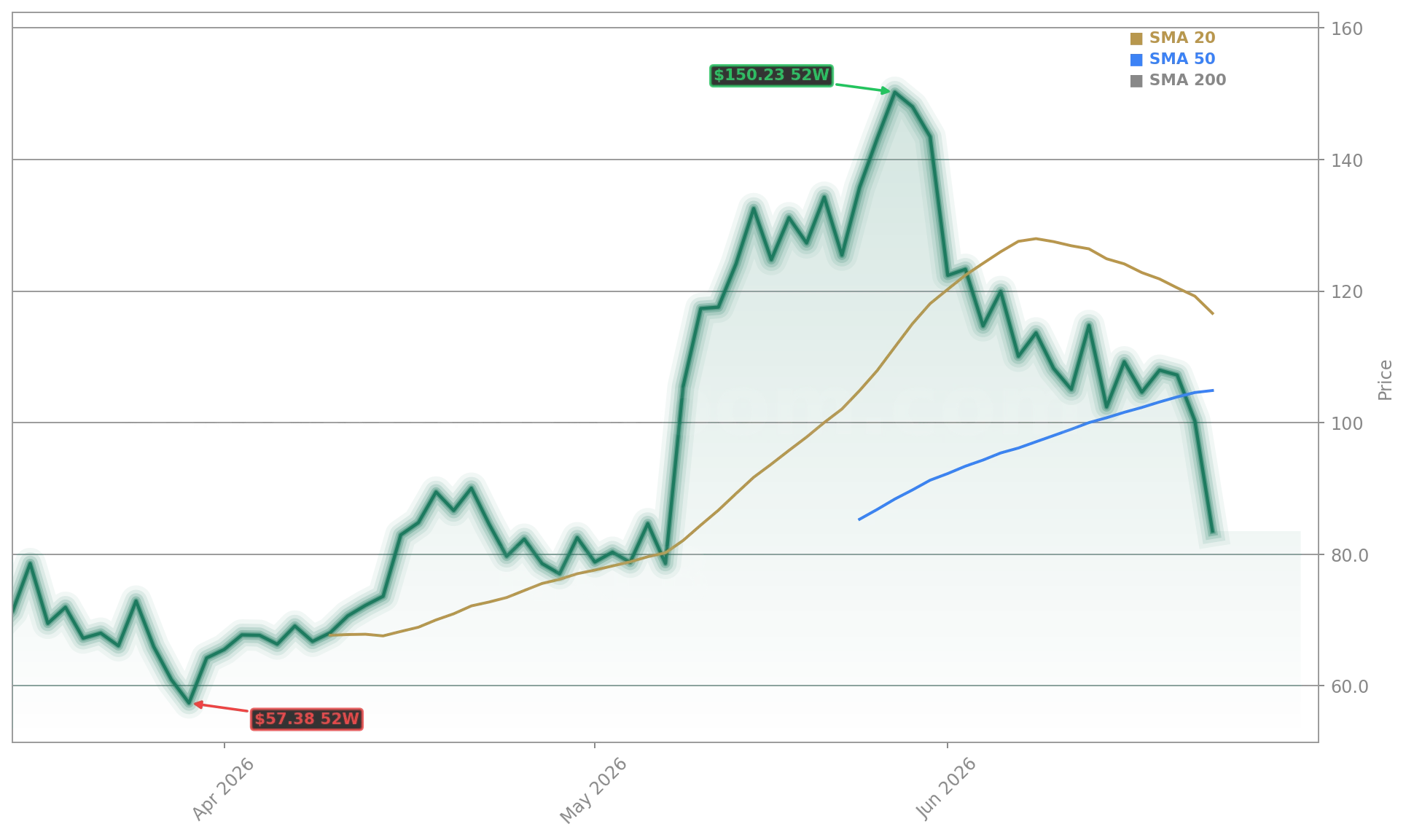
Analysts are upgrading sentiment on fundamentals — not just hype. Keybanc Capital Markets upgraded Rocket Lab USA, Inc. to Overweight with a $135.00 price target on June 15, citing accelerating defense and science wins. KGI Securities initiated coverage with a Neutral rating and $105.00 target, highlighting the TSIS-2 and PolSIR missions as near-term catalysts. The consensus price target across 21 firms stands at $98.57 — implying roughly 15% upside from current levels — even as the stock trades 26.7% below its 20-day moving average. That gap reflects investor caution: while Rocket Lab NASA Missions deliver credibility, the company still reported a $45.02 million net loss in Q1 2026 and is funding Neutron development via at-the-market equity issuance.
How Does This Win Stack Up Against SpaceX and Other Peers?
In a sector where SpaceX (SPCX) dominates headlines and capital flows, Rocket Lab USA, Inc. is carving a complementary niche: precision, responsiveness, and mission-critical science execution. While SpaceX targets mega-constellations and lunar landings, Rocket Lab’s Electron serves NASA’s need for targeted, low-risk launches to precise inclinations — a capability proven in the record-breaking 16-hour, 42-minute VICTUS HAZE mission for the U.S. Space Force. That contrast matters to institutional investors: Rocket Lab’s 63.5% year-over-year revenue growth ($200.35 million in Q1) and NASDAQ-100 inclusion on June 22 underscore its transition from startup to infrastructure provider. Meanwhile, peers like AST SpaceMobile trade at 130x forward sales — versus Rocket Lab’s 60x — making its NASA-backed fundamentals relatively more compelling in a rising-rate environment.
What’s Next for Rocket Lab USA, Inc. in Q2 2026?
Electron has become synonymous with reliability, precise orbital accuracy, and on-demand launch capability and we’ve been delivering this for NASA missions for almost a decade. We’re proud to deliver this once again for PolSIR and TSIS-2.— Peter Beck, founder and CEO of Rocket Lab USA, Inc.
With PolSIR and TSIS-2 now secured, attention shifts to Q2 guidance ($225–$240 million) and the August 6, 2026 earnings report — the first since NASDAQ-100 inclusion. The company’s defense wins, including the Golden Dome Space Based Interceptor program, signal expanding Pentagon adoption. Yet technical resistance remains at $93.00 — near the 100-day SMA — and the 52-week high ($151.00) is still 44% above current levels. For U.S. portfolios, Rocket Lab USA, Inc. offers leveraged exposure to NASA’s $30+ billion annual science budget and the S&P 500’s growing space-tech weighting — but only if it sustains execution amid macro headwinds. The next major test? Neutron’s first orbital flight — expected late 2026 — and whether Rocket Lab NASA Missions can convert science credibility into commercial scale.