Can Rocket Lab’s massive $8 billion Iridium acquisition propel it to industry dominance, or will the heavy debt load crush its stock?

How Did Rocket Lab Space Services Provider Prove Its Value?
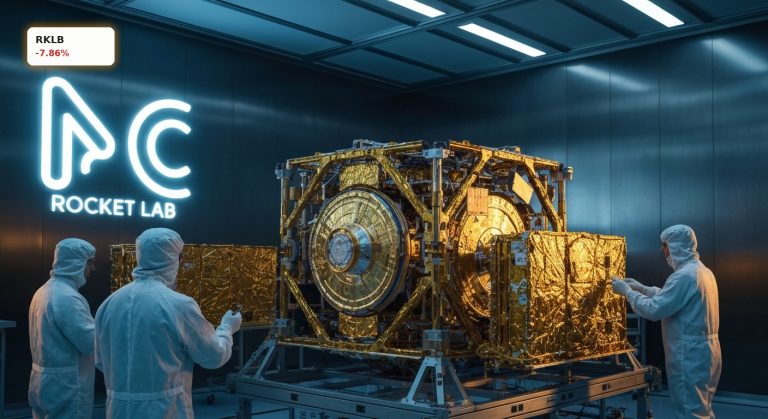
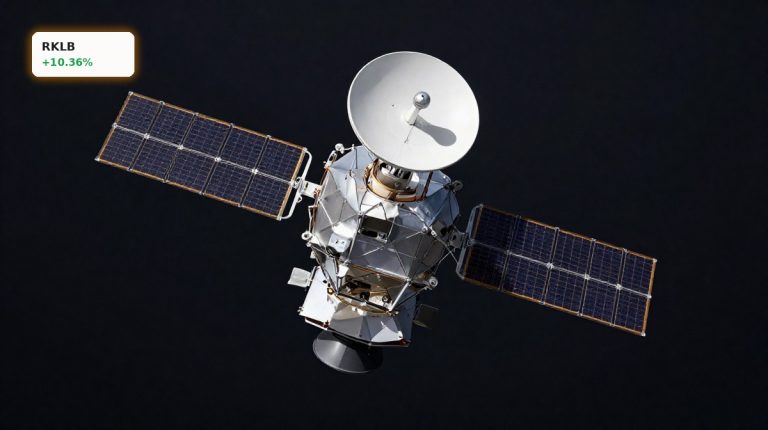
The ultimate proof of concept for the **Rocket Lab Space Services Provider** model came during the recent Victus Haze mission for the U.S. Space Force. Instead of just selling a rocket launch, the company delivered a complete, turn-key orbital solution. The mission combined an Electron rocket, a company-built Pioneer spacecraft, custom mission software, and ground control systems into a single rapid-response service.
The execution was flawless. Upon receiving final instructions, the team launched the spacecraft in just **16 hours and 42 minutes**. Within **38 hours**, the Pioneer satellite was fully activated and tested—shattering the military’s 72-hour deadline. In less than **59 hours**, the spacecraft successfully maneuvered close to a target satellite to observe and photograph it. This rapid-response capability shows how the company can capture multiple revenue streams from a single mission, drastically reducing contractor handoffs for defense clients.
Why Did Rocket Lab USA, Inc. Win a Record Contract?
This integrated capability is already translating into massive commercial momentum. The U.S. Space Force recently awarded the company a **$266 million** contract for 12 suborbital launch missions from Alaska’s Kodiak spaceport, with options for six more through 2028. This represents the largest government launch award in the company’s history, highlighting the military’s growing trust in their rapid-response capabilities.
Financially, the operational engine is firing on all cylinders. First-quarter revenue surged **63%** year-over-year to a record **$200.3 million**, while the GAAP net loss narrowed to **$45 million**. Crucially, the company’s backlog has climbed to a record **$2.2 billion**. Investors are also keenly watching the upcoming debut of Neutron, the next-generation reusable rocket designed to challenge larger launch vehicles in the commercial satellite market.
How Do Analysts View the Iridium Acquisition?
Despite strong operational execution, Wall Street remains divided over the company’s massive **$8 billion** agreement to acquire satellite operator **Iridium Communications**. The deal would instantly hand the company an operating global satellite network. However, the financing plan—which includes a **$3.6 billion** bridge loan alongside potential equity dilution—has introduced significant leverage to a company that is not yet profitable.
This uncertainty has kept the stock trading around **$65.09**, well below its 52-week high of **$151**. Yet, analyst targets remain highly optimistic, averaging **$114.33**. Bank of America recently lifted its price target to **$115**, while Roth Capital and Citizens both raised their targets to **$130**. New Street Research holds a street-high target of **$150**. Conversely, Piper Sandler initiated coverage with a Neutral rating and an **$83** price target, citing the substantial debt load.
Related Coverage
For deeper insights into the financial implications of this massive merger, read Rocket Lab Acquisition: Stock Tanks -7.9% After $8B Iridium Deal to understand how debt is impacting investor sentiment. Additionally, check out how other transportation and infrastructure sectors are evolving in JetBlue Fare Overhaul Sparks +3.8% Stock Surge on Premium Shift.
The transition into a fully integrated **Rocket Lab Space Services Provider** represents a major paradigm shift for the aerospace sector. While the financial leverage from the Iridium acquisition introduces near-term volatility, the company’s record backlog and defense partnerships underscore its long-term commercial viability. For forward-looking investors, the upcoming Neutron launch will likely serve as the next major catalyst to bridge the gap between the current stock price and Wall Street’s bullish targets.