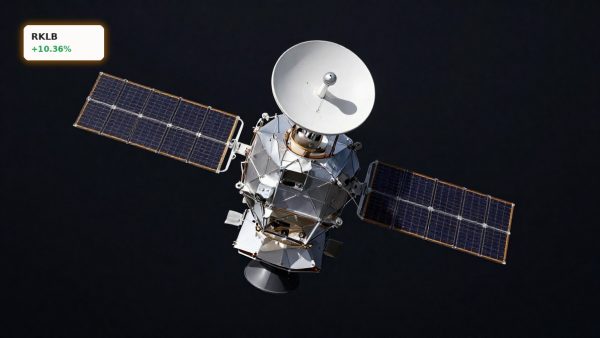
Will Rocket Lab’s massive $8 billion acquisition of Iridium propel the space pioneer to new heights, or will it crush the stock under financial strain?

Is the Rocket Lab Acquisition Worth the $8 Billion Price Tag?
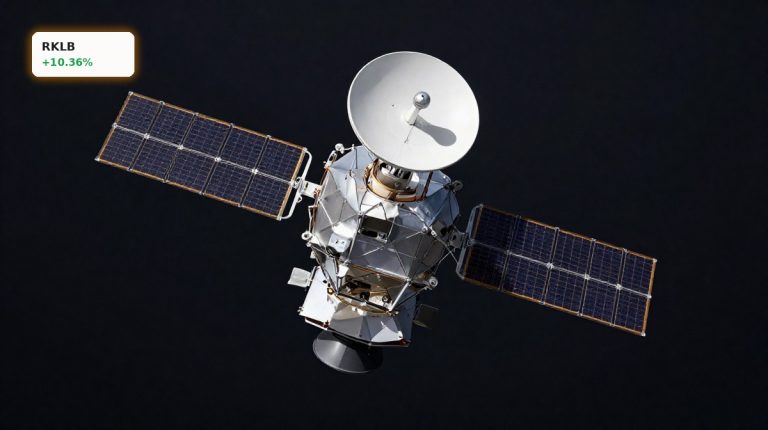
Under the terms of the signed agreement, Rocket Lab USA, Inc. will acquire Iridium Communications in a transaction valued at approximately $8 billion, offering $54 per share in a mix of cash and stock. While the strategic merits of the deal are clear—combining satellite manufacturing with a robust global communications network—the transaction is not expected to close until mid-2027. This extended timeline leaves the company exposed to integration risks and capital constraints during a pivotal year for its core launch business.
Wall Street analysts are divided on the immediate financial impact. Some investment banks point out that while the Rocket Lab Acquisition secures a massive, recurring revenue stream, the sheer scale of the transaction could strain the company’s balance sheet. Currently, the company boasts a solid backlog of $2.2 billion and cash reserves exceeding $2 billion, providing a temporary buffer. However, funding both this acquisition and the capital-intensive development of its next-generation launch vehicle will require flawless operational execution.
Can Rocket Lab Deliver the Neutron Rocket on Time?
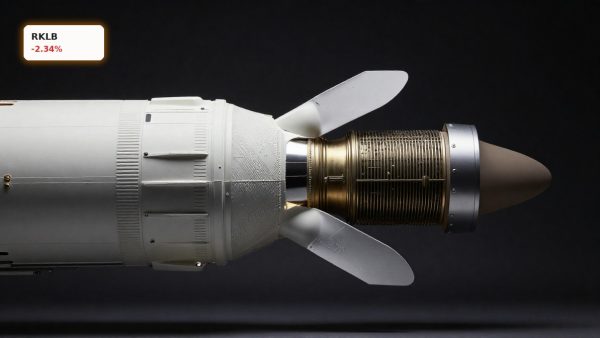
While the market evaluates the long-term implications of the Rocket Lab Acquisition, short-term investor sentiment remains heavily tied to the development of the medium-lift Neutron rocket. Designed to compete directly with commercial launch giants, Neutron is the cornerstone of the company’s future growth narrative. However, the program has already suffered two major schedule slips. Originally slated for a 2025 debut, the maiden flight was pushed to 2026, and a structural tank failure during a January test further delayed the timeline to the fourth quarter of 2026.
Founder Peter Beck remains publicly committed to the late 2026 launch window, confirming that the engineering team recently completed critical full-flight-load separation tests on the second stage. Despite these technical milestones, the lack of detailed hardware updates since the January anomaly has kept institutional investors cautious. Any further delay beyond the fourth quarter of 2026 would severely undermine the bullish thesis, as much of the company’s projected valuation is baked into Neutron’s commercial viability.
How Do Competitors Compare in the Commercial Space Race?
The broader aerospace sector is watching the integration closely. Unlike legacy defense contractors, Rocket Lab has successfully scaled its smaller Electron rocket, which continues to enjoy record launch cadences and robust commercial demand. This operational success has allowed the company to secure a new multi-launch contract for five Neutron missions and three Electron flights from an undisclosed customer, proving that commercial interest in the unproven Neutron vehicle remains exceptionally high.
However, the stock’s recent technical performance has raised technical red flags, with shares trading below their 200-day moving average. Some market observers note that high-growth space equities are increasingly correlated with broader tech sentiment and liquidity trends. If macroeconomic pressures mount, highly leveraged expansion plans could face sharper valuation discounts, making the execution of the upcoming integration a critical test of management’s financial discipline.
Related Coverage
The team has successfully completed separation events at full flight limit loads on the second stage and interstage development system.— Peter Beck
For a deeper look into how the market initially reacted to this massive transaction, read about the Rocket Lab Iridium Acquisition, which saw the stock plunge 6% despite the announcement of the landmark $8 billion deal. Additionally, industrial supply chains continue to face broader economic headwinds, as detailed in the analysis of the Fastenal Earnings Drop, where margin pressures triggered a sharp 3.3% sell-off, highlighting the current market sensitivity to corporate profitability.