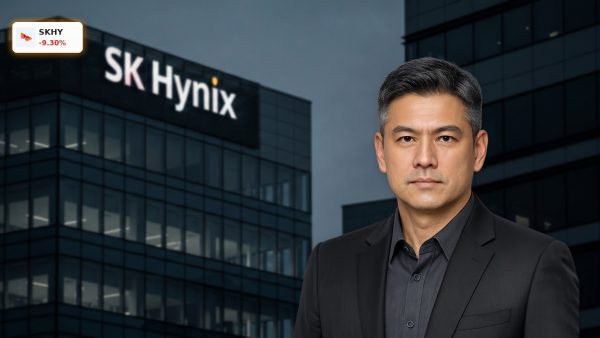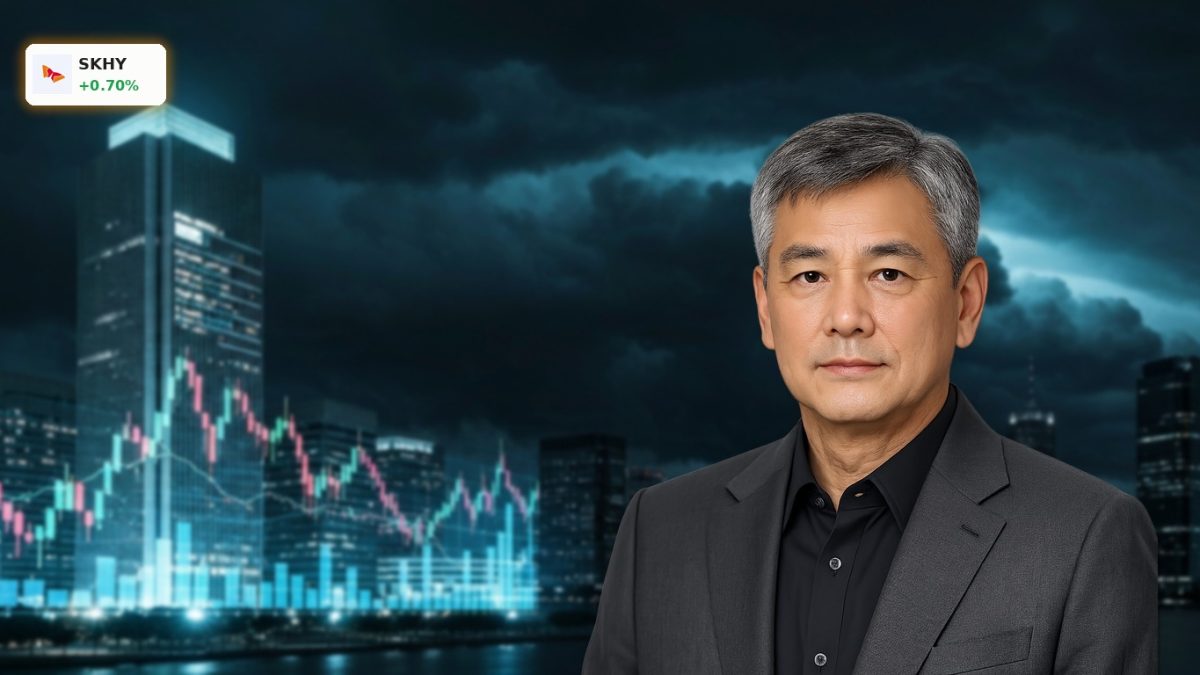
Will South Korea’s aggressive regulatory crackdown on the booming SK Hynix ETF market derail the global AI chip rally?

Why is the SK Hynix ETF market facing regulatory intervention?
South Korea’s Financial Services Commission (FSC) has stepped in to curb speculative trading in single-stock leveraged investment vehicles. Recently, domestic regulators permitted the creation of single-stock leveraged products, which quickly led to an enormous concentration of retail capital. At their peak, just three specialized SK Hynix ETF products held over $23 billion in assets. This massive volume represented more than 2.5 times the average daily turnover of the company’s locally listed shares.
Because these funds utilize complex financial derivatives like swaps and options to maintain a constant 2x daily leverage, they are forced to rebalance their portfolios dynamically. When the underlying stock price falls, these funds must rapidly sell off shares to maintain their target leverage ratio. To prevent these automated feedback loops from triggering a broader market collapse, South Korean regulators have temporarily halted new listings of these leveraged products and tripled the minimum cash balance required for retail investors to 30 million won (approximately $20,000).
How does the global chip sell-off impact SK Hynix Corporation?
The regulatory crackdown coincides with a broader correction across global technology markets. A growing fear of overinvestment in artificial intelligence has triggered a sharp sell-off, pulling down major chipmakers like NVIDIA, TSMC, and Tokyo Electron. During a recent trading session, overseas traders offloaded billions of dollars in South Korean equities, with SK Hynix Corporation alone accounting for about a fifth of those total capital outflows.
With the South Korean Kospi closed for a local holiday, the company’s US-listed American Depositary Receipts (ADRs) plummeted by 13% in intraday trading, reflecting the intense pressure on the sector. This correction has dragged the US-listed shares of the memory manufacturer more than 20% below their recent historic highs. However, current market data shows SK Hynix Corporation (SKHY) trading at $153.37, up 0.70% from its previous close of $152.31, indicating that some buyers are stepping back in at these lower valuation levels.
Is the massive AI infrastructure spending cycle still intact?
Despite the short-term panic reflected in the volatile flows of any specialized SK Hynix ETF, the fundamental demand for advanced memory hardware remains exceptionally strong. High-bandwidth memory (HBM) chips manufactured by the South Korean giant are critical components packaged alongside NVIDIA GPUs to run complex AI workloads. Industry projections estimate that global AI infrastructure spending could exceed $1 trillion by 2029, up from $318 billion in 2025.
Furthermore, major technology companies are actively expanding their capital expenditures. Alphabet recently announced massive capital spending plans, while SpaceX continues to aggressively scale its AI capabilities. To meet this surging demand, the South Korean chipmaker has committed approximately $743 billion (1,100 trillion won) to expand its manufacturing capacity over the medium to long term, signaling deep confidence in the structural longevity of the AI revolution.
Related Coverage
For a deeper look into the company’s recent market performance, read about how the SK Hynix ADR Plunges -6.2%: Is This the Ultimate AI Buying Opportunity? and whether the regulatory changes will impact its long-term growth. Additionally, you can explore broader semiconductor industry trends by reading about the Teradyne Insider Sales: Stock Drops -6.3% as Executives Liquidate Shares to see how other chip equipment giants are performing in this volatile environment.