
Can Alphabet’s record-breaking bond offering really turn massive AI capex into long-term shareholder gains instead of balance-sheet risk?

How big is the latest Alphabet Bond Offering?
Alphabet Inc. (Google) is preparing a yen deal of nearly 600 billion yen (about $3.6 billion), eclipsing Berkshire Hathaway’s previous foreign‑issuer record in Japan. The transaction is part of an accelerated funding sprint that has seen Alphabet raise roughly $60 billion in bonds over the last four months across Japan, Switzerland, the U.K., Canada and other markets.
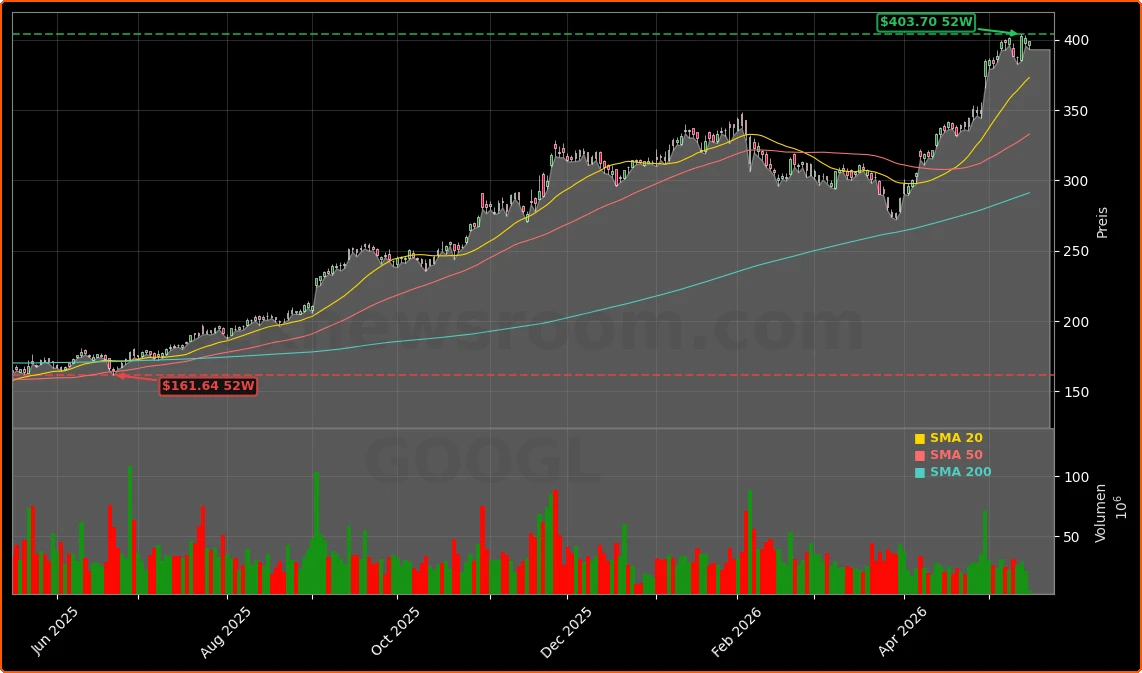
Alphabet shares trade at $398.77 in Friday intraday action, down about 0.6% from the prior close of $400.25, after recently touching record territory on the NASDAQ. Despite the slight pullback, the stock remains up roughly 28% year to date, outpacing the S&P 500 and cementing Alphabet as one of Wall Street’s core AI bellwethers.
The new Alphabet Bond Offering underscores just how aggressively the company is scaling its balance sheet to support capital expenditures that are expected to hit $180–$190 billion in 2026, mostly tied to AI infrastructure and data centers. That capex figure rivals the annual GDP of medium‑sized countries and puts Alphabet in the same super‑spender league as NVIDIA, Amazon and Meta.
Why is Alphabet loading up on debt for AI?
AI infrastructure has become a balance‑sheet arms race. Alphabet is a top supplier of cloud compute and custom TPUs to leading labs such as Anthropic, while also training and serving its own Gemini models across Search, YouTube, Google Cloud and Workspace. Management has made clear that the constraint is no longer demand but the amount of affordable compute and power it can bring online fast enough.
Anthropic CFO Krishna Rao recently framed the stakes as existential: buy too much compute and you go out of business, buy too little and you fall off the frontier. That logic doesn’t just apply to startups. For Alphabet, under‑investing risks ceding high‑margin cloud AI workloads to rivals, while over‑investing risks compressing returns if demand or pricing disappoint.
Cheap global funding helps square that circle. By tapping deeply liquid markets like Japan, where local yields remain structurally lower than in the U.S., the latest Alphabet Bond Offering allows the company to lock in long‑term funding below its return expectations on AI data centers. At the same time, shifting from equity buybacks toward debt conserves cash while keeping Alphabet’s share count relatively stable after a decade in which it spent about $346 billion to retire roughly 13% of its stock.
What does this mean for profitability and buybacks?
The trade‑off for investors is clear: higher leverage and capex now, less EPS tailwind from repurchases. Alphabet and Meta both spent over $10 billion on buybacks in early 2025, but paused repurchases entirely in Q1 2026 as capex for AI spiked. That pause removes one of Wall Street’s most reliable EPS boosters just as valuations across the AI complex have become more demanding.
Still, recent results suggest the spend is paying off. In Q1 2026, Google Cloud revenue jumped more than 60% year over year, with high‑margin AI services and TPU sales driving the outperformance. YouTube is also becoming a more diversified growth engine as subscription revenue climbs to about one‑third of the platform’s total, cushioning cyclicality in advertising.
Sell‑side desks at large banks such as Morgan Stanley and Goldman Sachs continue to emphasize AI capex as the primary driver of long‑term value for the big hyperscalers, even as they warn about rising volatility if macro conditions or AI monetization slow. Several institutional investors, including Bowie Capital and Egerton Capital, have recently boosted positions in Alphabet, betting that its scale and balance sheet can absorb the debt wave.
How does Alphabet stack up against AI rivals?
In the broader AI ecosystem, NVIDIA, Amazon, Apple, Meta and Microsoft all represent different slices of the same infrastructure story. NVIDIA dominates the GPU layer; Amazon’s AWS and Microsoft Azure control massive cloud footprints; Meta is pouring tens of billions into AI for social and ads; and Apple is pushing device‑side intelligence while exploring model partnerships.
Alphabet sits at the intersection of hardware, cloud and consumer apps. It supplies TPUs to external customers, sells cloud AI platform services, and embeds Gemini deeply in core franchises like Search and Gmail. The company is even exploring orbital data centers with SpaceX and satellite‑based projects such as Suncatcher to tap cheap solar energy and sidestep land and grid bottlenecks that former CEO Eric Schmidt has warned could be a limiting factor for AI.
That versatility is why many on Wall Street still view Alphabet as one of the most balanced AI plays, despite concerns about regulatory pressure and lawsuits over data and voiceprint usage in training models. A market cap approaching $4.8 trillion places it just ahead of Apple and behind only Microsoft, reflecting investors’ confidence that the current debt‑funded capex cycle will convert into durable free cash flow.
Related Coverage for Alphabet investors
For a deeper dive into how recent bond issues fit into the company’s broader leverage strategy, investors can read “Alphabet Bond Sale Record Fuels Massive AI Boom Warning”, which examines whether the current borrowing spree is a smart accelerator for growth or the start of a more risky balance‑sheet experiment in Big Tech.
In sum, the latest Alphabet Bond Offering in Japan signals that Google’s parent is willing to use its pristine credit and global reach to front‑load AI infrastructure spending on an unprecedented scale. For investors, that means less support from buybacks in the near term but potentially greater operating leverage if cloud, Gemini and YouTube subscriptions keep compounding. The next few quarters of AI revenue traction will be crucial in proving that this bond‑financed gamble deserves a permanent place in long‑term portfolios.