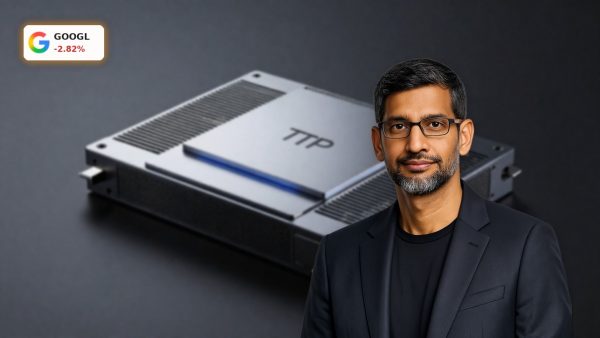
Can the Alphabet Anthropic Deal and its massive cloud commitment push $GOOGL into a new long-term AI leadership phase?

How is Alphabet trading after the Anthropic news?
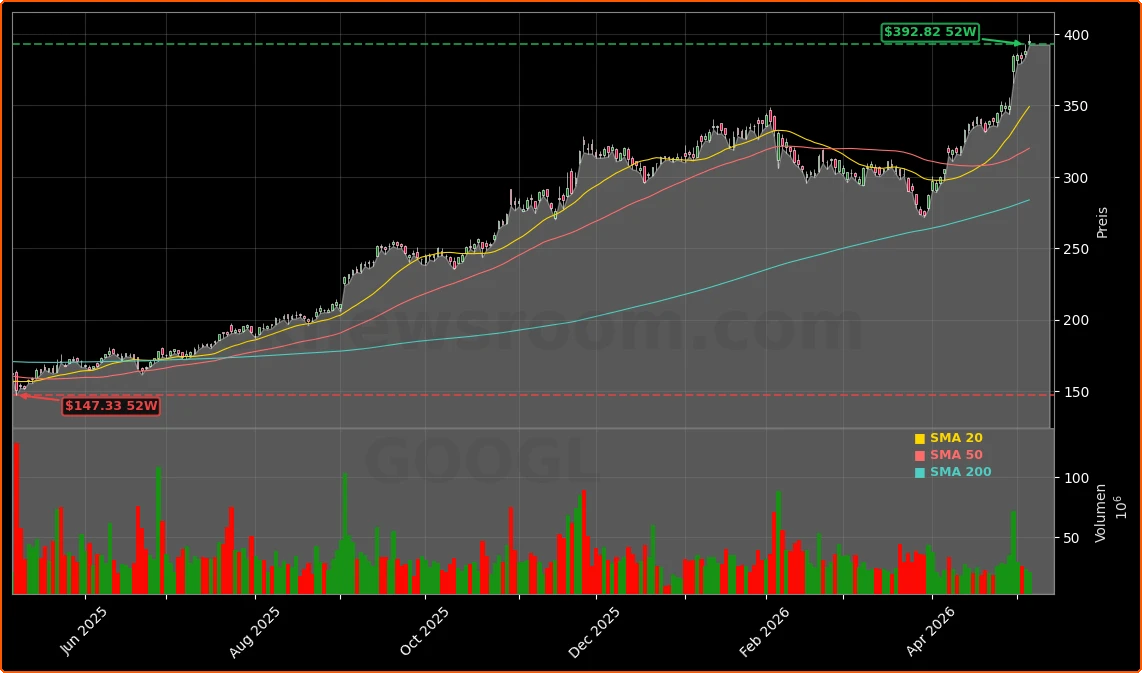
Alphabet (GOOGL) was last changing hands around $395.49, up roughly 1.8% from Tuesday’s close of $394.73, leaving the stock just below its recent 52‑week and record high near $397. The move extends a powerful rally that began in late March, when shares rebounded from roughly $273 and have since climbed more than 40% in under two months. With the stock now hovering just under the psychologically important $400 mark, traders on Wall Street are openly debating whether the Alphabet Anthropic Deal could be the catalyst that pushes the shares decisively into a new price zone.
The enthusiasm builds on a stellar Q1 performance. Alphabet delivered earnings per share of $5.11, almost doubling consensus expectations of $2.63, on revenue of about $109.9 billion, up 22% year over year. Google Cloud revenue jumped 63% to roughly $20 billion, while the overall cloud backlog swelled beyond $460 billion, underlining the scale and visibility of future demand for Alphabet’s infrastructure.
What’s really in the Alphabet Anthropic Deal?
The potential Alphabet Anthropic Deal centers on Anthropic, the AI lab behind the Claude models and a key rival to OpenAI. Reporting indicates Anthropic has agreed in principle to spend up to $200 billion over five years on Google Cloud services and Google’s custom Tensor Processing Unit (TPU) chips. If fully realized, that commitment could represent more than 40% of Alphabet’s disclosed cloud backlog, effectively anchoring a significant portion of the company’s future infrastructure revenue.
The partnership is multi‑layered. Alphabet has pledged up to $40 billion in funding to Anthropic, deepening its financial stake while also securing preferential demand for its cloud and AI hardware stack. Anthropic is expected to tap multiple compute platforms, including AWS Trainium, Google TPUs and GPUs from NVIDIA, but the reported Google contract suggests Alphabet will be a central pillar in powering future Claude model training and inference at hyperscale.
For investors, this structure matters. Instead of relying solely on its own Gemini models, Alphabet is positioning itself both as an AI platform owner and as a neutral infrastructure provider to third‑party model developers. The Alphabet Anthropic Deal therefore reinforces the idea of Alphabet as an AI “picks and shovels” play, generating high‑margin, recurring cloud revenue from the broader AI ecosystem.
How do analysts value Alphabet’s AI and cloud momentum?
Wall Street has responded with a wave of optimistic revisions. Citizens Research analyst Andrew Boone recently lifted his Alphabet price target to a street‑high $515 and reiterated a Buy rating, arguing that the stock remains inexpensive even near $400. Boone emphasizes Alphabet’s vertical integration with its latest TPU v8 chips, which he believes are lower‑cost than competitors relying heavily on third‑party hardware from vendors like NVIDIA. At roughly 29x consensus 2026 earnings, Boone sees room for further multiple expansion if cloud and AI growth persist.
Mizuho Financial has also turned more bullish, raising its Alphabet target from $420 to $460 while maintaining a positive rating. Analyst Lloyd Walmsley projects Google Cloud revenue could grow about 70% from current levels by the end of 2026, well above the market’s implied 58% trajectory. That bullish view is rooted in Alphabet’s strengthening cloud backlog, the Anthropic commitment and rising AI workloads from customers across industries.
Across Wall Street, the sentiment skew remains strongly positive: data show that more than 50 of roughly 60 covering analysts now rate Alphabet as a Buy or Strong Buy. The stock is increasingly framed as a core AI compounder within the NASDAQ and S&P 500, rather than a more cyclical ad‑tech name tied solely to digital marketing budgets.
How does Alphabet stack up against U.S. tech rivals?
Alphabet’s capex plans underscore how aggressively it is contesting the AI infrastructure race with Amazon and Microsoft. Management now expects to spend around $175–$185 billion on capital expenditures this year, broadly in line with or slightly below Microsoft’s roughly $190 billion plan but not far off Amazon’s projected $200 billion. That puts Alphabet firmly in the top tier of global AI infrastructure investors, well ahead of many peers.
At the same time, Alphabet has differentiated itself by diversifying its funding base. The company recently raised $17 billion in bond markets, including the largest euro‑denominated bond ever issued by a U.S. tech company and its first Canadian dollar bonds. Invesco portfolio manager Matt Brill highlights Alphabet as the most advanced among U.S. hyperscalers in terms of currency diversification, which could help the company manage funding costs and FX risk as it builds out data centers worldwide.
Beyond cloud, Alphabet continues to push autonomy through its Waymo unit, which has reached around 500,000 rides per week in U.S. robotaxi services and now operates in more than ten cities. While Waymo’s LiDAR‑heavy approach leads to higher cost per vehicle than Tesla’s camera‑centric strategy, it gives Alphabet another AI‑rich optionality play alongside Search, YouTube, Android and Google Cloud.
What are the risks and opportunities for investors?
The Alphabet Anthropic Deal and Alphabet’s own Gemini rollout both highlight the opportunity and the risk in AI. On one hand, AI is an upgrade to a business already powered by Search, YouTube and Android, not a bet‑the‑company pivot. Alphabet generated about $165 billion in operating cash flow in 2025, giving it ample firepower to fund massive data center and chip investments without jeopardizing its balance sheet.
On the other hand, generative AI could eventually pressure the economics of traditional search ads if users migrate toward conversational agents. Heavy capex does not guarantee perfect returns, and Alphabet must prove it can monetize AI features across consumer and enterprise products while competing fiercely with Apple, NVIDIA, Amazon, Microsoft and Meta. Still, compared with pure‑play AI startups that remain deeply loss‑making, Alphabet offers a blend of scale, profitability and AI upside that many institutional portfolios prefer.
Related Coverage
Investors looking for a deeper dive into how Alphabet’s record earnings intersect with its aggressive infrastructure build‑out can read Alphabet Earnings Record: AI Capex Boom And Cloud Surge. That analysis explores whether the company’s massive spending plans and recent results make it the ultimate long‑duration AI infrastructure play or raise new risks for shareholders.
In summary, the Alphabet Anthropic Deal, coupled with explosive cloud growth and record earnings, is reinforcing Alphabet Inc. (Google) as a central AI infrastructure leader on Wall Street. For U.S. investors, the stock now offers a mix of strong current cash flows, accelerating cloud momentum and optionality from partnerships like Anthropic’s that few rivals can match. The next leg higher will likely depend on whether Alphabet can convert this unprecedented AI demand into sustained margins and durable shareholder returns over the coming years.